
 AC repair
 Furnace & heating
 Heat pumps
 Carrier
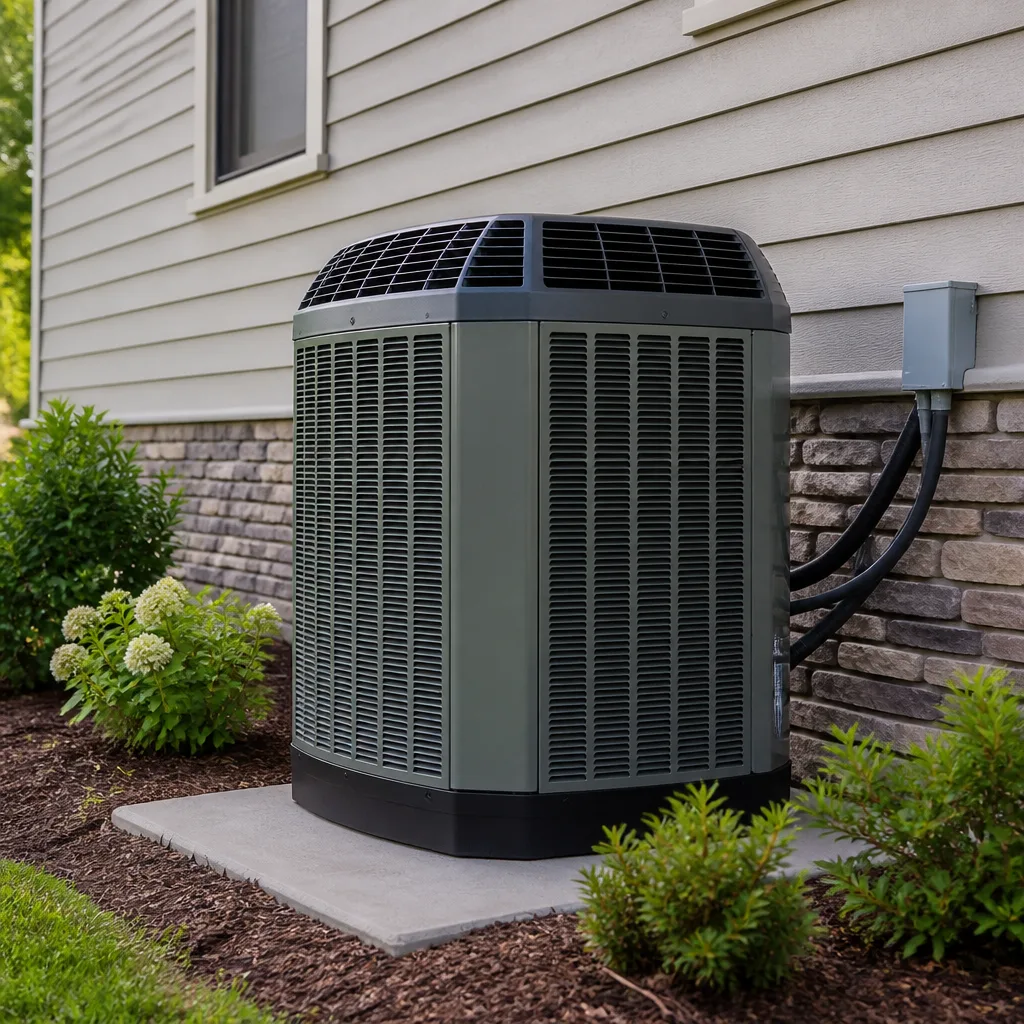 Trane
Trane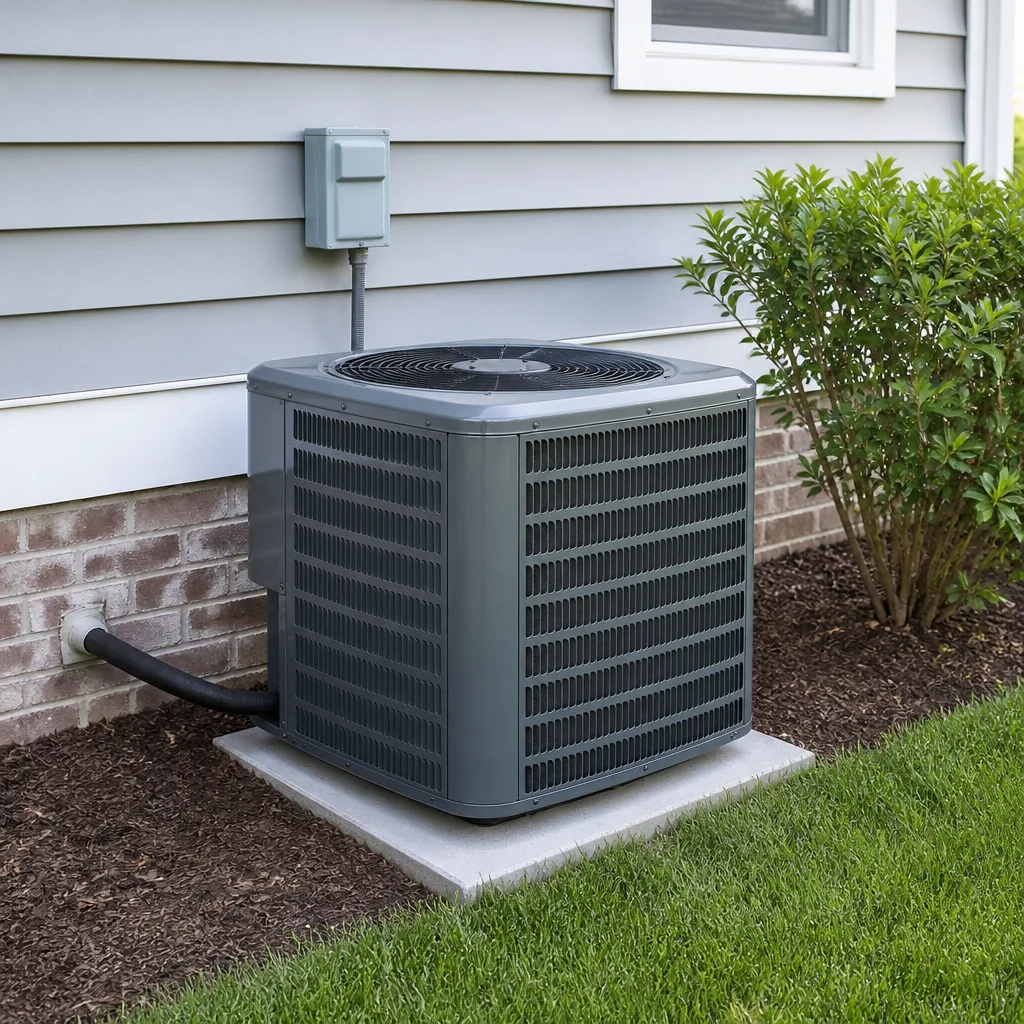 Goodman
Seasonal tune-up and full diagnostic on your Carrier, Trane, or Goodman system - readings shown to you before any repair is proposed
Diagnosis first, numbers second - you approve the repair price before a single part goes in.
Get your free estimateTrane AC Repair in Atlanta: What to Know First
Independent Trane AC repair in Atlanta typically runs $150 – $650 depending on what failed, and most calls we handle are diagnosed the same day you phone us. We’re not a Trane dealer and we don’t pretend to be one, but we fix these systems constantly. Trane builds a solid machine, and when one quits cooling, the problem is usually a specific, fixable part rather than a system-wide failure. If your Trane is blowing warm air, short cycling, or making a noise it didn’t make last summer, call (762) 465-4570 and we’ll send a tech who actually knows the equipment.
This page is written for Trane owners in Atlanta who want straight answers before a truck rolls: what breaks, what it costs, and how the whole repair process goes. Devin Marlowe, our owner, has spent years working on Trane systems across Buckhead, Decatur, Sandy Springs, and the rest of metro Atlanta, and he insists on the same standard every time: written price before work starts, no exceptions.
How Trane Products Fail – and How We Fix Them
- XR Series (XR13, XR14) – capacitor failure during Atlanta heat waves. The XR line is Trane’s workhorse, and in Atlanta it gets pushed hard from May through September. The run capacitor, that cylinder that gives the compressor and fan motor their starting jolt, takes the brunt of it. When it fails, the outdoor unit hums but won’t start, or the fan spins slow and the compressor overheats. We replace capacitors with OEM or high-grade aftermarket units rated for continuous heat exposure, and we always check the contactor at the same time, because one failing usually means the other is close behind.
- XL Series (XL16i, XL18i, XL20i) – communication board errors from power flickers. Atlanta storms and the power blips that come with them are rough on variable-speed and two-stage Trane systems. The XL line uses communicating thermostats and control boards, and when the power flickers, the board can lock out or lose its configuration. A homeowner sees the thermostat read fine but the outdoor unit won’t respond. We reset and reflash the board, test the communication circuit, and replace the board only when it’s genuinely fried, because these parts run hundreds of dollars and you shouldn’t pay for one you don’t need.
- Ameristar Series (by Trane) – evaporator coil leaks after 6 to 10 years. Ameristar is the value line Trane makes for budget-conscious installs, and we see a fair number of them in Atlanta’s older subdivisions. The evaporator coil inside the air handler is the weak point. Formicary corrosion, which is a fancy way of saying pinhole leaks caused by acid in the air, eats at the copper. The AC still runs but cools poorly, and the tell is a hissing sound near the indoor unit or a slow drop in refrigerant pressure. We isolate the leak with nitrogen, patch when it’s safe, and replace the coil when it’s not. We’ll tell you which one makes sense before we touch anything.
- RunTru by Trane – undersized filter driers causing early compressor strain. RunTru is Trane’s entry-level residential line, and in Atlanta’s humidity it draws extra work. The filter drier, which traps moisture and contaminants before they reach the compressor, can clog early in these units, especially if the system was installed without a proper vacuum pull. Symptom: the compressor runs hot, the suction line ices up on humid days, and the system struggles to hold temperature. We replace the drier, pull a proper vacuum, and recharge to manufacturer spec.
- All Trane lines – condensate drain clogs from Atlanta’s pollen and humidity. This one isn’t brand-specific to Trane, but Atlanta’s pollen season makes it worse here than almost anywhere. The condensate line that carries water away from the indoor coil clogs with algae and pollen sludge, the float switch trips, and the whole system shuts down because the pan is full. We clear the line, flush it with an antimicrobial treatment, and test the float switch rather than just bypassing it. It’s a cheap fix, usually under $200, and it prevents a ceiling stain or a flooded closet.
Styles & brands we work with
Our Trane AC Repair Process
- 1
You call, a person answers. No phone tree, no voicemail queue. A live human picks up 24 hours a day and gets the details: what the system is doing, how long it’s been doing it, and what brand and model you have if you know it.
- 2
We send a tech you can identify. Before the truck leaves, you get the technician’s name and photo. At your door, they show a photo ID badge. If the person standing there doesn’t match the photo we sent, you don’t open the door. That’s the Threshold Verified standard, and it’s non-negotiable on every call.
- 3
Diagnosis comes before anything else. The tech tests the system: electrical readings at the capacitor and contactor, refrigerant pressures, airflow at the vents, and the thermostat signal. On a Trane, we also check the control board and any stored fault codes. You get a plain-English explanation of what’s wrong before any work begins.
- 4
Written price, no exceptions. We hand you or show you the repair cost in writing before we turn a single screw. You approve it or you don’t. No surprise charges, no “we found something else” after the fact. If the scope changes, the written price changes first.
- 5
The repair and the test. We use OEM Trane parts when the warranty is active and the price difference is reasonable. When OEM isn’t available or is priced absurdly, we use quality aftermarket parts and we tell you which one we’re installing and why. After the repair, we run the system through a full cycle and verify it’s hitting proper temperature split and pressures.
- 6
The guarantee, in writing. Every repair gets a written guarantee covering parts and labor on that repair. Under our 365-Day Done Right Promise, if that same repair fails within a year, we come back and fix it at no charge. No argument, no fine print runaround.
See the difference
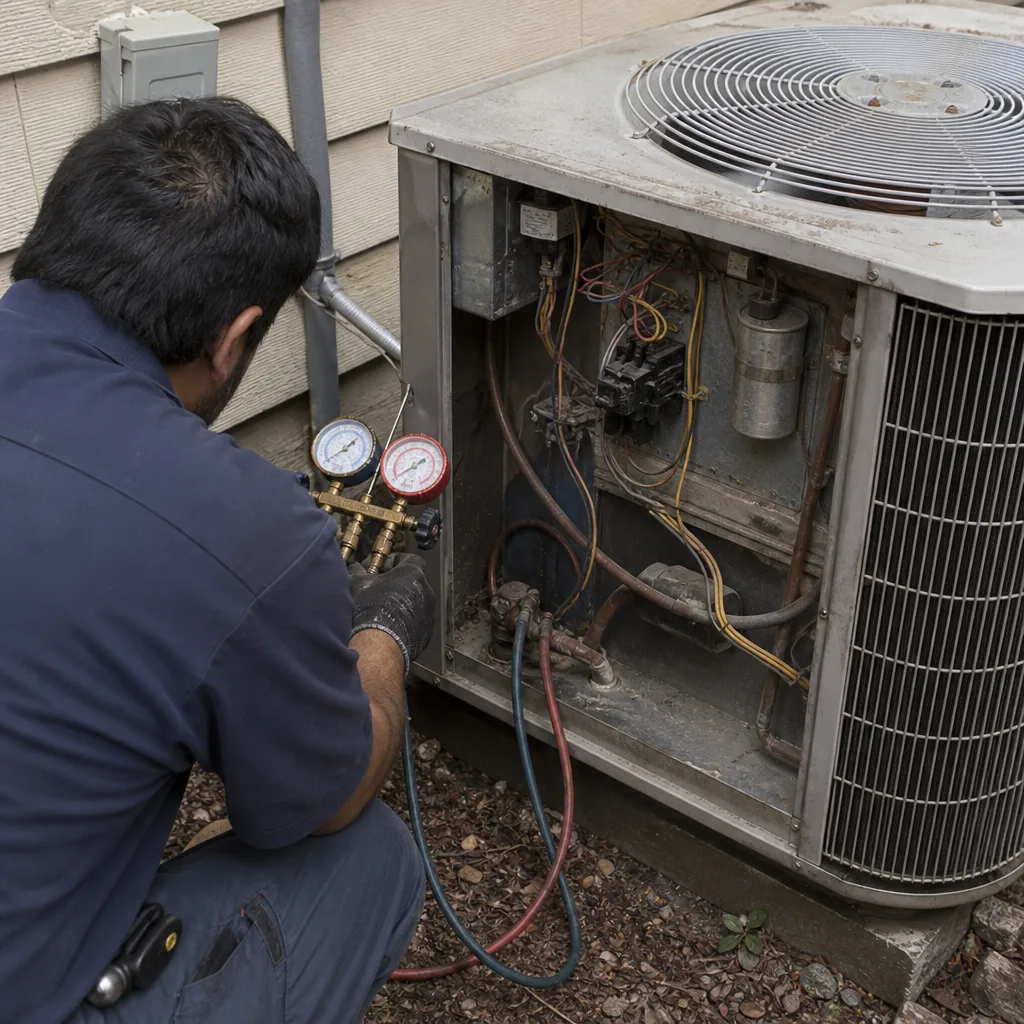 Before
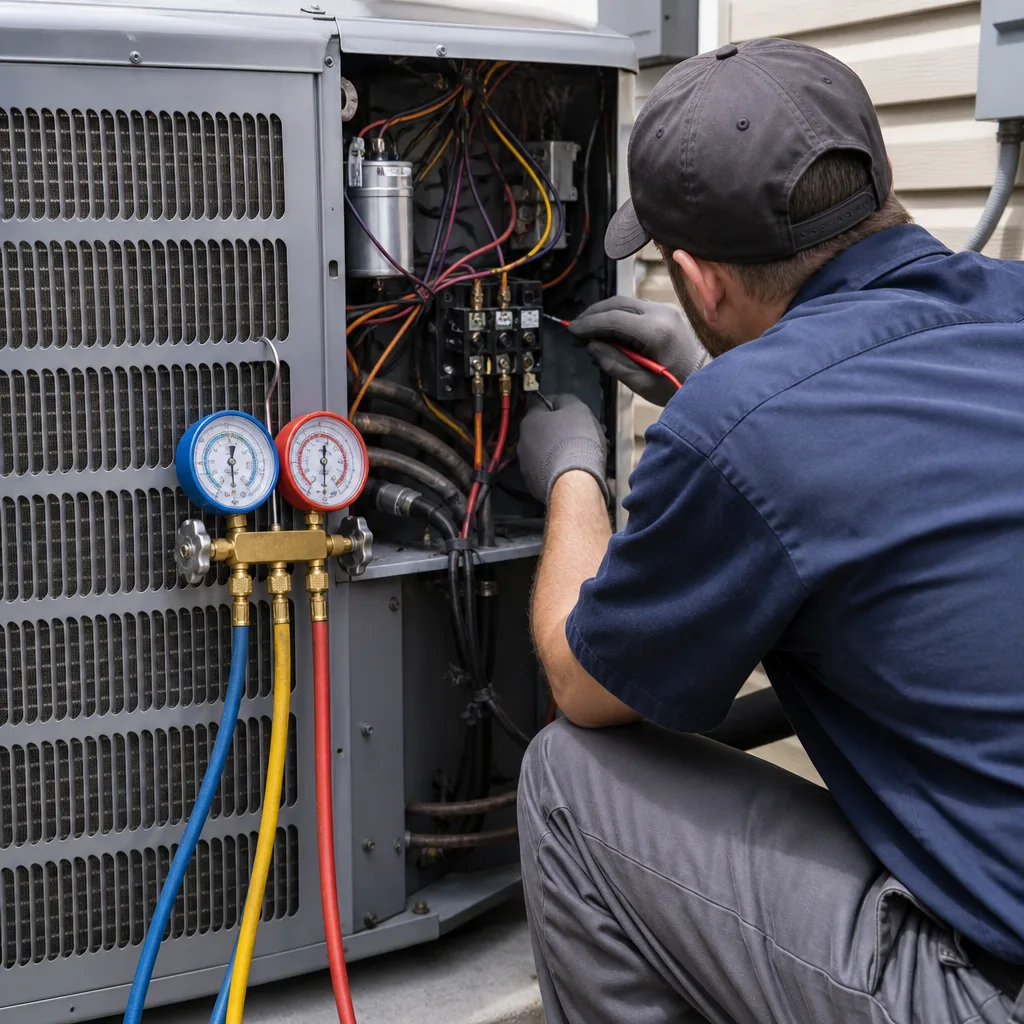 After
After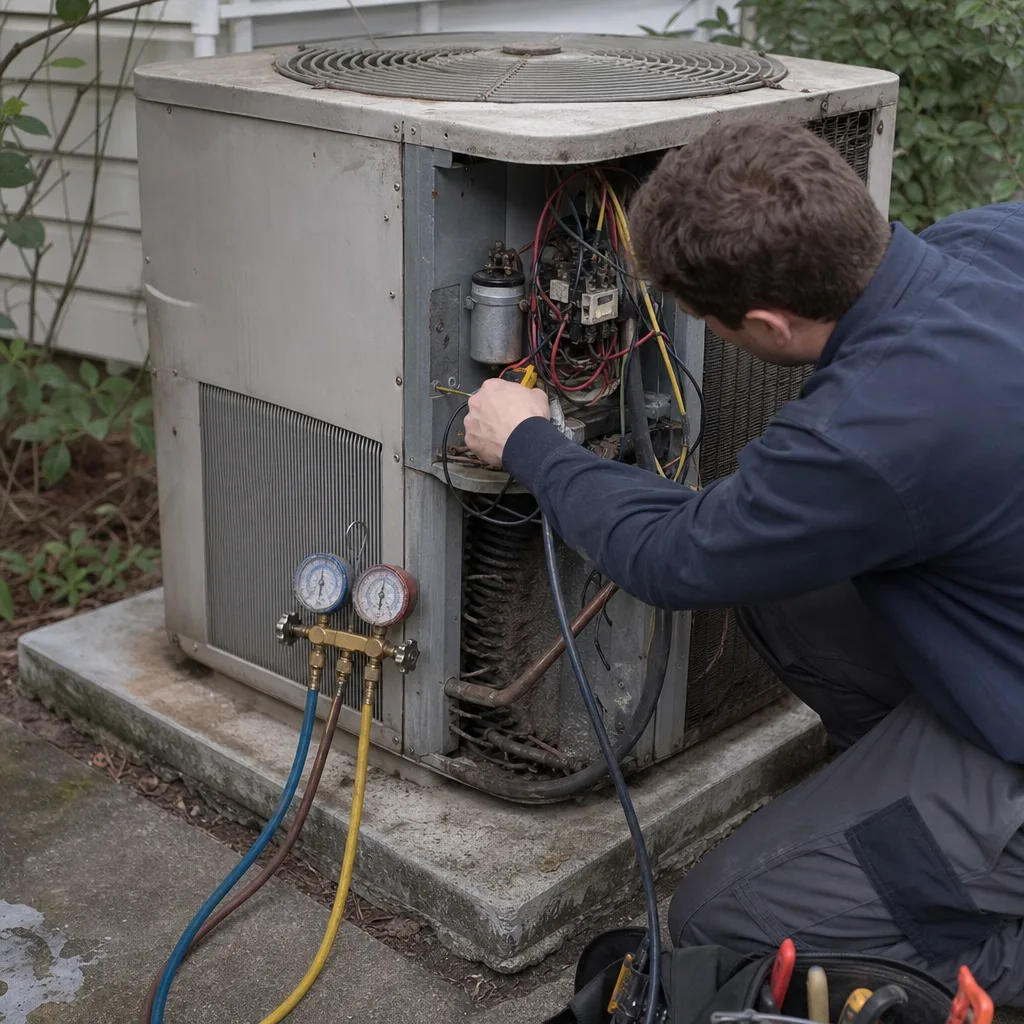 Before
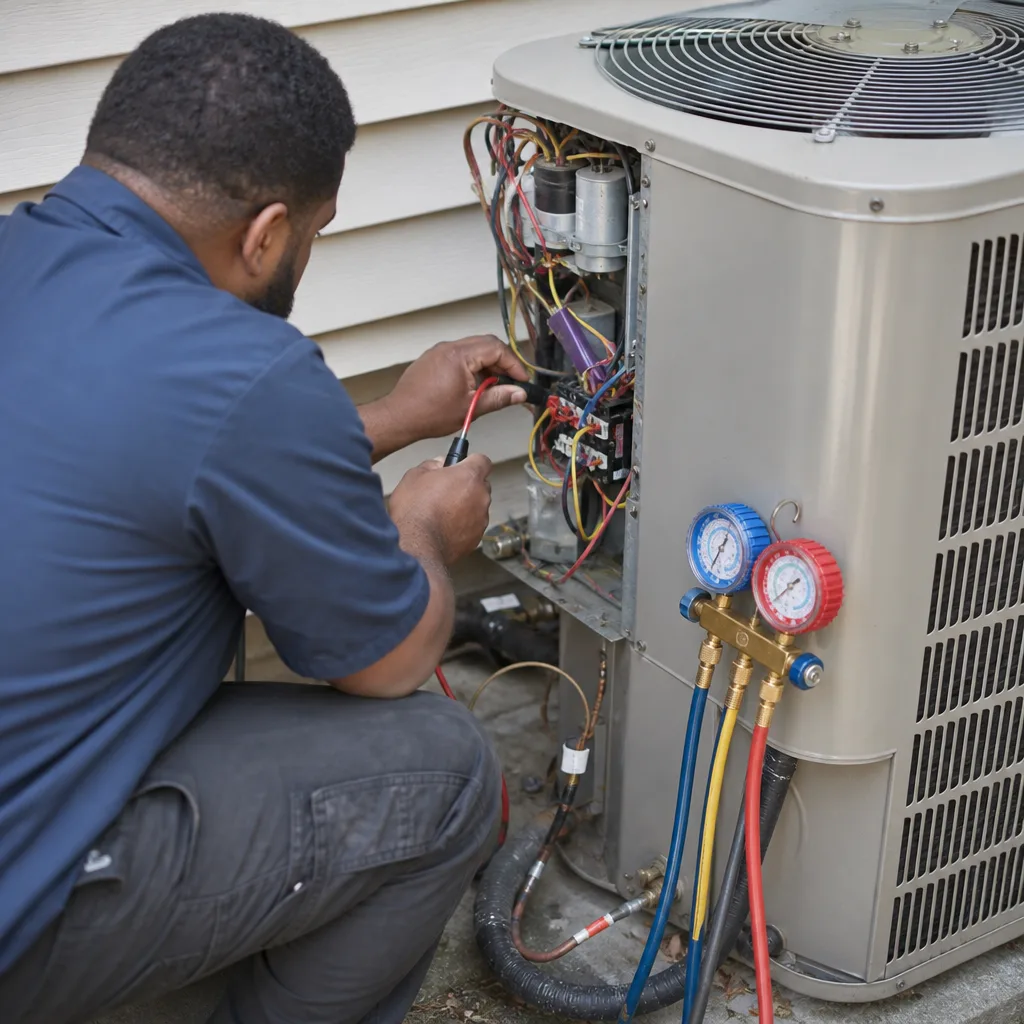 After
After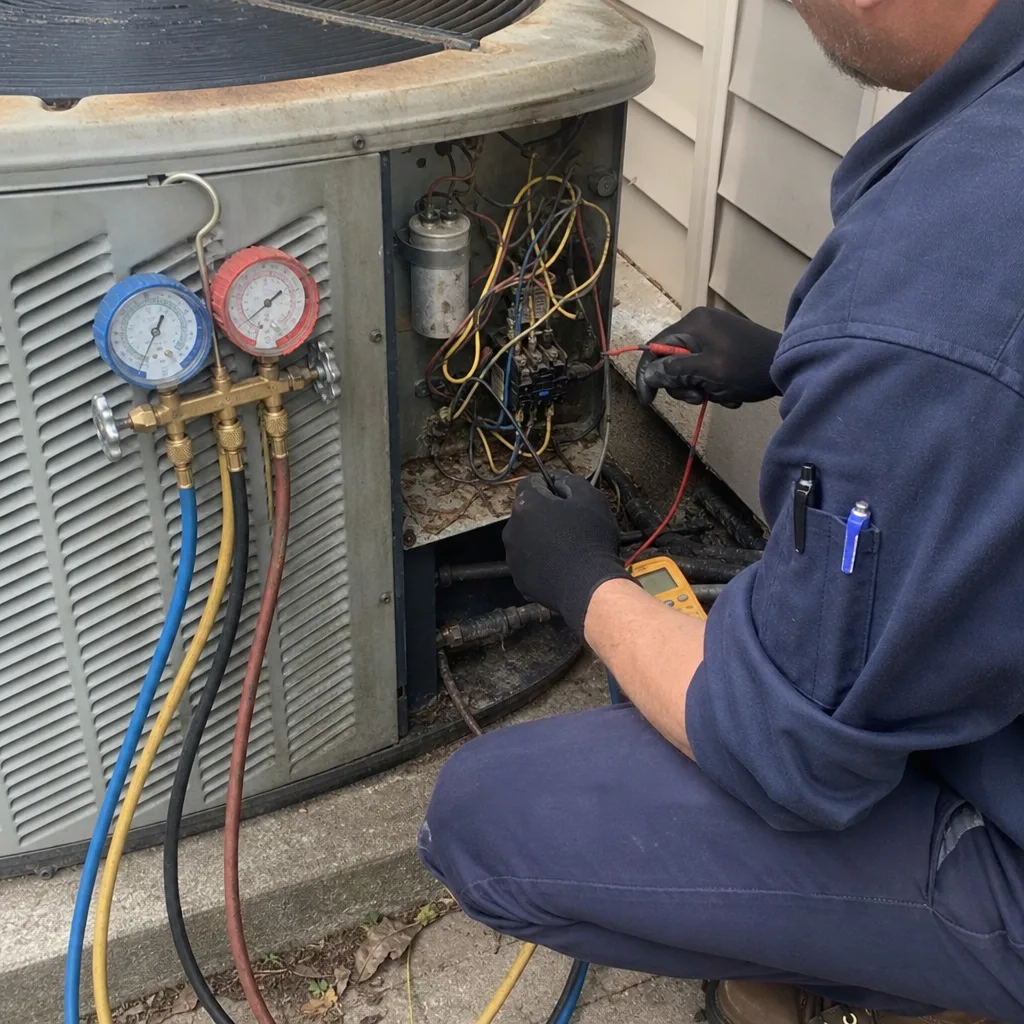 Before
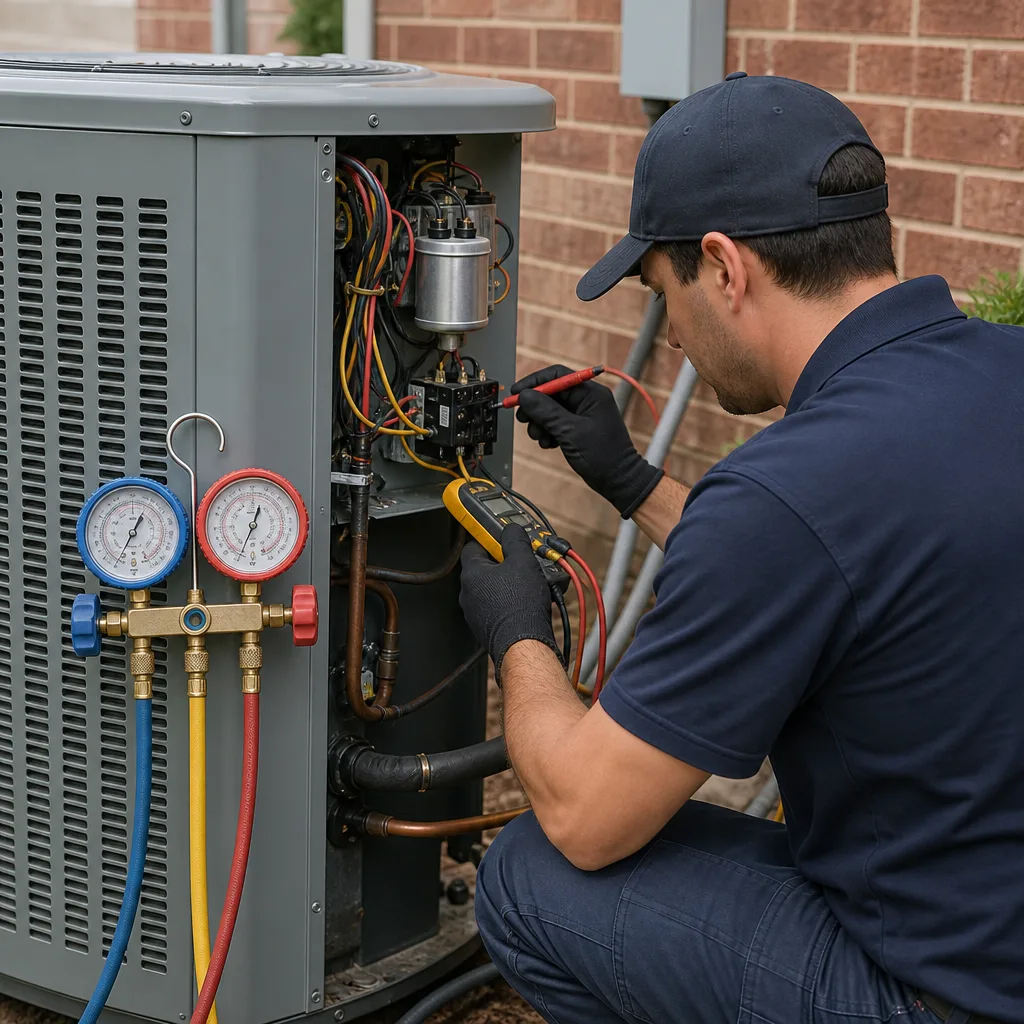 After
AfterWhat Trane AC Repair Costs in Atlanta
Here’s the honest spread for Trane work in Atlanta, parts and labor included:
- Capacitor replacement: $150 – $300. The most common repair we do on Trane XR and XL units.
- Condensate drain clearance: $150 – $250. Quick fix, but it gets expensive if you ignore it and the pan overflows.
- Refrigerant recharge (with leak check): $250 – $500. That means refilling the fluid that moves heat out of your home. We always find and fix the leak first because a recharge without a repair is just renting the problem.
- Fan motor replacement: $300 – $550. Common on older Trane condensers that have run through a decade of Atlanta summers.
- Compressor repair or replacement: $450 – $650 and up. This is the big one. We’ll tell you straight if the compressor is done and a new system makes more sense.
What moves the price: the age of the unit, whether the part is under warranty, and whether we’re dealing with a basic single-stage XR or a communicating XL with pricier electronics. You’ll never get a price over the phone without a diagnosis, because we don’t guess. Call (762) 465-4570 for a free estimate and we’ll give you real numbers based on what’s actually wrong.
Why Atlanta Homeowners Call Brandt HVAC Co Atlanta for Trane Work
Most HVAC companies in Atlanta will tell you they fix Tranes. Few have a tech crew that can rattle off the difference between an XR14 and an XL18i without looking it up. Devin Marlowe learned the trade at Los Angeles Trade-Technical College and spent decades turning that training into thousands of real repair calls, including plenty of Trane units in Buckhead’s older construction, where cramped mechanical closets and aging ductwork make every diagnosis harder than it should be.
We also know that Trane isn’t the only system in your house. Some Atlanta homes have a Trane condenser paired with a Carrier air handler, or a Lennox thermostat controlling a Trane compressor. We service Carrier, Lennox, Goodman, Rheem, York, Daikin, Bryant, and American Standard alongside Trane every week, so mixed-system jobs don’t throw us. And every repair we do, on any brand, carries the same 365-day written guarantee. Know what’s wrong, know what it costs, know it’s covered, that’s the whole deal.
FAQs
It depends on the model, the install date, and whether the warranty was registered. Trane’s standard compressor warranty runs 10 years on most XR and XL units if registered within 60 days of installation, but parts like capacitors and contactors usually fall under a 1-year or 5-year parts window. We check your serial number during diagnosis and tell you what’s covered before quoting the repair. Call (762) 465-4570 and have your model and serial number handy, and we’ll walk you through it.
Most Trane repairs are completed the same day we arrive. Common fixes like capacitors, contactors, condensate lines, and fan motors are handled from our truck stock. Bigger jobs like a compressor replacement or a coil swap take a day or two, and we’ll give you a set schedule with a written price before any work starts.
As a rule: if the repair costs less than a third of what a new system would run, and the unit is under 12 years old, repair it. If the compressor is dead on a 15-year-old XR, or the coil is leaking on an Ameristar that’s already had two other failures this year, replacement starts making more sense. We’ll give you numbers for both and let you decide. We don’t push replacements, because we make our living on honest repair work either way.
We use OEM Trane parts whenever your warranty requires it or when the price difference is small enough that it’s a no-brainer. When OEM parts are backordered or overpriced, we use quality aftermarket equivalents that meet or exceed the original spec, and we tell you exactly which one we’re installing and why. The written price shows the part, the source, and the labor.
In Atlanta, the most common cause is a failed capacitor that spins the fan too slowly, followed closely by a clogged condensate line tripping the float switch, and a low refrigerant charge from a slow leak. We diagnose all three on every no-cool call before recommending a repair. Your exact issue gets confirmed by test readings, not guesswork.
Written by Devin Marlowe, Owner, Brandt HVAC Co Atlanta at Brandt HVAC Co Atlanta, serving Atlanta and nearby areas.