
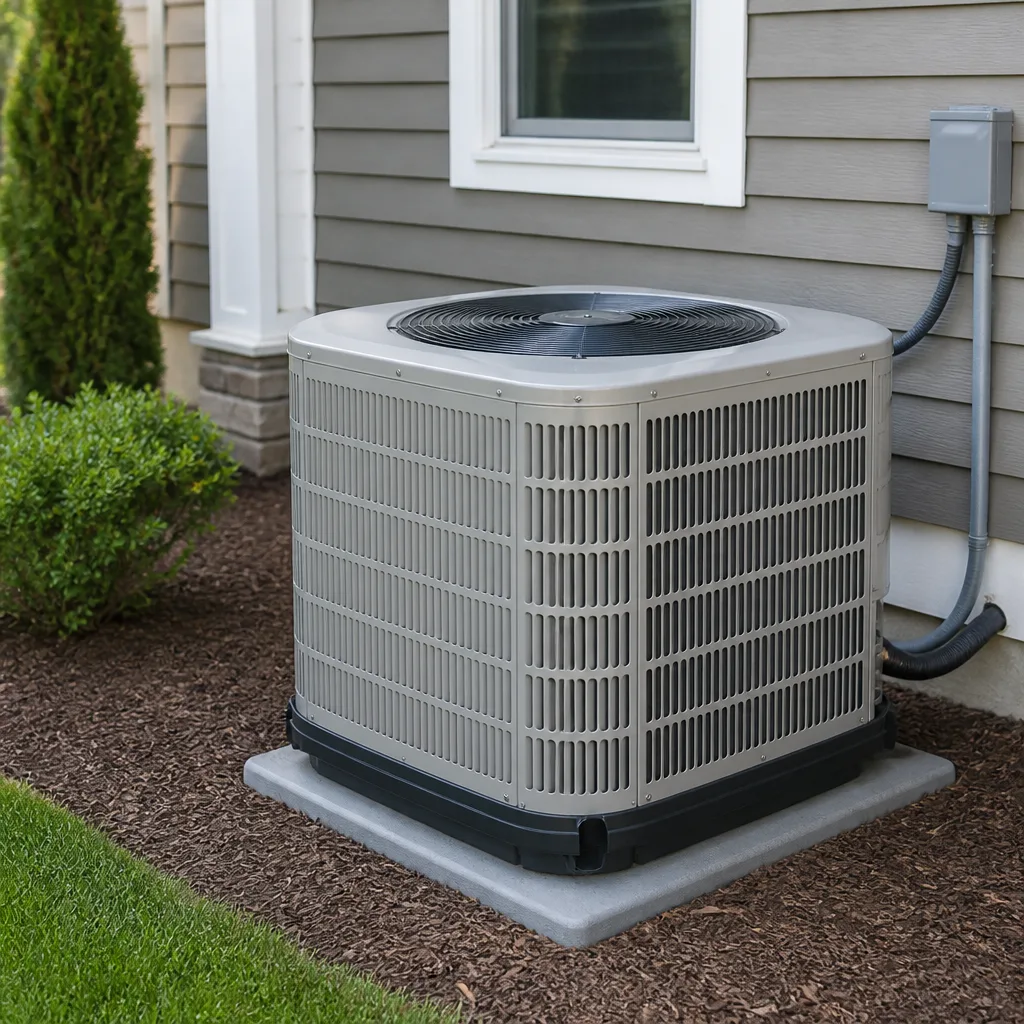
 AC repair
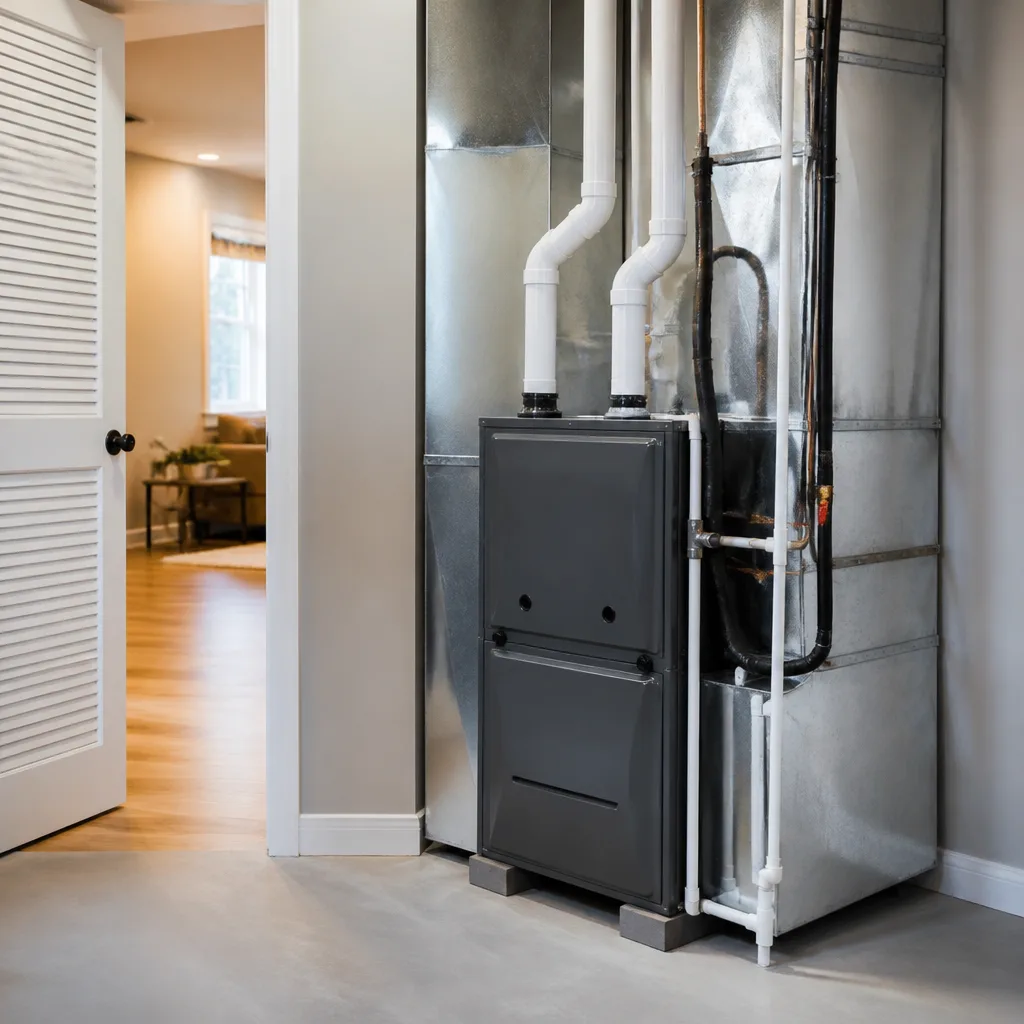 Furnace & heating
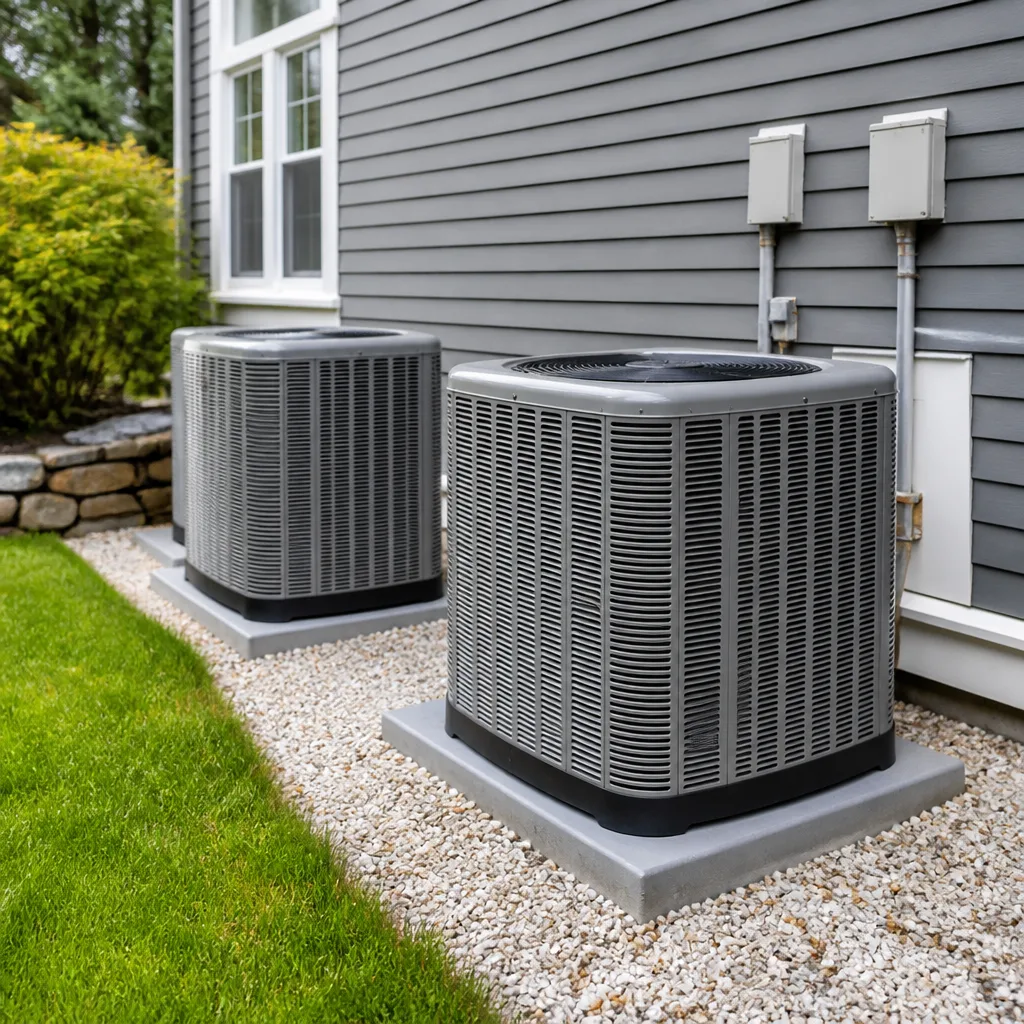 Heat pumps
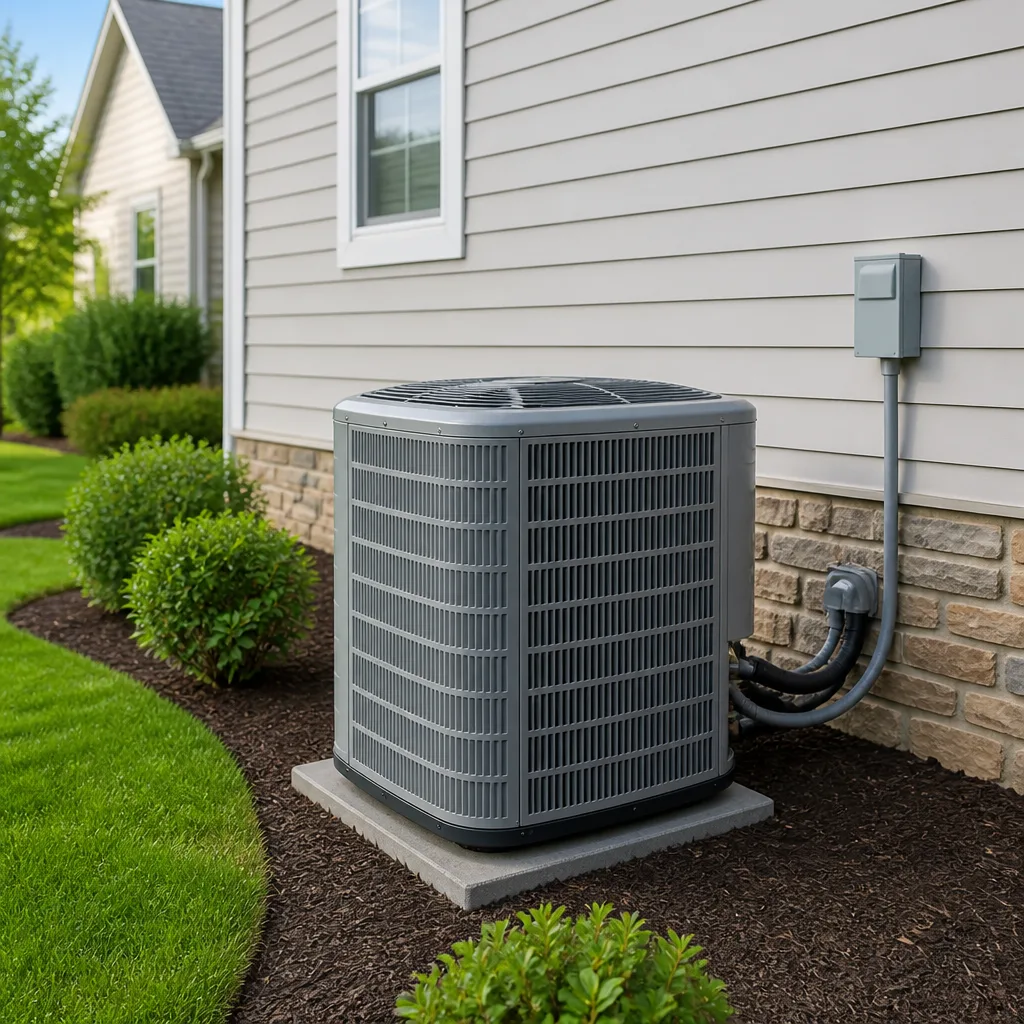 Carrier
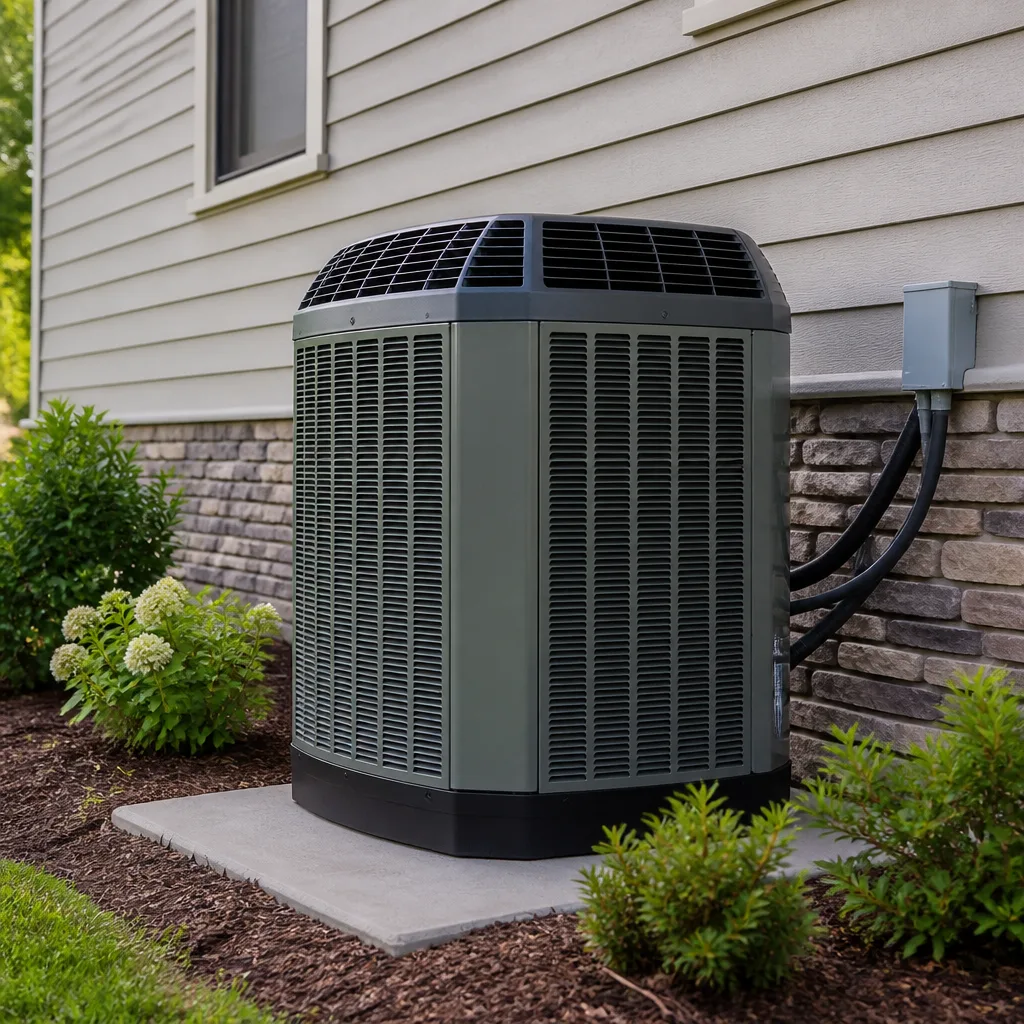 Trane
Trane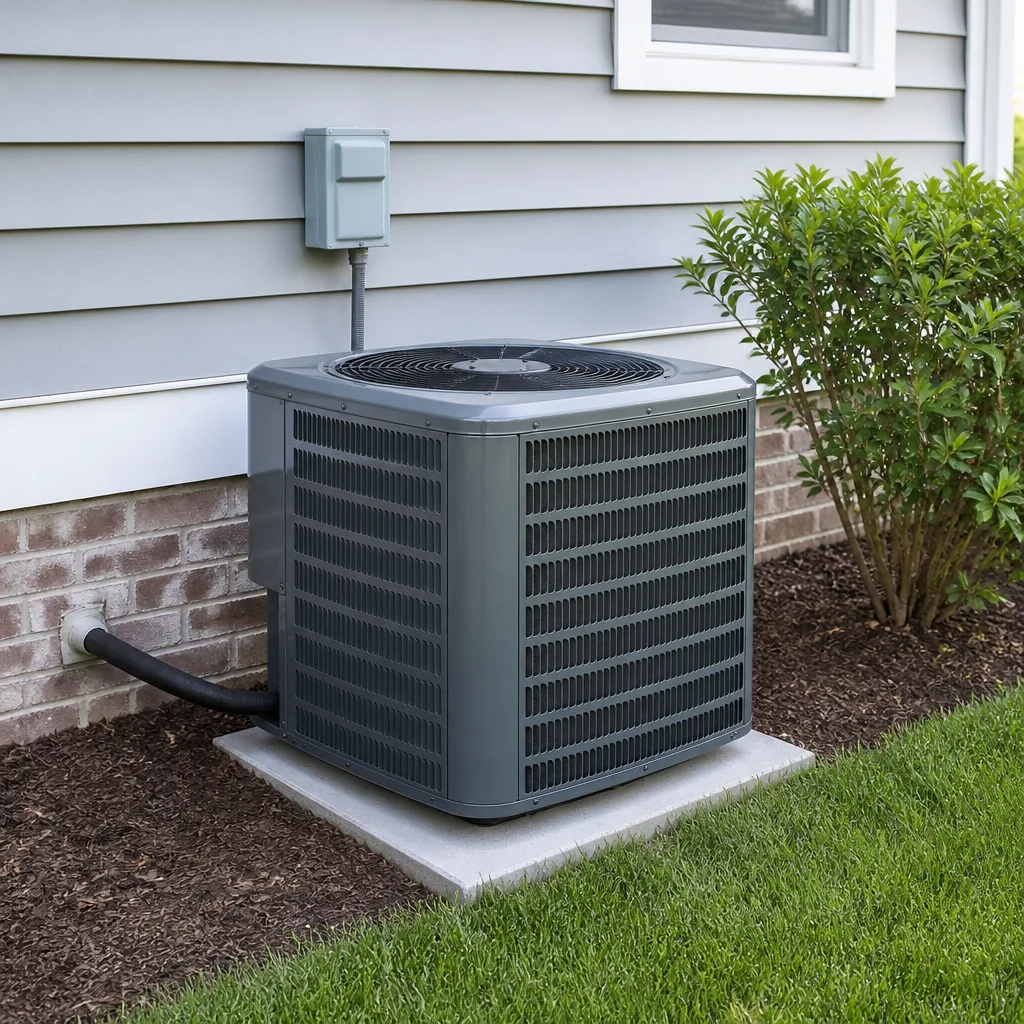 Goodman
Seasonal tune-up and full diagnostic on your Carrier, Trane, or Goodman system - readings shown to you before any repair is proposed
Diagnosis first, numbers second - you approve the repair price before a single part goes in.
Get your free estimateLennox Capacitor Replacement: The Atlanta Owner’s Guide
A Lennox capacitor replacement in Atlanta typically runs $180 – $340 installed, parts and labor included, and most calls are completed the same day we diagnose the failure. We keep common Lennox-spec capacitors on our trucks because this part fails more often in Georgia than anywhere else we’ve worked: the heat and humidity push run capacitors hard from May through September. Most homeowners discover the failure as a buzz from the condenser, a system that won’t start, or a fan that hums without turning.
Before we get into the details, let’s be straight about one thing: this is an electrical component. A capacitor holds a charge even after the power is off, and touching the terminals the wrong way can hurt you. If you’re reading this while poking around inside the condenser cabinet, stop. We’ll cover what you can safely check and what you should leave to someone with a meter and the right training.
Brandt HVAC Co Atlanta is an independent service provider. We’re not affiliated with Lennox, but we work on their equipment daily and stock the capacitors that match their model lines.
Which Lennox Models This Applies To
Lennox uses round and oval run capacitors across nearly every residential condenser and air handler they’ve built in the last 25 years. The common ones we replace in Atlanta homes include the XC and XP series (XC13, XC14, XC15, XP13, XP14), the Elite and Signature lines, and the Merit series (ML14, ML17, 13ACX, 14ACX). If your outdoor unit has a Lennox badge and was installed before 2020, the odds are high it has a dual-run capacitor that handles both the compressor and the condenser fan.
Here’s the compatibility gotcha most people miss: Lennox doesn’t use a single capacitor spec across those lines. A Merit 13ACX-036 might take a 35/5 µF (microfarad) dual capacitor, while an XC21 of the same tonnage might call for a 45/5 or 50/5. The microfarad rating is stamped on the side of the old capacitor, along with the voltage rating (usually 370 or 440 VAC). You can read it yourself, but matching it exactly matters. Putting a 35 µF capacitor where a 45 µF belongs is a common cause of compressor failure six months later.
On OEM versus aftermarket: Lennox-branded capacitors are made by the same manufacturers that supply the aftermarket (AmRad, Titan, Genteq). The aftermarket Titan HD and AmRad Turbo200 capacitors are excellent parts, often with better heat tolerance ratings than the OEM spec. We tend to install AmRad or Titan parts on Lennox equipment because they hold up to Atlanta summers well, and they carry a 5-year manufacturer warranty versus the typical 1-year on bare OEM parts. The honest answer: either works, but the premium aftermarket parts cost about $20 – $40 more and have outlasted OEM equivalents in our experience.
We also stock capacitors for Carrier and Trane equipment, so if you have mixed brands in the house, one call covers it.
Styles & brands we work with
Signs Your Lennox Capacitor Replacement Is Failing
- The outdoor unit hums but the fan won’t spin. That hum is the compressor trying and failing to start. The capacitor has lost enough microfarads that it can’t provide the starting torque. If you hear this and let it run, the compressor overheats and locks out, which is a much more expensive repair.
- The air conditioner starts, then shuts off after a few minutes. Compressor thermal overload protection is kicking in. A weak capacitor makes the compressor run hot because it’s drawing more amperage than it should. The system short-cycles and the house never fully cools.
- Your energy bill jumped without a matching change in usage. A failing run capacitor makes the compressor and fan motor work inefficiently, and inefficiency shows up as amperage draw. We’ve seen Atlanta homeowners with 20 – 30% bill increases traced directly to a dying capacitor.
- The capacitor case is bulging, split, or leaking oil. Atlanta’s heat causes the dielectric fluid inside the capacitor to expand. Over time, the pressure deforms the aluminum case. A bulged capacitor is a failed capacitor, even if the system still limps along.
- The AC runs but the condenser fan has slowed down noticeably. Fan motors have their own microfarad rating, usually separate from the compressor side of a dual capacitor. When the fan side degrades, the fan spins slower, condensing pressure rises, and the system loses cooling capacity. You’ll notice the air coming from the top of the condenser feels hotter than it should.
Replacement Cost & What’s Included
In Atlanta, a Lennox capacitor replacement runs $180 – $340 installed. That’s parts and labor together, with the work completed in a single visit. The range exists because capacitor specs vary: a single-run fan capacitor costs less than a premium dual-run capacitor, and a system that needs both the compressor and fan sides addressed sits at the higher end.
Here’s what you get for that price, on every single capacitor job we do in Atlanta:
- A written price before any work starts. You see the number, you agree to it, then tools come out. No surprises.
- The correct microfarad-rated capacitor matched to your specific Lennox model and serial number, not a “close enough” generic.
- A 365-day written guarantee on the repair. If the capacitor fails within a year, we return and replace it at no charge. That’s the 365-Day Done Right Promise, and it’s printed on the invoice.
- A technician whose name and photo are sent to you before arrival, who shows a photo ID badge at the door. That’s the Threshold Verified standard, and it matters when you’re letting someone into your home or yard.
Compared to a new compressor ($2,000+) or a full AC replacement ($3,500 – $7,500 in the Atlanta market), a capacitor swap is the cheapest repair on the condenser, and the one we do most often.
See the difference
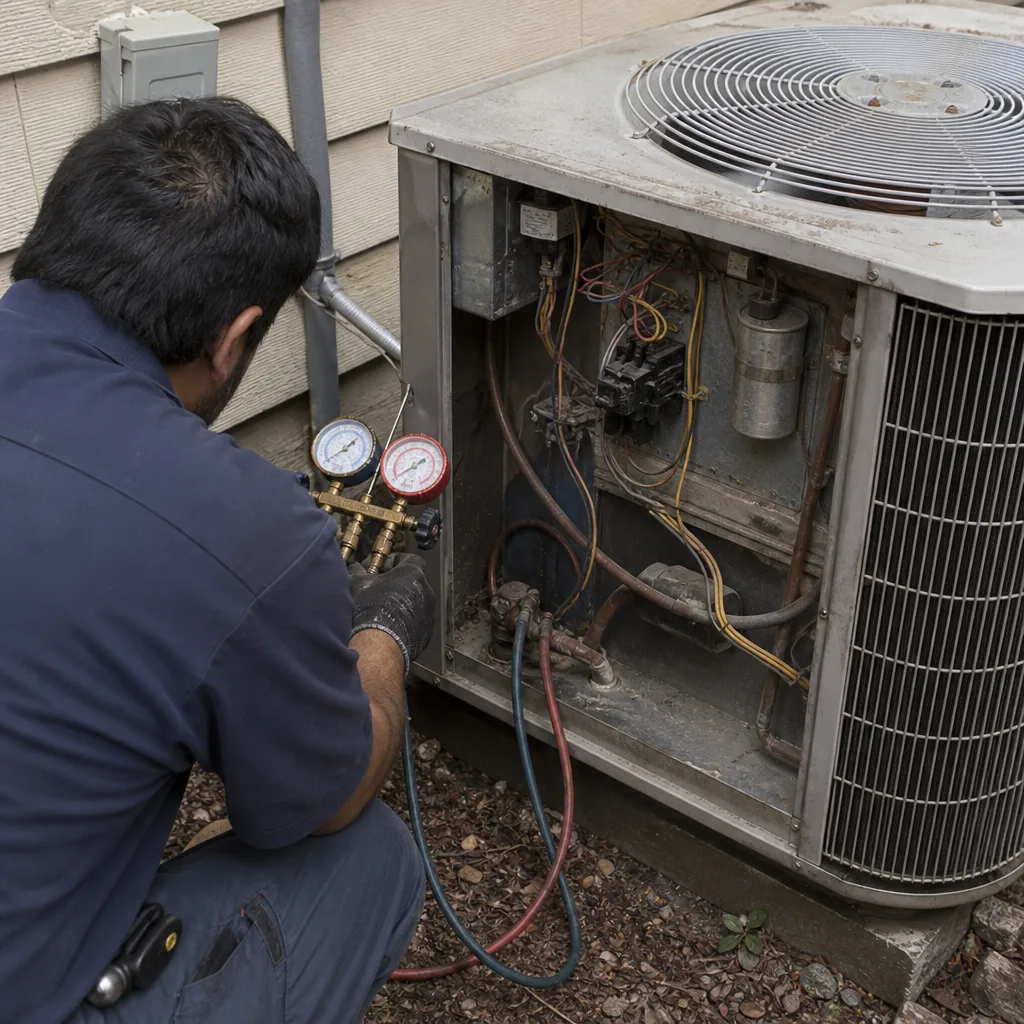 Before
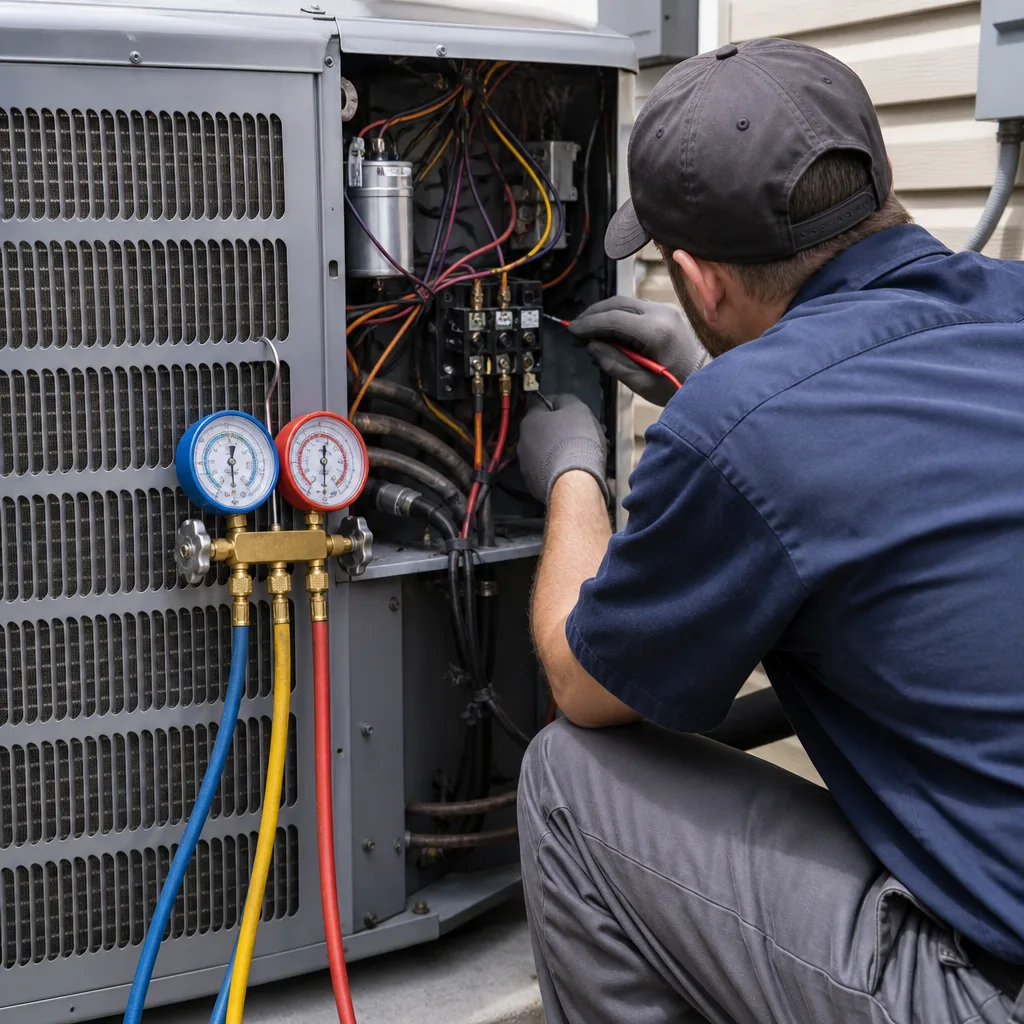 After
After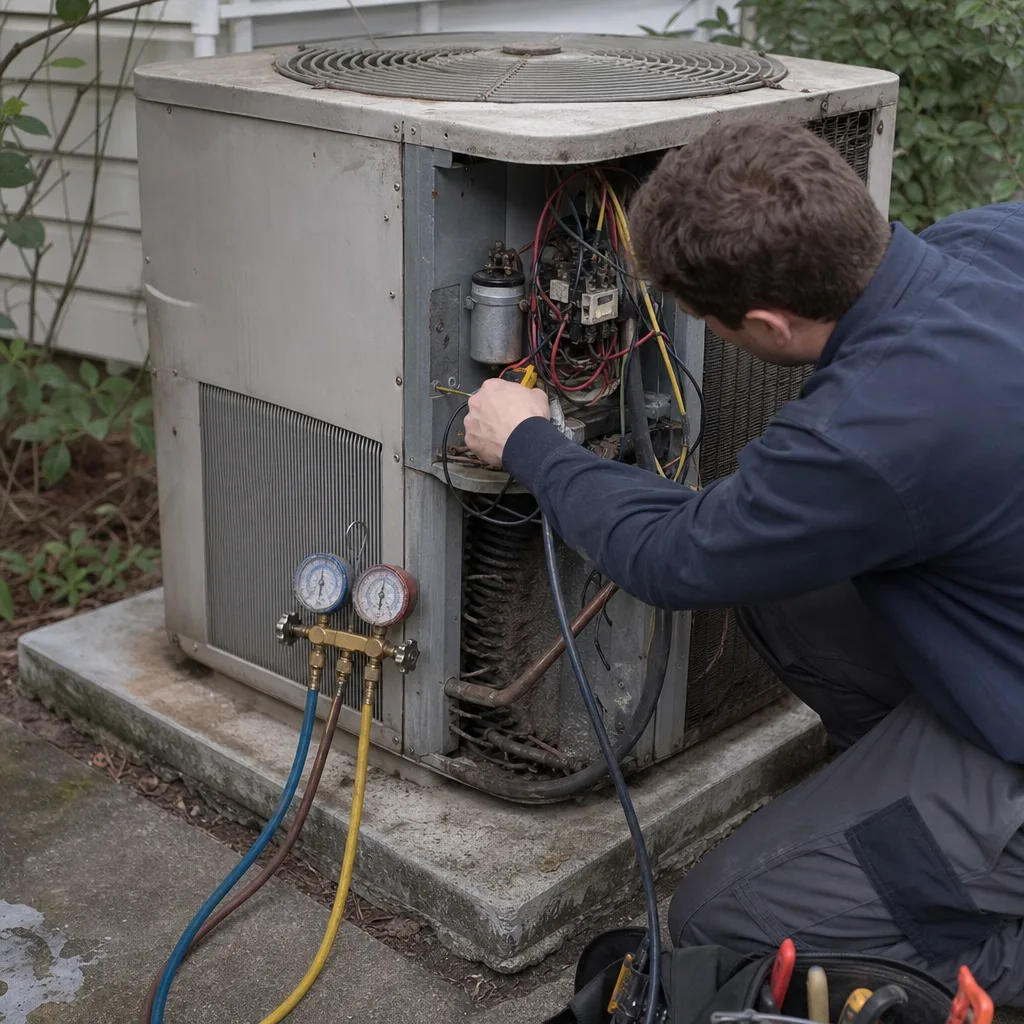 Before
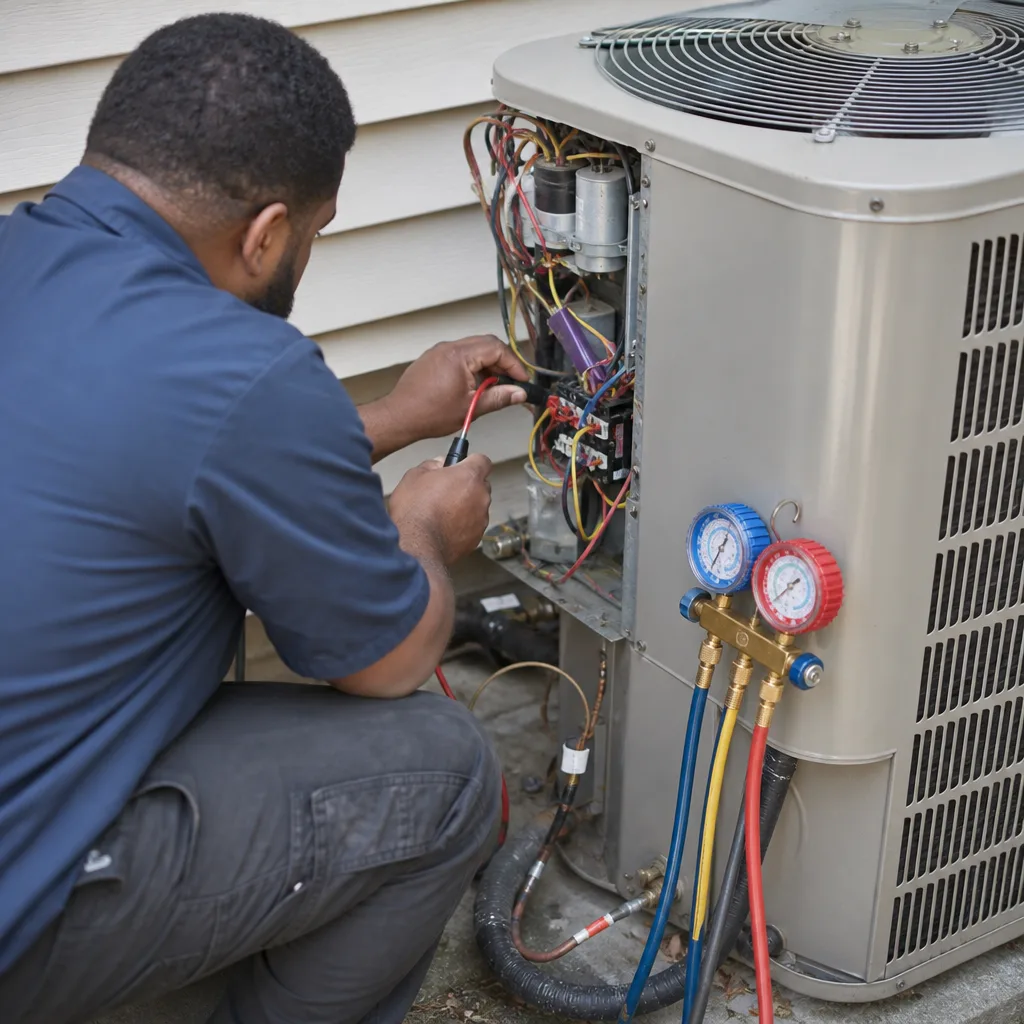 After
After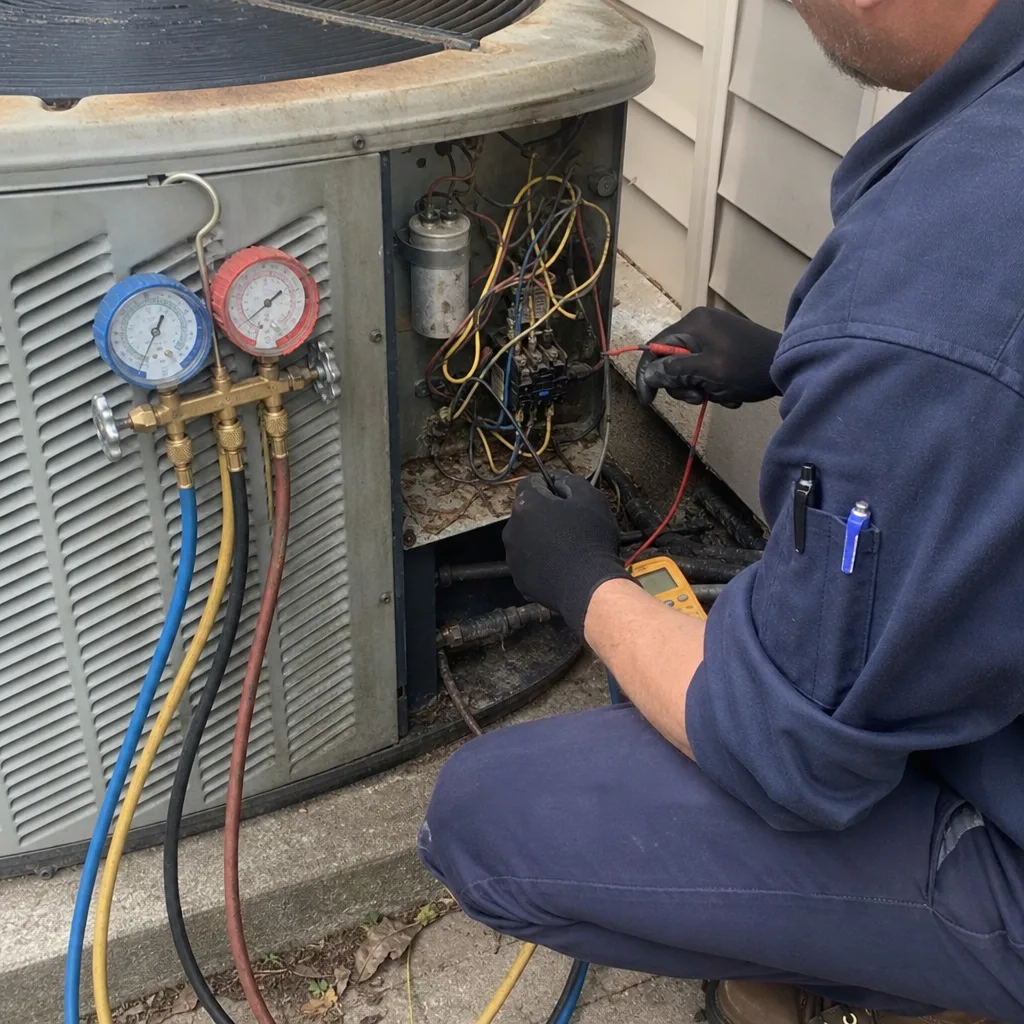 Before
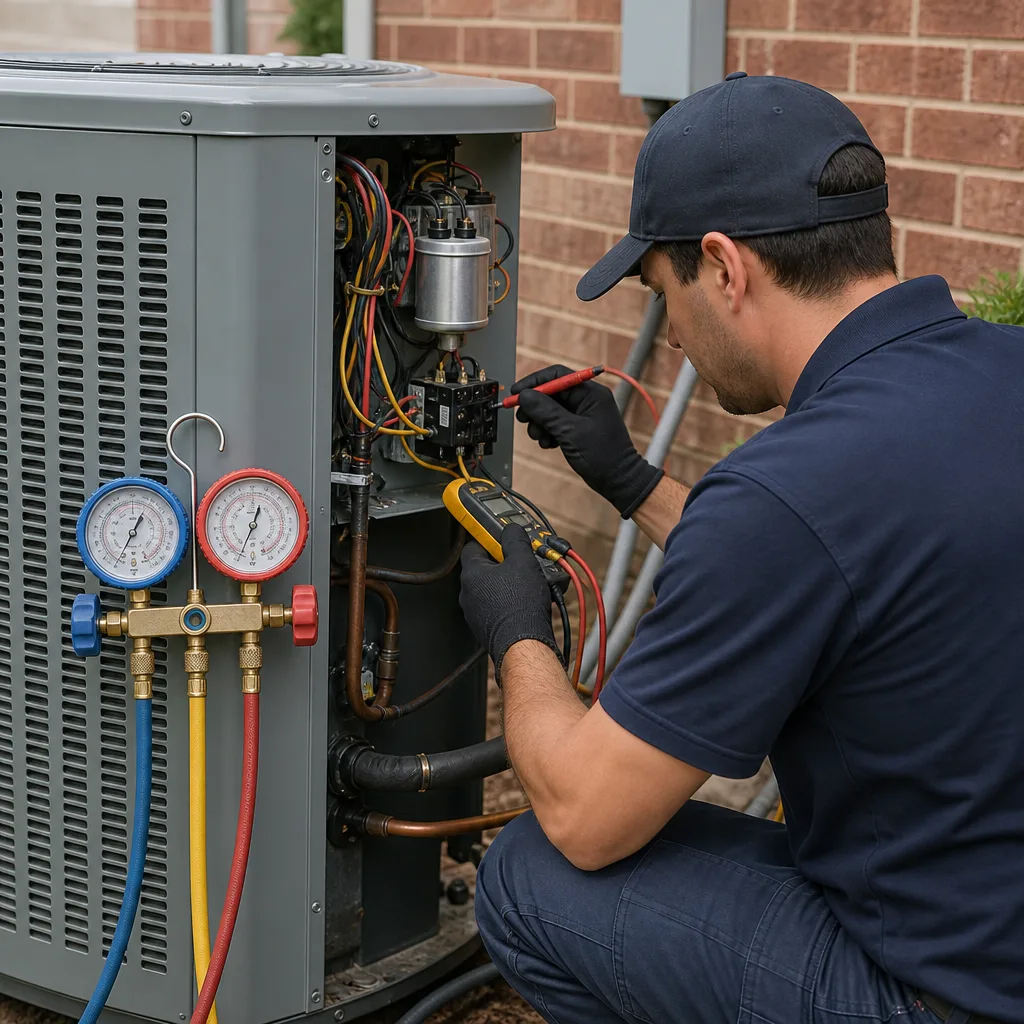 After
AfterDIY or Call Us?
Here’s the honest split. You can safely check two things from the outside: whether the condenser fan spins freely by hand (power off at the breaker), and whether the capacitor case is visibly bulged or leaking (with the cabinet cover still in place, just looking through the grille). Those checks tell you what’s likely wrong and keep your hands away from energized parts.
What you shouldn’t do is open the condenser cabinet, disconnect the capacitor, or try to install a new one yourself. A capacitor stores several hundred volts of electrical charge even after the breaker is off. Discharging it properly requires a resistor and a meter, and getting the wiring wrong on a dual-run capacitor (common terminal, fan terminal, compressor terminal) causes immediate damage to the fan motor or compressor. That’s a $200 repair turned into a $2,000 one because one wire landed in the wrong spot.
Devin Marlowe says it plain: “Know what’s wrong, know what it costs, know it’s covered – that’s the whole deal.” We’d rather you call us at (762) 465-4570, get a straight answer, and have this done right in an hour than watch someone turn a capacitor into a compressor replacement.
FAQs
A Lennox capacitor in the Atlanta climate typically lasts 5 to 7 years. The combination of 90+ degree days, high humidity, and the long cooling season means these parts run more hours per year than they would in a milder climate, and heat is the primary thing that degrades the dielectric material inside the capacitor. If your capacitor was replaced more than 6 years ago and you’re noticing hard starts or a slower fan, it’s probably nearing the end of its useful life. We check capacitor readings on every tune-up (which runs $80 – $200) so you know when it’s getting weak, not after it fails. Call (762) 465-4570 for an exact quote, estimates are free.
No, a failed or failing capacitor cannot be repaired. The internal dielectric material degrades chemically over time, and once the microfarad rating drops more than about 10% or the case is bulging, the part is done. There is no rebuild process for residential capacitors. The good news is replacement is inexpensive relative to other condenser repairs. If you need a capacitor swapped in Atlanta, call (762) 465-4570 and we’ll have you running the same day.
A Lennox capacitor replacement takes 45 to 90 minutes from the time the technician arrives, including the diagnostic confirmation, removal, installation, and testing of the new capacitor under load. Most Atlanta customers are back to cooling within an hour. We carry the most common Lennox capacitor specs on the truck, so there’s usually no second trip or waiting on parts. If your exact spec is unusual, we’ll tell you during the diagnostic and schedule the return visit the moment the part lands.
Yes. Our trucks carry the standard Lennox-compatible specifications, including 35/5, 40/5, 45/5, 50/5, and 55/5 µF dual-run capacitors in both 370 and 440 volt ratings, along with common single-run capacitors for fan motors. That covers the vast majority of Lennox systems in Atlanta in a single visit. If your condenser takes a less common spec, we’ll confirm pricing before ordering and you’ll get a firm install date.
Get a Straight Answer and a Fixed Price
If your Lennox is humming, short-cycling, or just not cooling like it used to, call us at (762) 465-4570. A live person answers, 24/7, no voicemail queues. We’ll schedule a visit, send you the technician’s name and photo before arrival, and hand you a written price before any work begins. That’s Brandt HVAC Co Atlanta: certain price, certain identity, certain outcome.
Written by Devin Marlowe, Owner, Brandt HVAC Co Atlanta at Brandt HVAC Co Atlanta, serving Atlanta and nearby areas.