
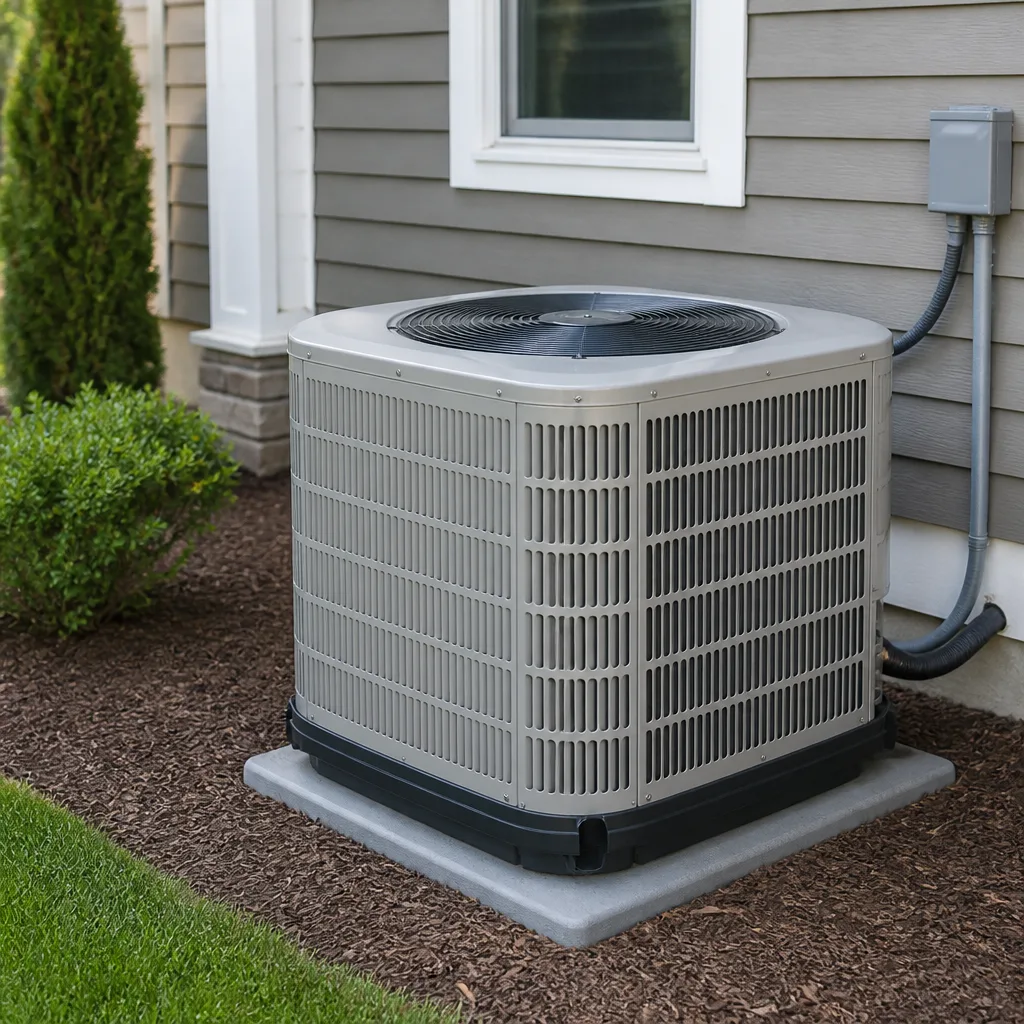
 AC repair
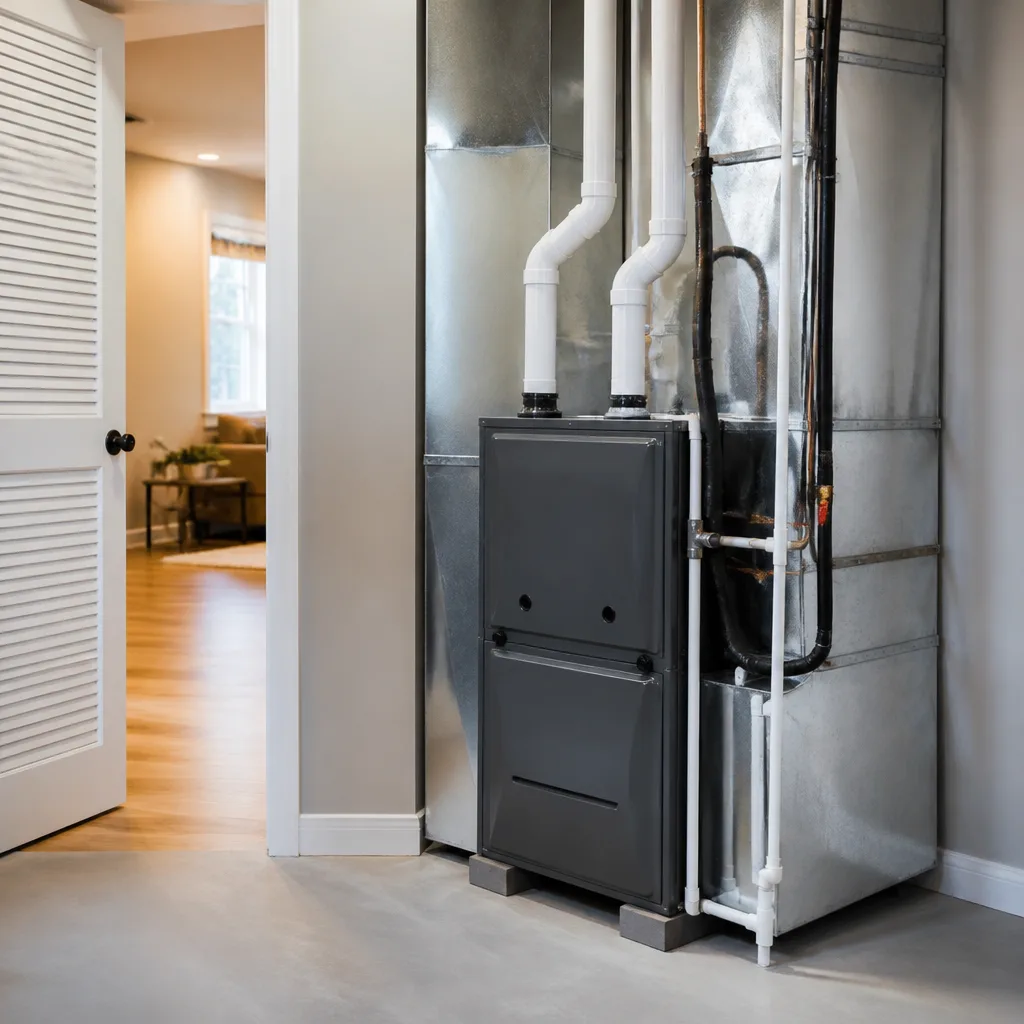 Furnace & heating
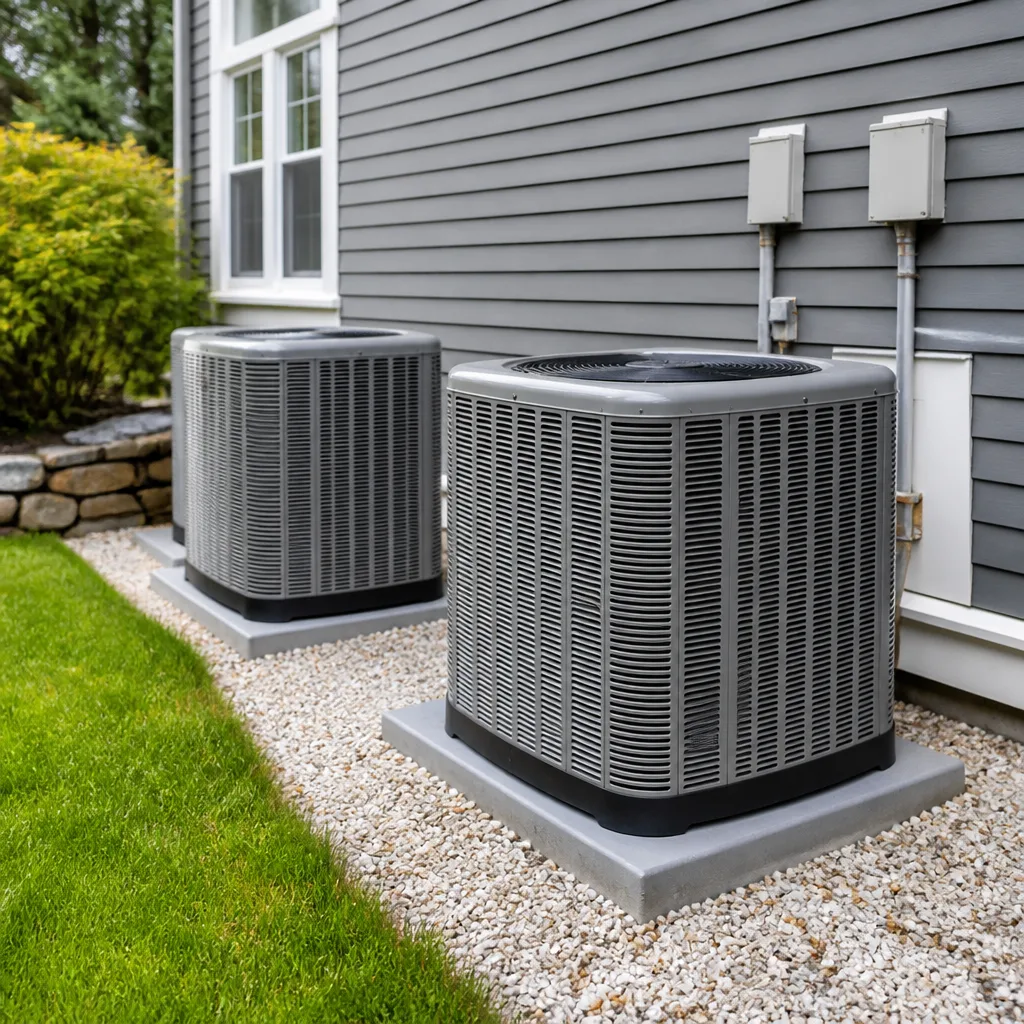 Heat pumps
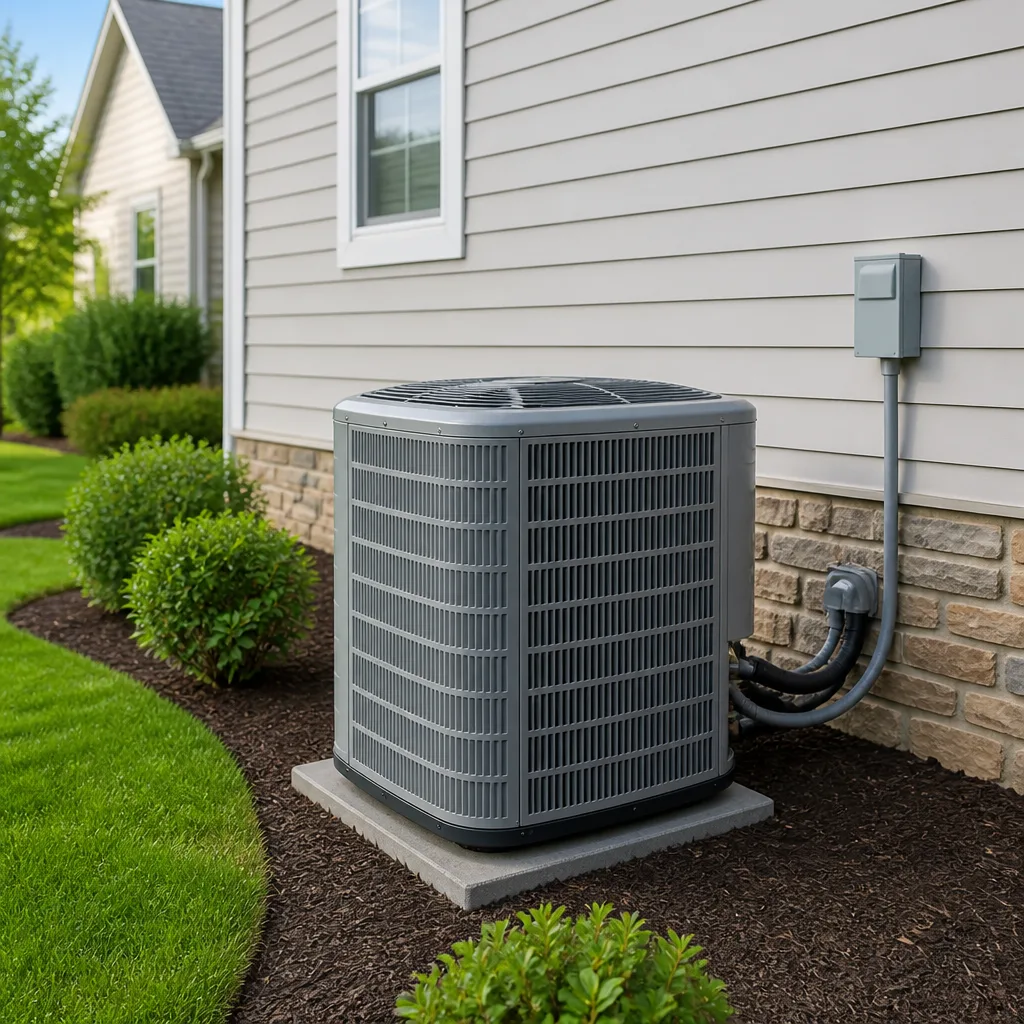 Carrier
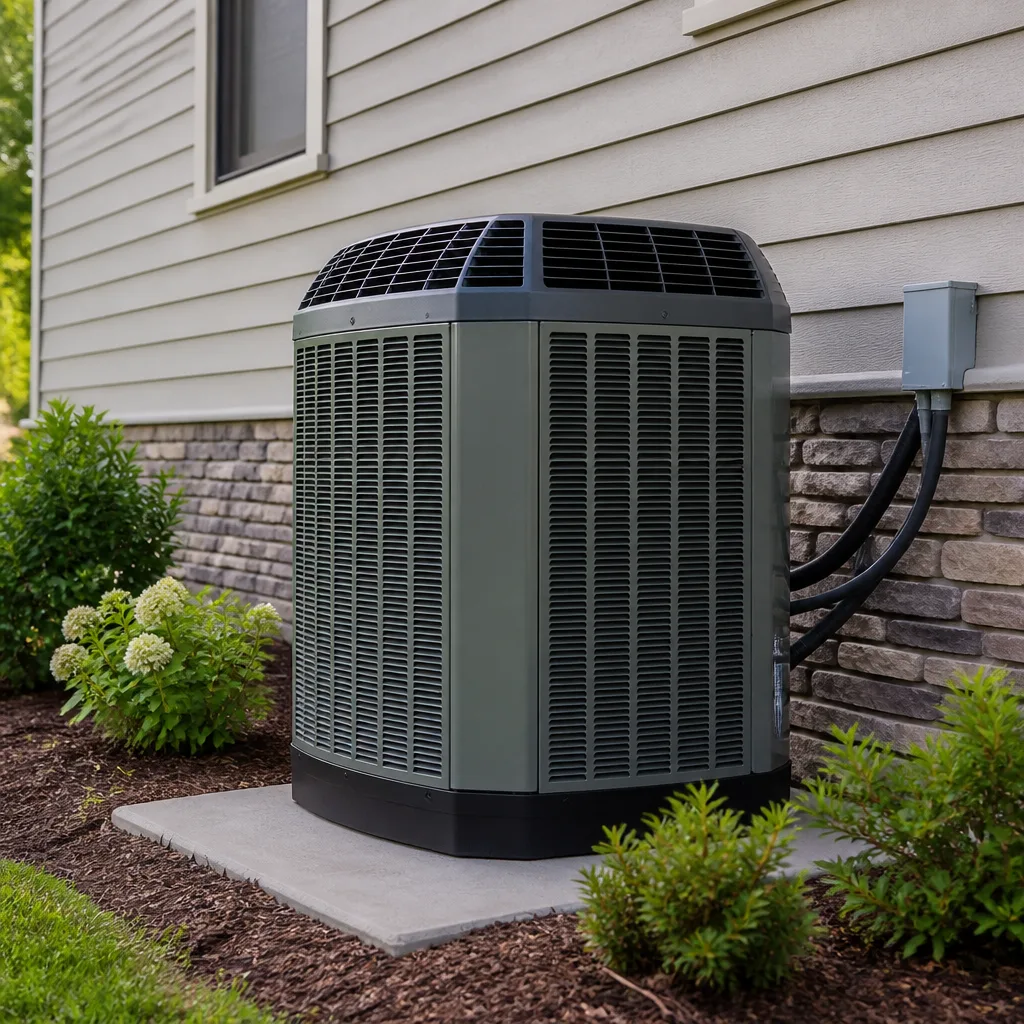 Trane
Trane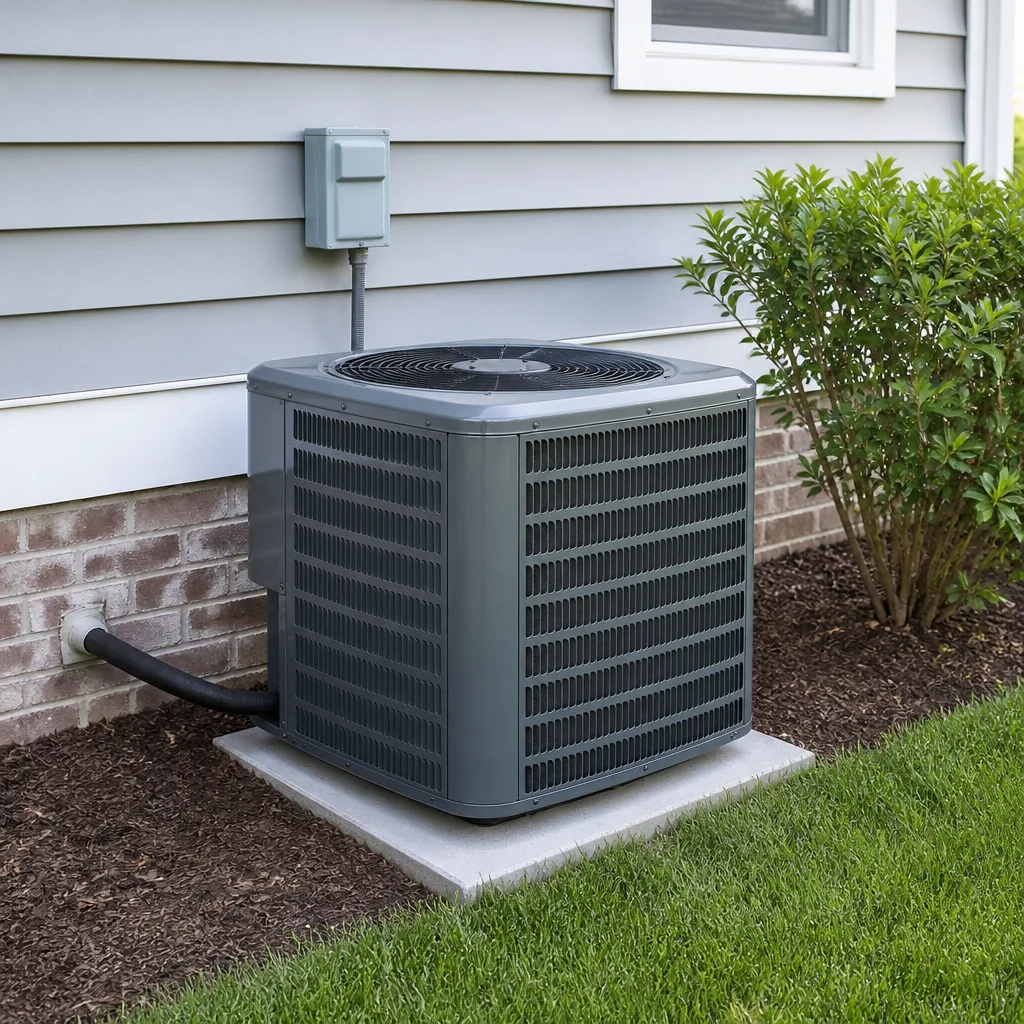 Goodman
Seasonal tune-up and full diagnostic on your Carrier, Trane, or Goodman system - readings shown to you before any repair is proposed
Diagnosis first, numbers second - you approve the repair price before a single part goes in.
Get your free estimateAmerican Standard Capacitor Replacement: The Atlanta Owner’s Guide
We stock American Standard-compatible capacitors on our trucks and install them same-day across Atlanta, typically for $150 – $320 parts and labor included. The exact price depends on your unit’s capacitor spec, which we confirm before quoting, and every American Standard capacitor replacement leaves here with a written 365-day guarantee. Most Atlanta homeowners discover the problem the same way: the outside unit hums but won’t start, or the fan spins slow and the house won’t cool. That hum is the compressor trying to start without the kick it needs, and in Georgia heat, a dead capacitor usually announces itself on the hottest afternoon of the year.
One thing to know up front: Brandt HVAC Co Atlanta is an independent HVAC service provider. We are not affiliated with American Standard, and we don’t pretend to be. We do, however, stock capacitors that meet or exceed the original specifications for American Standard residential units, and we know which ones fail first in Atlanta’s climate.
Which American Standard Models This Applies To
American Standard uses two capacitor configurations across their residential lineup. Older Silver, Allegiance, and Heritage series condensers from the 1990s and early 2000s typically run a dual-run capacitor, one cylinder that handles both the compressor and the condenser fan. Newer Gold and Platinum series units, including many of the Silver SI and Ameristar-badged models, use separate capacitors for the compressor and fan motor. Here’s the compatibility gotcha that matters: if you have a dual-run unit and someone installs two separate capacitors, the compressor and fan will fight each other on startup and you’ll be back to square one within a season. The part label on your existing capacitor tells us everything. It lists the microfarad rating (usually 35/5, 40/5, 45/5, or 50/5 for dual-run units), the voltage tolerance (370V or 440V), and the shape, round or oval. We match all three. On the OEM versus aftermarket question, American Standard factory capacitors are solid parts. But so are the American-made aftermarket equivalents we stock from AmRad and Titan. The honest difference is usually about $40 to $70 on the part, not in reliability. For most Atlanta homeowners, a quality aftermarket capacitor with a 440V rating is the smarter buy, and we’ll show you both prices before you choose.
Styles & brands we work with
Signs Your American Standard Capacitor Replacement Is Failing
- The outside unit hums but the fan won’t spin. This is the classic dead capacitor symptom. The compressor is calling for power, but the capacitor can’t deliver the voltage spike needed to start the motor, so you get a low electrical hum instead of a running unit.
- The condenser fan spins slowly or needs a push to start. If you can spin the fan blade by hand with a stick and it takes off, the capacitor is weak, not dead yet. The fan motor is trying to run on household current alone, which isn’t enough to get it moving from a stop.
- The system short-cycles, turning on and off every few minutes. A failing capacitor delivers inconsistent starting power, so the compressor starts, overheats, and shuts down on its internal thermal protection. In Atlanta, this behavior gets worse as afternoon temperatures climb.
- Your energy bill spikes while cooling feels weaker. A weak capacitor makes the compressor and fan motor work harder to do the same job, drawing more amperage. You’ll see the bill before you feel the full drop in cooling, usually a month or two before total failure.
- The capacitor itself looks swollen, leaking, or has a burnt smell. Pop the service panel on the condenser and look at the capacitor. A healthy one is a clean cylinder. A failing one bulges at the top, leaks oil down the side, or shows scorch marks. If you see any of that, it’s already done.
See the difference
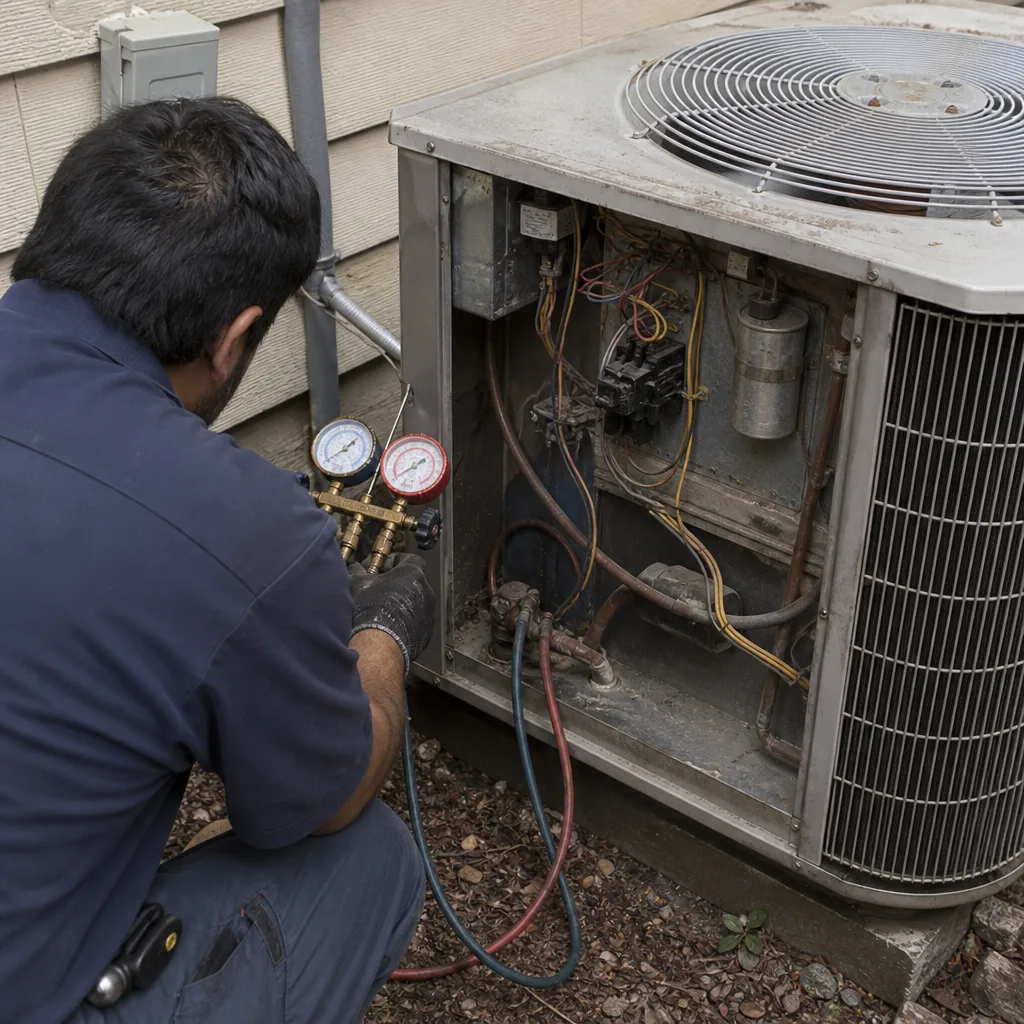 Before
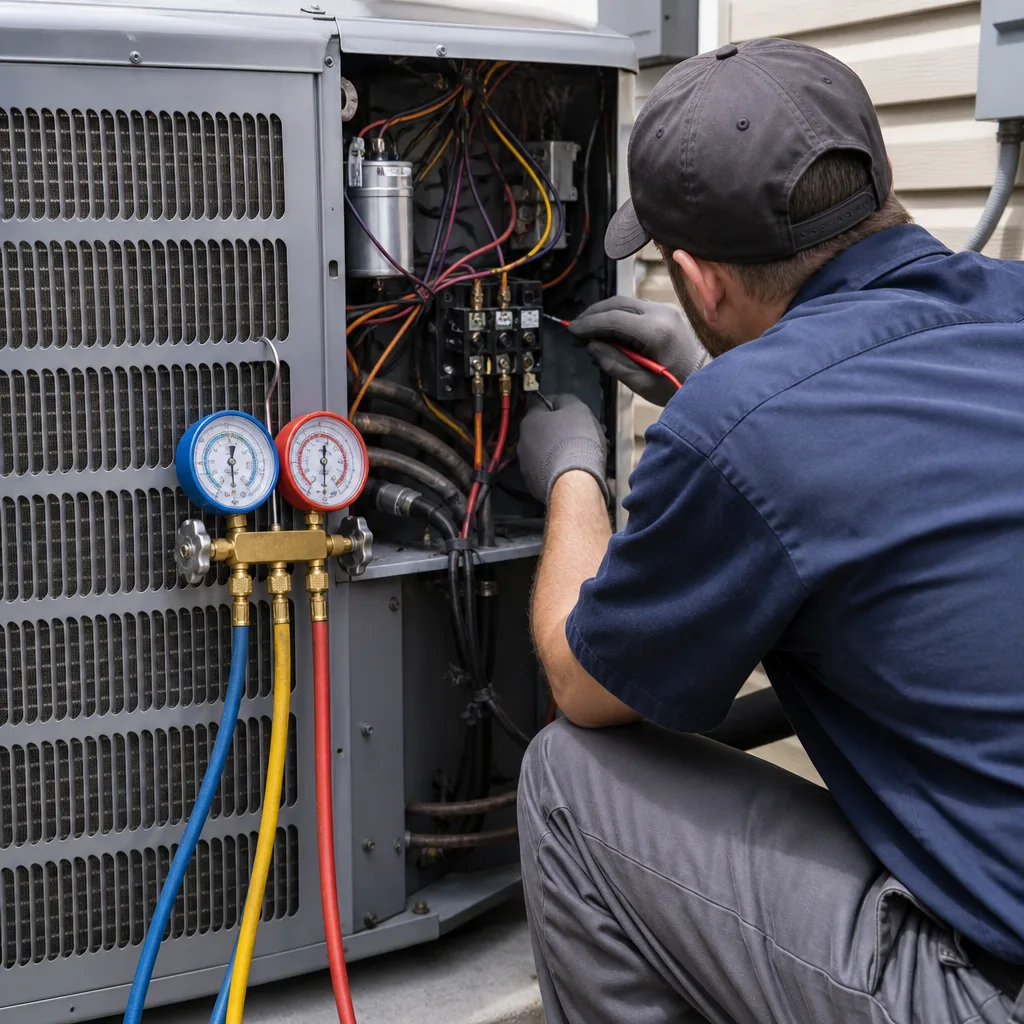 After
After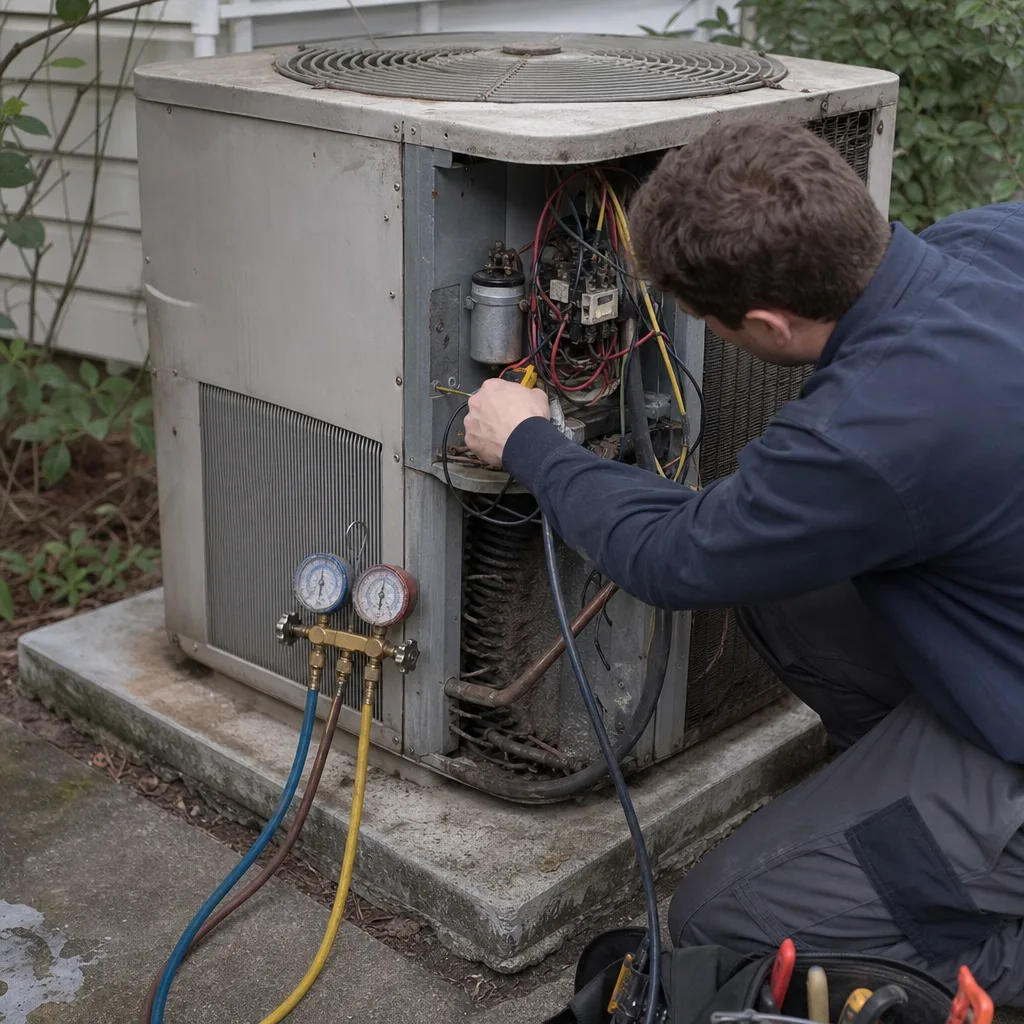 Before
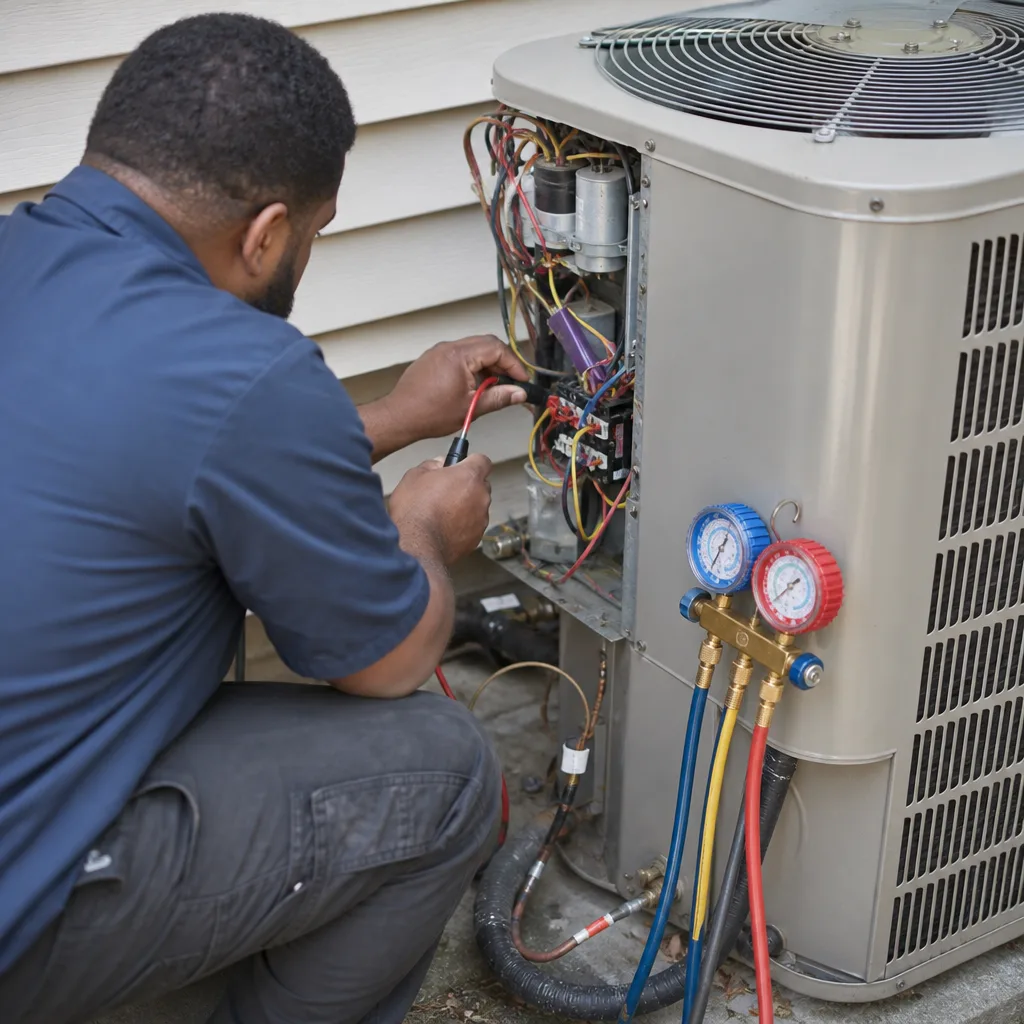 After
After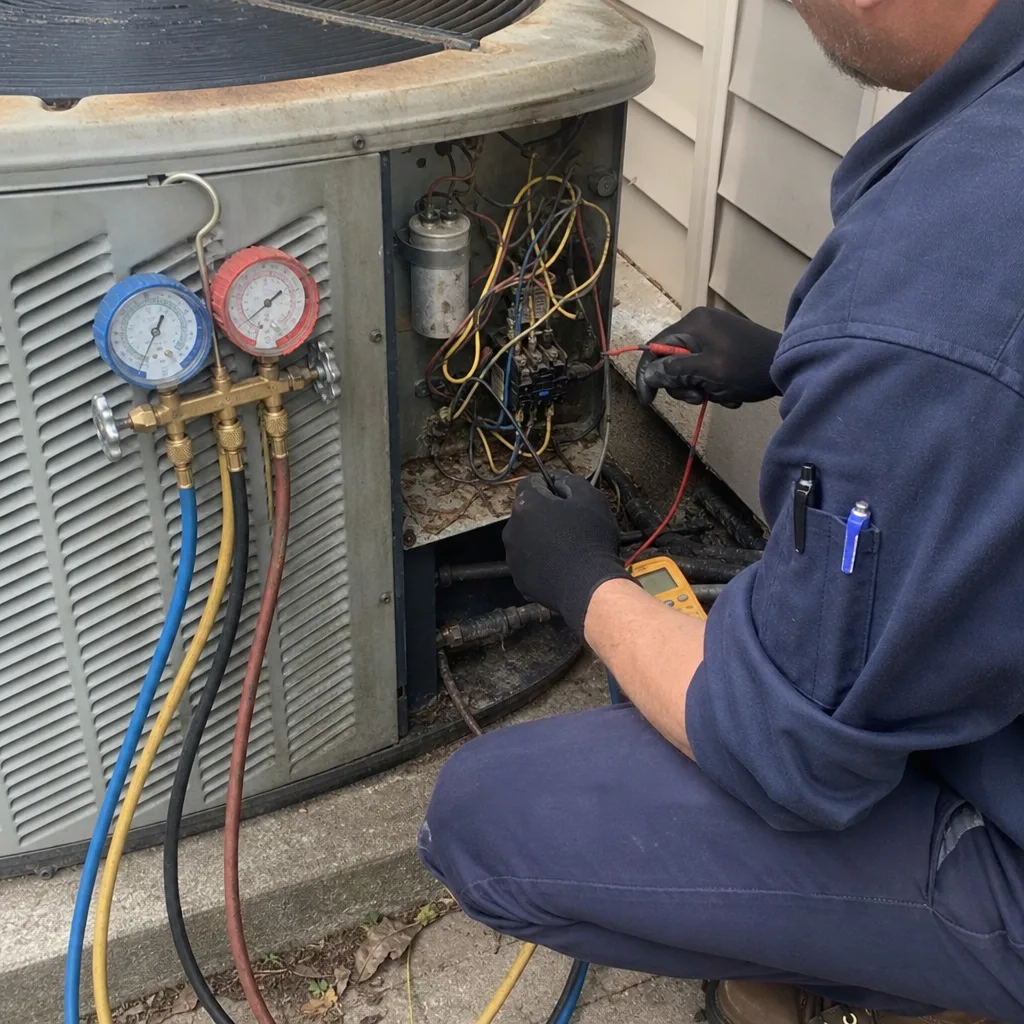 Before
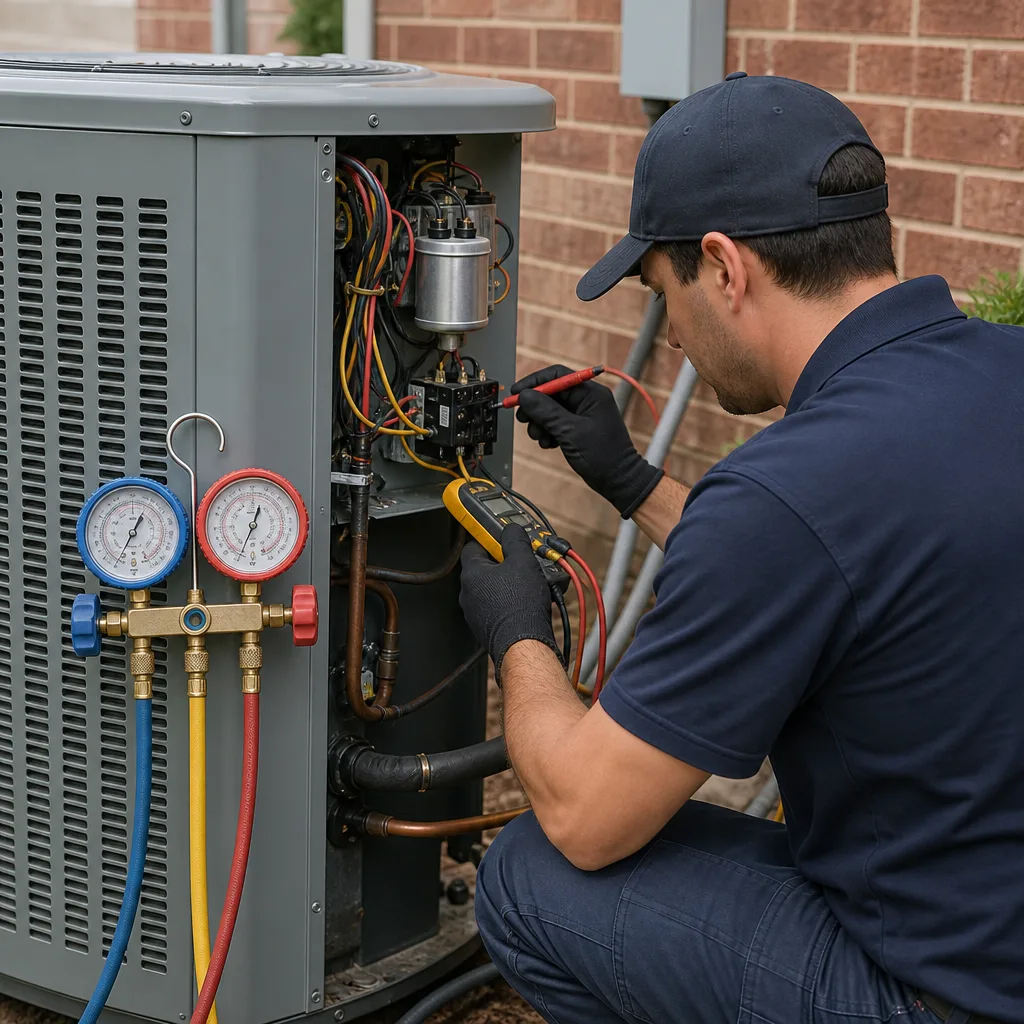 After
AfterReplacement Cost & What’s Included
In Atlanta, an American Standard capacitor replacement runs $150 – $320 installed. The low end covers a standard single or dual-run capacitor on an accessible condenser. The higher end covers units that need a hard-start capacitor added, oval capacitors that cost more than round ones, or jobs where the wiring terminals show heat damage and need re-terminating. Here’s what’s included in every capacitor replacement with us:
- The capacitor itself, matched to your exact microfarad and voltage specs
- Labor to remove the old part, test the new one, and confirm proper startup
- A written price before any work starts, with no surprises after
- A 365-day written guarantee. If that capacitor fails within a year, we return and replace it at no charge. No argument, no pro-rated anything.
The price you’re quoted is the price you pay. We don’t do add-on charges for showing up, for the diagnostic, or for the time of day. One number, in writing, before the first tool comes off the truck.
DIY or Call Us?
Here’s the honest split. You can safely look at the capacitor yourself. Pop the service panel off the condenser, look for a swollen or leaking cylinder, and read the label. That tells you the microfarad rating, the voltage, and whether it’s round or oval. What you should not do is touch it. A capacitor stores enough electrical charge to knock you on your back or worse, even with the power off. That charge can linger for hours after the breaker is thrown. Discharging a capacitor safely takes a specific tool and a specific sequence, and getting it wrong is how people end up in an emergency room thinking they were just swapping a $40 part. In Georgia, where condensers run hard from April through October, capacitors also fail more often from heat degradation. We replace dozens of them every summer, and more than a few were “almost fixed” by someone who watched a video first. If you’ve read the label and know it’s bad, call us at (762) 465-4570. We’ll have a technician out with the right part on the truck, and you’ll have a price in writing before any work begins.
FAQs
In Atlanta’s heat, expect 5 to 8 years from a quality capacitor. The constant high temperatures inside the condenser cabinet break down the internal dielectric over time, and Georgia summers accelerate that wear compared to milder climates. If your unit runs 3,000-plus hours a year, as most Atlanta systems do, the capacitor is working every one of those hours.
No. A capacitor is a sealed, factory-assembled component. Once the dielectric breaks down or the casing swells, there’s no repair path, only replacement. Anyone offering to “rebuild” a capacitor is selling you something that will fail again, and soon.
Most American Standard capacitor replacements take 30 to 45 minutes from arrival to a cool house. That includes discharging the old part safely, swapping in the new capacitor, testing startup amperage, and confirming the fan and compressor are both running within spec. If the wiring is heat-damaged, add 15 minutes and a few dollars for new terminals.
We do. Our Atlanta trucks carry dual-run capacitors in 35/5, 40/5, 45/5, and 50/5 microfarad ratings, both round and oval, in 370V and 440V versions, plus hard-start capacitors for older compressors. If your unit needs a spec we don’t have on board, we’ll have it the same day from our local supply house. Call (762) 465-4570 for a free estimate, and we’ll tell you straight what your American Standard unit needs.
Written by Devin Marlowe, Owner, Brandt HVAC Co Atlanta at Brandt HVAC Co Atlanta, serving Atlanta and nearby areas.