
 AC repair
 Furnace & heating
 Heat pumps
 Carrier
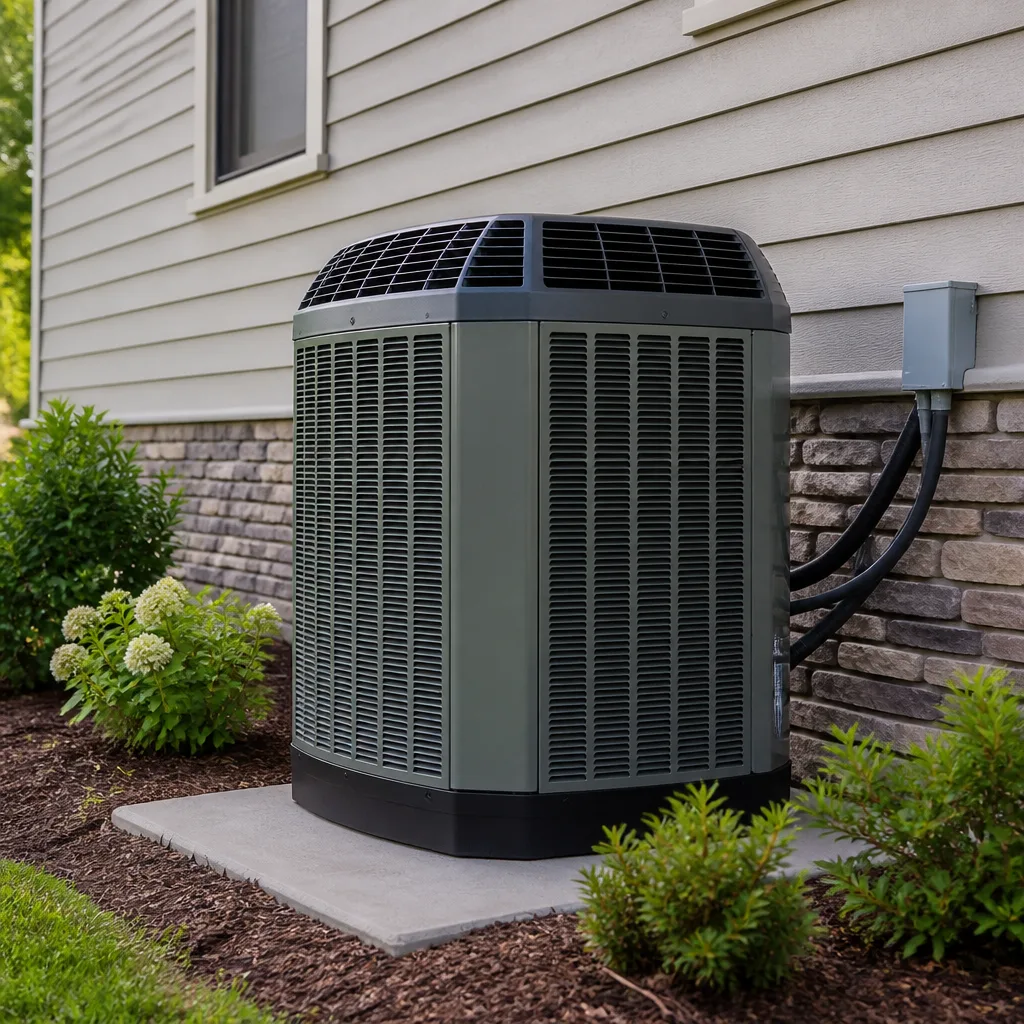 Trane
Trane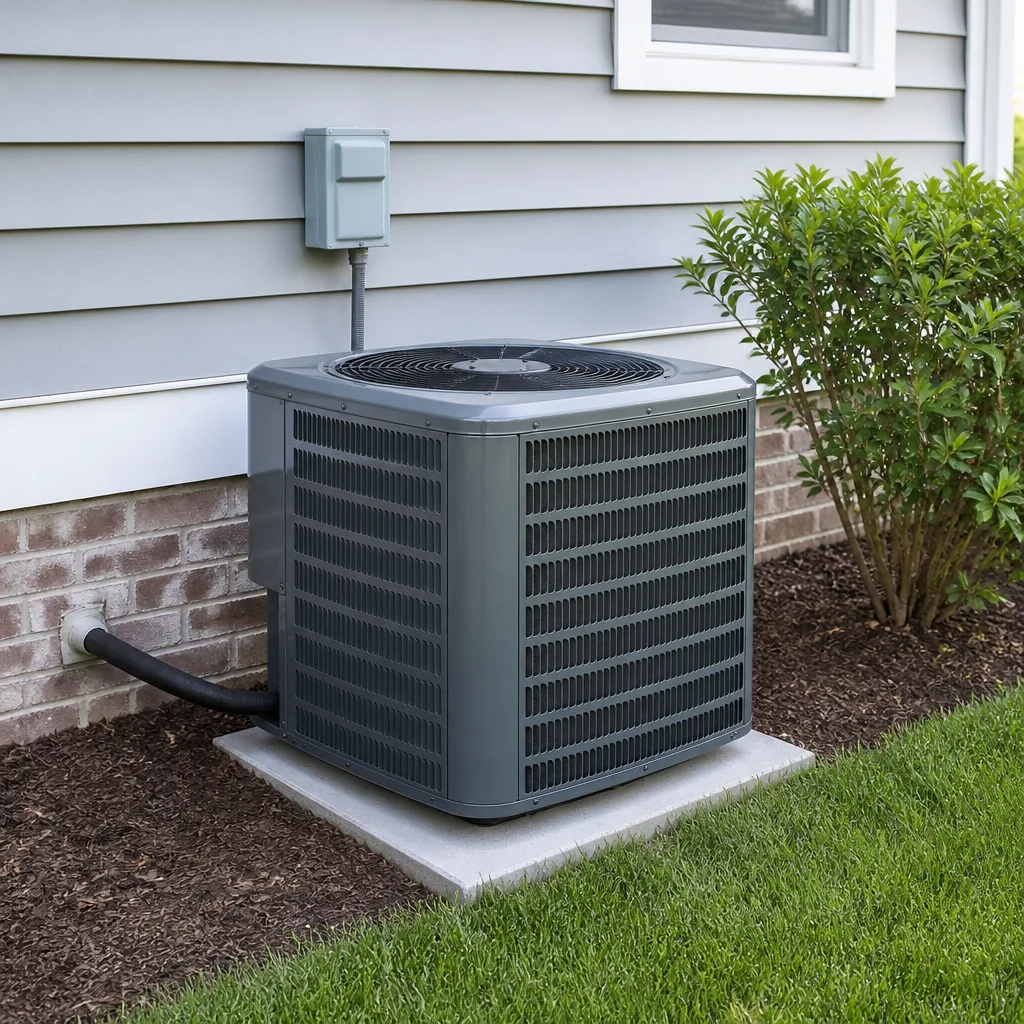 Goodman
Seasonal tune-up and full diagnostic on your Carrier, Trane, or Goodman system - readings shown to you before any repair is proposed
Diagnosis first, numbers second - you approve the repair price before a single part goes in.
Get your free estimateCarrier Ductwork Repair: The Atlanta Owner’s Guide
Carrier ductwork repair in Atlanta typically runs between $150 and $650 for most residential jobs, with the final price depending on how much duct has failed and how accessible it is. We stock Carrier-compatible duct materials on our trucks and can usually complete common repairs the same day we diagnose the problem. Most Atlanta homeowners discover they have duct trouble the same way: one room stays hot in July, the utility bill climbs for no obvious reason, or a musty smell comes through the vents every time the air kicks on.
Ductwork is the part of your Carrier system nobody thinks about until it misbehaves. It lives in attics and crawl spaces, where Atlanta’s heat and humidity work on it year-round. A split seam, a disconnected joint, or a crushed return section means the air you paid to condition is leaking into a space you don’t live in. That’s money leaving through the attic floor. Devin Marlowe has pulled back plenty of duct insulation in Buckhead attics and found the same story: fifteen years of Georgia heat had turned tape to dust and left gaps you could put a hand through. The good news is that duct repair is usually straightforward, honest work, and we’ll tell you the price before anything gets touched.
Which Carrier Models This Applies To
Here’s something a lot of Atlanta homeowners don’t realize: your Carrier system’s ductwork is not model-specific in the way a control board or blower motor is. The ducts themselves are sized to your home’s airflow requirements, not to your indoor unit’s model number. That means the compatibility question matters more for the connection points, plenums, and fittings than for the duct bodies themselves.
What we do match carefully is the connection between your Carrier air handler or furnace and the duct runs. Carrier systems, especially the Infinity and Performance series, are designed around specific static pressure tolerances. An undersized return or an improperly sealed supply plenum will make even a perfectly good Carrier Infinity system run like a budget builder-grade unit. When we repair or replace sections of duct on a Carrier system, we verify the airflow at the register level and check the static pressure against the manufacturer’s specifications for your unit. That’s the difference between a repair that holds and one that just moves the problem down the line.
One more compatibility note that saves people money: flex duct comes in R-values from R-4.2 to R-8. In an Atlanta attic, where summer temperatures regularly pass 130 degrees, R-4.2 is a false economy. We stock R-6 and R-8 flex for repairs here because the thinner stuff loses so much cooling capacity through the duct walls that you end up paying for it on every Georgia Power bill. As for OEM versus aftermarket: Carrier does not manufacture its own duct. The duct your system was likely originally installed with was a supply-house product, so there is no OEM-versus-aftermarket penalty here. What matters is the material spec, the insulation rating, and the sealing method. We use mastic and mesh tape on every metal seam, not the gray cloth duct tape that dries out and fails inside two Atlanta summers.
Styles & brands we work with
Signs Your Carrier Ductwork Repair Is Failing
- One or two rooms never reach the thermostat setting. This usually means a supply run has separated, a damper has slipped, or a section of flex has collapsed. The air is still being produced, it’s just not reaching its destination. In two-story Atlanta homes, the upstairs far bedroom is the classic victim.
- Your energy bill is climbing but your usage habits haven’t changed. Leaky ducts can sap twenty to thirty percent of your system’s conditioned air, which means your Carrier unit runs longer to hit the same temperature. That’s real money every month, and it will never fix itself.
- You can see dust streaks on the ceiling near vents or around return grilles. When ducts leak, the negative or positive pressure pulls dust through the gaps and deposits it where you can see it. Those gray smudges are a map of where your air is escaping.
- Rooms get stuffy or humid even when the AC feels cold at the register. A disconnected return in a humid Atlanta crawlspace pulls damp outside air into the system. Your Carrier coil has to work harder to strip that moisture, and the air that reaches you feels clammy.
- You hear a persistent hiss or flapping sound when the system runs. A hiss at a joint or seam is air escaping under pressure. A flapping noise in flex duct often means the inner liner has torn and is moving with the airflow. Both are repairable, and both are cheap to fix compared to the cost of ignoring them.
See the difference
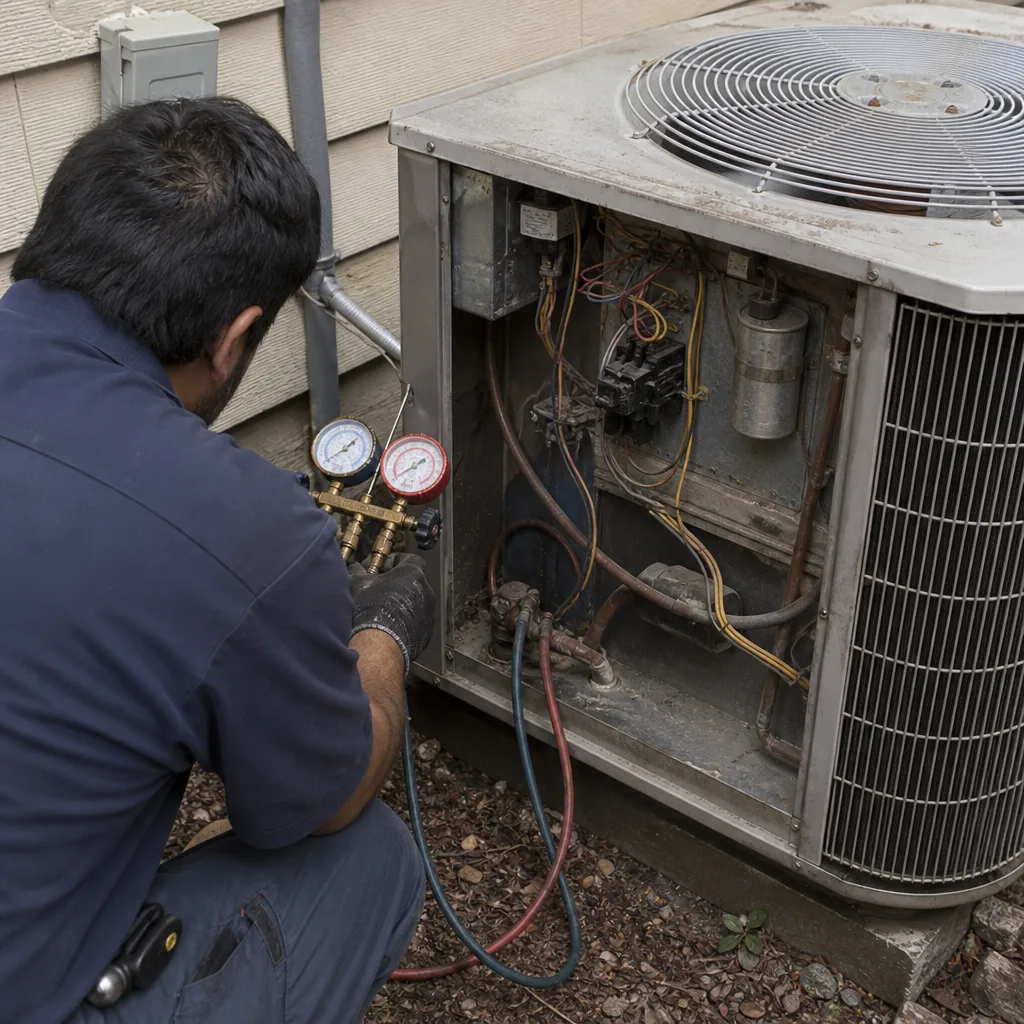 Before
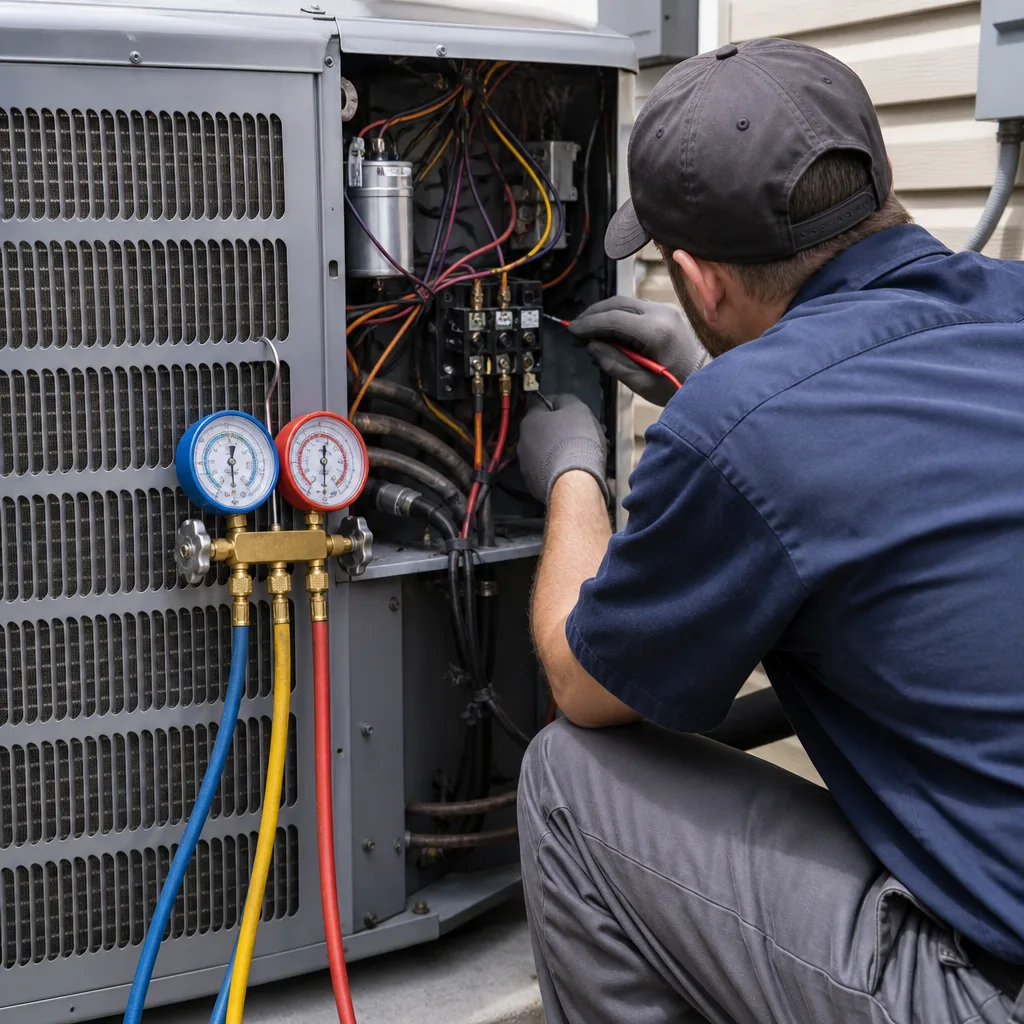 After
After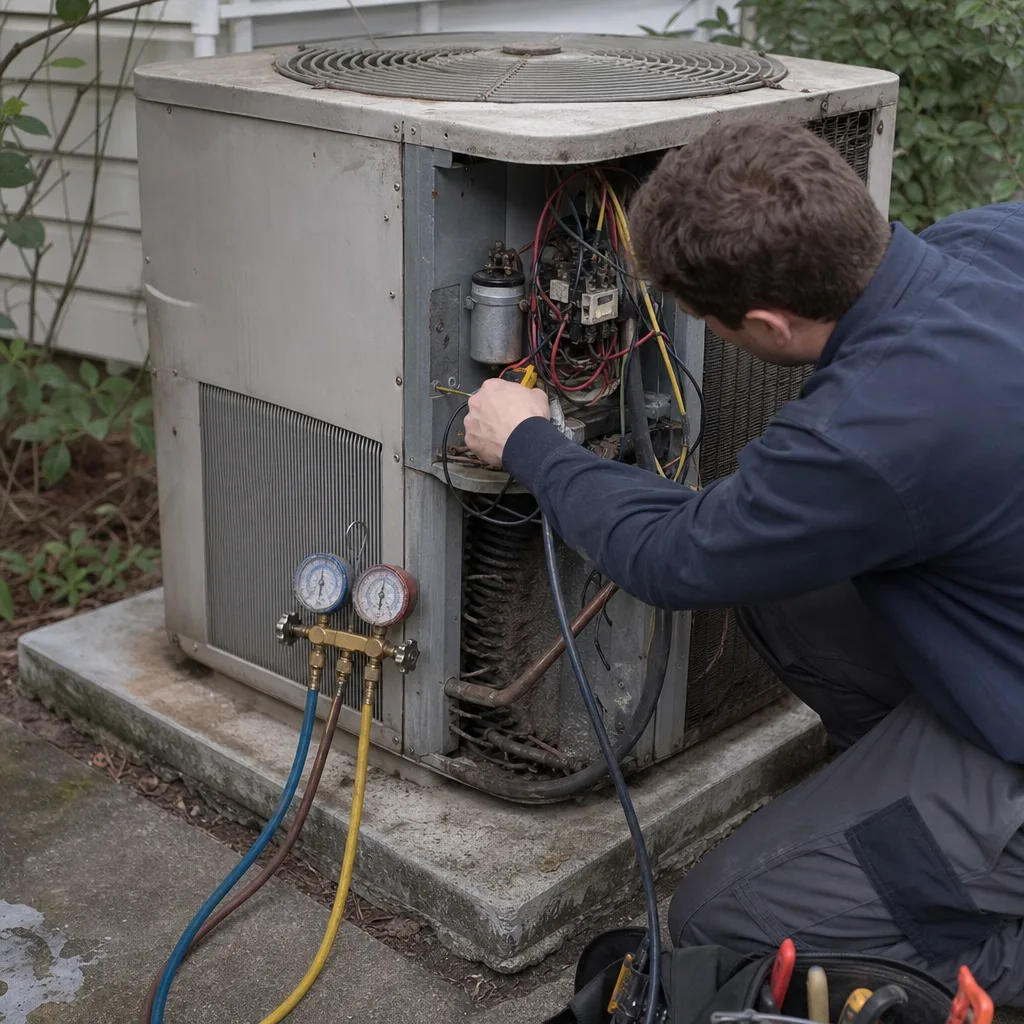 Before
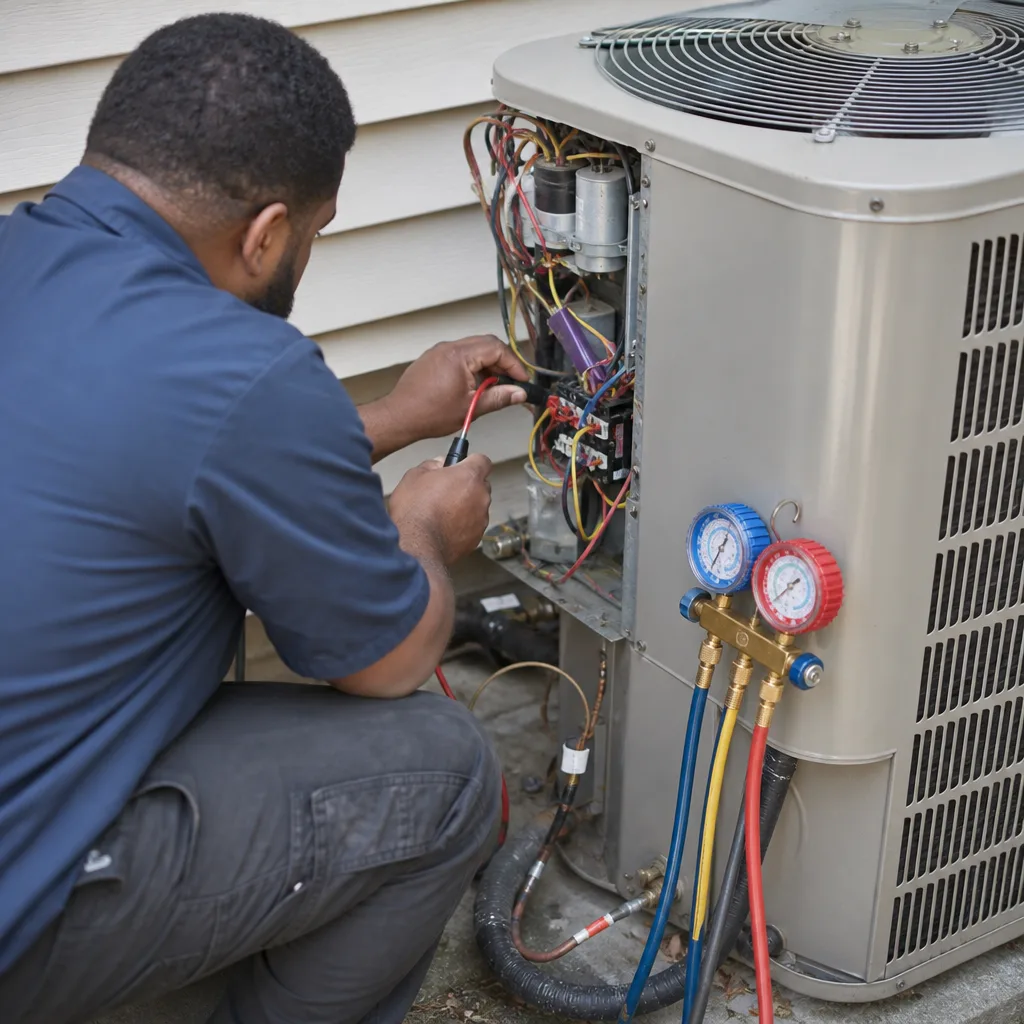 After
After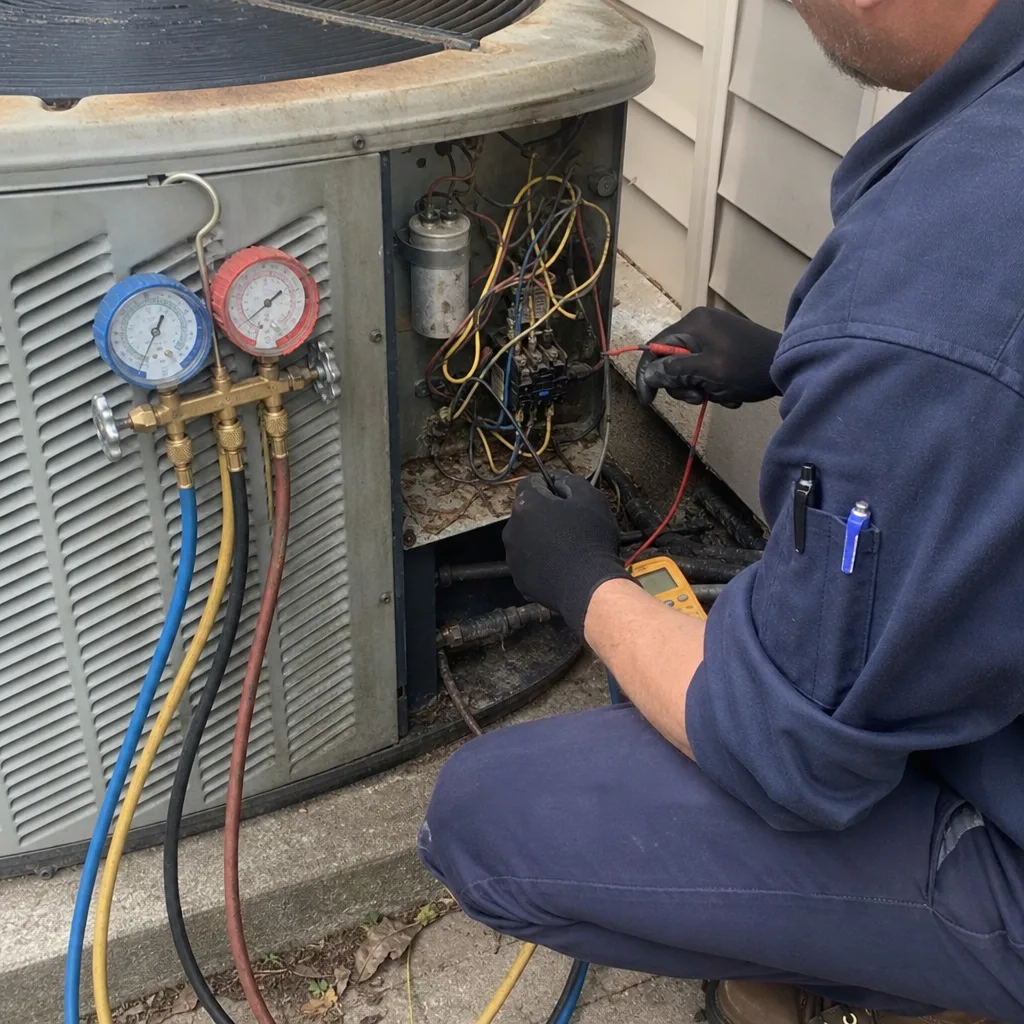 Before
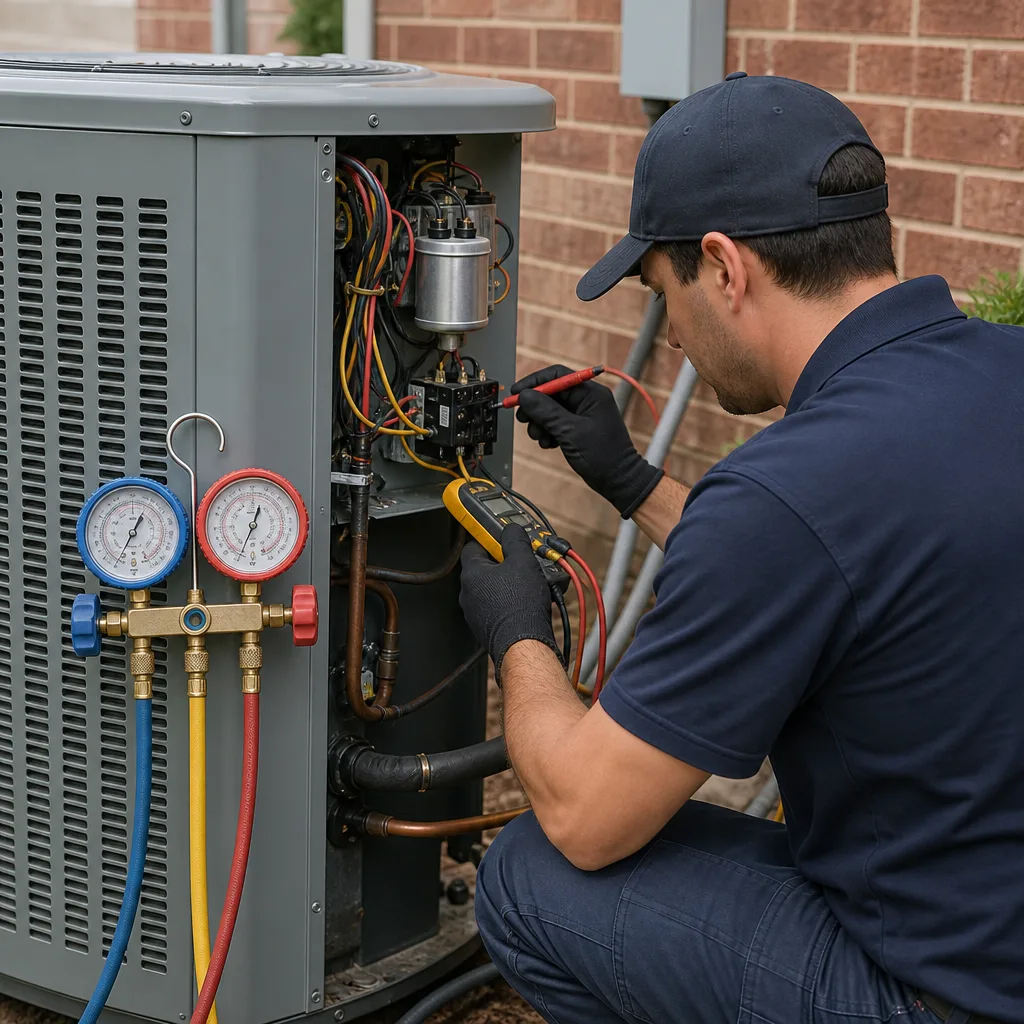 After
AfterReplacement Cost & What’s Included
In Atlanta, most Carrier ductwork repairs land between $150 and $650 installed. The low end of that range covers a simple job: reconnecting a separated joint, sealing a visible seam, or replacing a short section of damaged flex. The upper end covers more involved work: rebuilding a return plenum, replacing a long run of deteriorated duct in an attic, or re-supporting sagging duct that has pulled apart in multiple places.
Here’s what every duct repair from us includes, no exceptions: a written price before we start, the labor to make the repair correctly, the materials matched to your system and attic conditions, a written guarantee, and a post-repair airflow check at the affected registers. The price we quote is the price you pay. No add-on surprises when the job gets harder halfway through. If the repair fails within the guarantee period, we return and do it again at no charge, covered by our 365-Day Done Right Promise. That’s the guarantee, stated plainly: 365 days, free return visit, no argument.
DIY or Call Us?
The honest answer: there are things you can safely check, and things you should not attempt. Safe to check: visible ducts in an unfinished basement or open attic. If you see a joint that has visibly separated, a section of flex that’s sagging or torn, or a crushed return, you’ve found the problem. You can also go room to room on a running system and feel which registers are weak compared to others.
What’s not a DIY job: any repair that requires you to move insulation over ductwork in an Atlanta attic in July, any repair that involves cutting and reconnecting duct, and any repair near electrical wiring or gas lines. Attic work in Georgia heat is genuinely dangerous. People end up sick from heat exhaustion faster than they expect, and one wrong step through a ceiling joist is a hospital trip. Duct sealing also looks easier on video than it is on site; a sloppy mastic job still leaks and you won’t know it until the next electric bill. We’ll come out, find the leak, price it in writing, and fix it properly. Call (762) 465-4570 and a live person picks up, 24 hours a day.
FAQs
Flex duct in an Atlanta attic typically lasts 15 to 20 years before the outer insulation jacket degrades and the inner liner starts to fail. Metal duct lasts longer, but metal seams and connectors still work loose over time as the house settles and temperature swings cause expansion and contraction. If your home is older than that and the ducts have never been inspected, it is worth having someone take a look. Call (762) 465-4570 and we’ll tell you honestly whether your ducts need repair or whether they’re holding up fine.
Most duct damage can be repaired: separated joints get reconnected and sealed, torn flex gets replaced section by section, and sagging supports get rehung. Full duct replacement is only the right call when the majority of the system has deteriorated, which we see more often in very old homes or where past remodels left ductwork undersized for the current Carrier system. We will never sell you replacement when repair does the job. Call us for a straight answer and a written price either way.
A common duct repair takes one to three hours on site, start to finish. More extensive repairs, like rebuilding a return plenum or replacing long attic runs, can take half a day. When we diagnose the problem, we’ll tell you how long the fix will take before you agree to anything, and the price you’re quoted is the price it stays.
Yes. Our trucks carry flex duct in R-6 and R-8, mastic, metal tape, drive cleats, and common fittings. That means most duct repairs are one visit. If your job needs a custom fabrication, we’ll bring what’s needed on the return trip and still finish the work without making you chase parts.
Written by Devin Marlowe, Owner, Brandt HVAC Co Atlanta at Brandt HVAC Co Atlanta, serving Atlanta and nearby areas.