
 Trane
Trane AC repair
 Furnace & heating
 Heat pumps
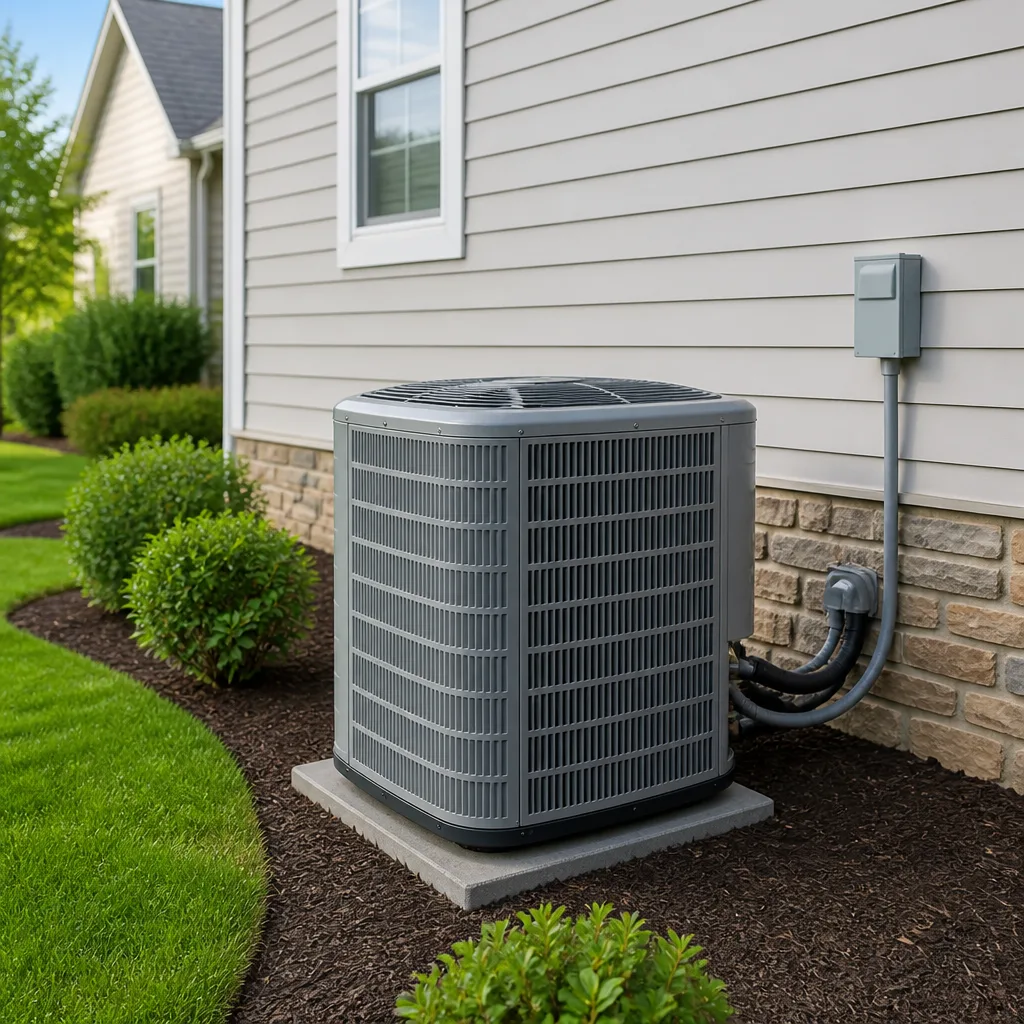 Carrier
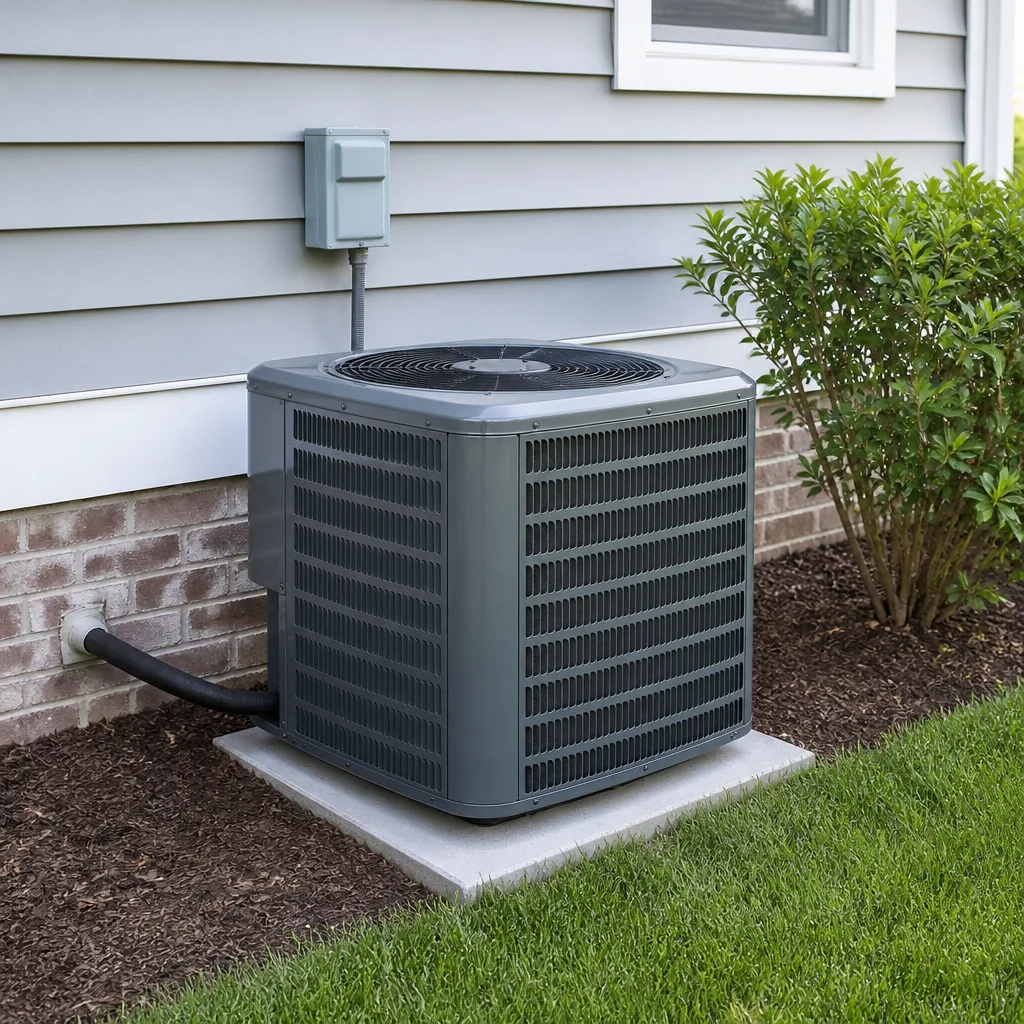 Goodman
Seasonal tune-up and full diagnostic on your Carrier, Trane, or Goodman system - readings shown to you before any repair is proposed
Diagnosis first, numbers second - you approve the repair price before a single part goes in.
Get your free estimateTrane Capacitor Replacement: The Atlanta Owner’s Guide
We stock and install Trane-compatible capacitors across Atlanta, and a capacitor replacement typically runs $150 to $320 including parts and labor, with same-day availability on most calls. That price includes the part, the service visit, the installation, and a written guarantee on the repair. Most homeowners discover a failing capacitor the hard way: the outdoor unit hums but the fan won’t spin, or the compressor tries to start and shuts off after a few seconds.
A capacitor is an electrical component that stores and releases voltage to get your Trane’s compressor and fan motor moving. When it fails, the system simply can’t start. Atlanta’s heat makes a weak capacitor fail faster than it would in a milder climate, because your system cycles on and off more often from May through September. Every start puts stress on that component, and a capacitor rated for 370 or 440 volts will eventually lose its ability to hold a charge. We replace these every week during Atlanta summers, and in neighborhoods like Buckhead and Decatur we see the same pattern: older Trane units from the mid-2000s often still have their original capacitor, and it’s usually the first electrical part to go.
Brandt HVAC Co Atlanta is an independent service provider, not affiliated with Trane. We do, however, keep Trane-compatible capacitors stocked on our trucks because we know how common this failure is in Atlanta’s climate.
Which Trane Models This Applies To
This replacement applies to nearly every residential Trane condenser and heat pump built in the last 25 years, including the XR, XL, and XB series. That covers model families like the XR13, XR14, XL14i, XL16i, XR16, XB13, and the newer XR17 and XV18 units. If you have a Trane packaged unit or a dual-capacitor setup where one capacitor serves both the compressor and the fan, we stock the right part for those too.
The key compatibility factor is the capacitor’s microfarad (µF) rating, not the model name. Trane units typically require a 35/5, 40/5, 45/5, or 50/5 dual-run capacitor, or a single-value capacitor in 5, 7.5, or 10 µF for the fan. The voltage rating matters as well: most Trane systems are designed for a 370V or 440V capacitor. Using a capacitor with the wrong microfarad rating is a real problem. Too low, and the motor struggles to start and runs hot. Too high, and the windings overheat and fail prematurely. The correct spec is printed on the side of the existing capacitor or on the data plate inside the condenser. We confirm that spec before we install anything.
On the OEM-versus-aftermarket question: Trane-branded capacitors are solid parts, but they’re manufactured by the same handful of electrical component suppliers that make quality aftermarket equivalents. We install capacitors from brands like AmRad and Titan HD, which match or exceed OEM specs and typically carry a five-year manufacturer warranty. We’ll tell you what we’re installing and why, and the choice is yours.
Styles & brands we work with
Signs Your Trane Capacitor Replacement Is Failing
- The outdoor unit hums but the fan doesn’t spin. That hum is the compressor or fan motor trying to start without enough stored voltage. The capacitor is either weak or dead, and the motor is sitting there drawing current and getting hot. This is the most common capacitor failure symptom we see in Atlanta.
- The compressor short-cycles, or the system starts and stops within a minute. A weak capacitor can’t hold enough charge to keep the compressor running, so the system tries, trips a thermal overload, and shuts down. Then it tries again a few minutes later. This repeated stress can damage the compressor if it goes on too long.
- The fan spins slowly or only starts if you push it with a stick. A fan motor that needs help getting going is almost always a capacitor problem. The motor itself may still be fine, but it’s not getting the starting voltage it needs.
- The capacitor case is bulged, split, or leaking oil. Capacitors are sealed metal cylinders. When the internal dielectric breaks down, gas builds up inside and the top or side of the can will bulge or split. This is a visual confirmation we look for on every diagnostic call.
- The AC blows air, but it’s warm air. The indoor fan may be running on a separate circuit, so the house gets airflow, but the compressor outside isn’t running because its capacitor failed. You’ll feel air moving, but it won’t be cool. In an Atlanta August, that’s a problem you want addressed the same day.
See the difference
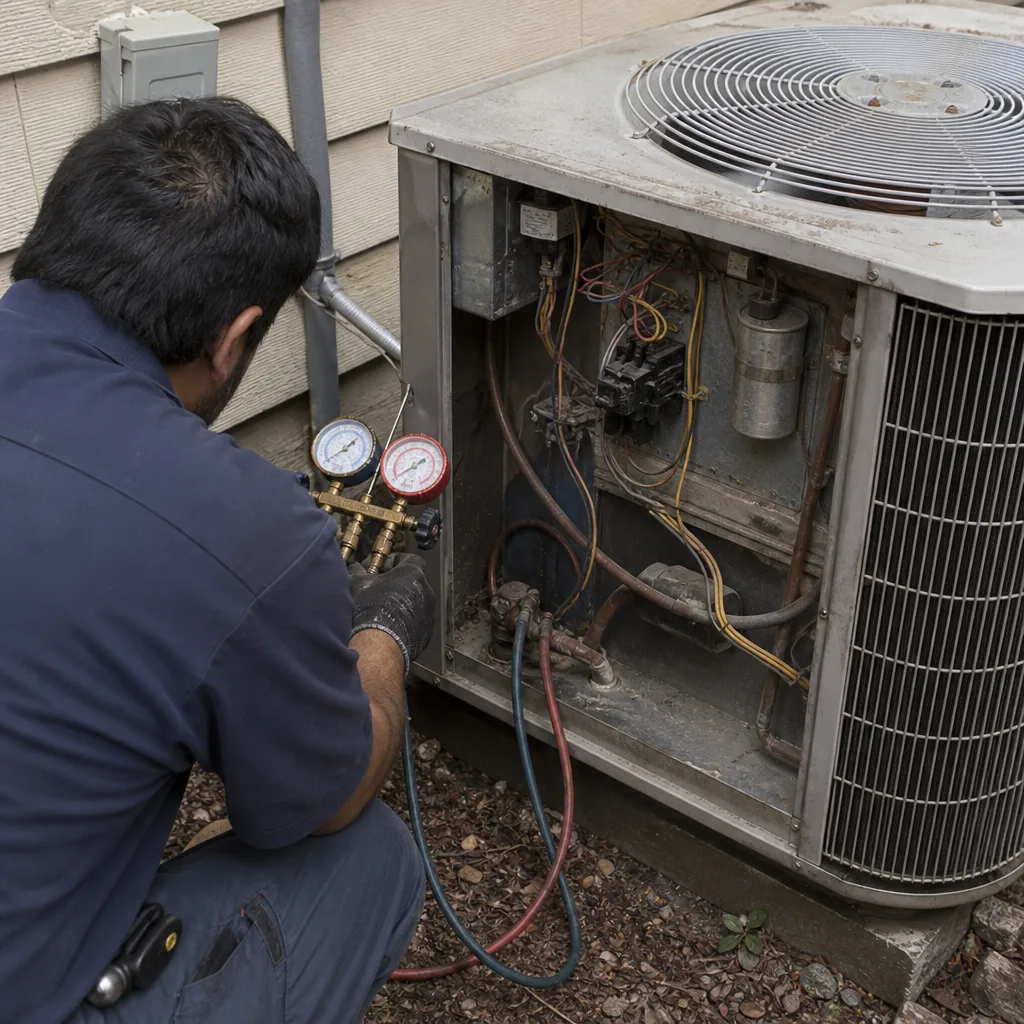 Before
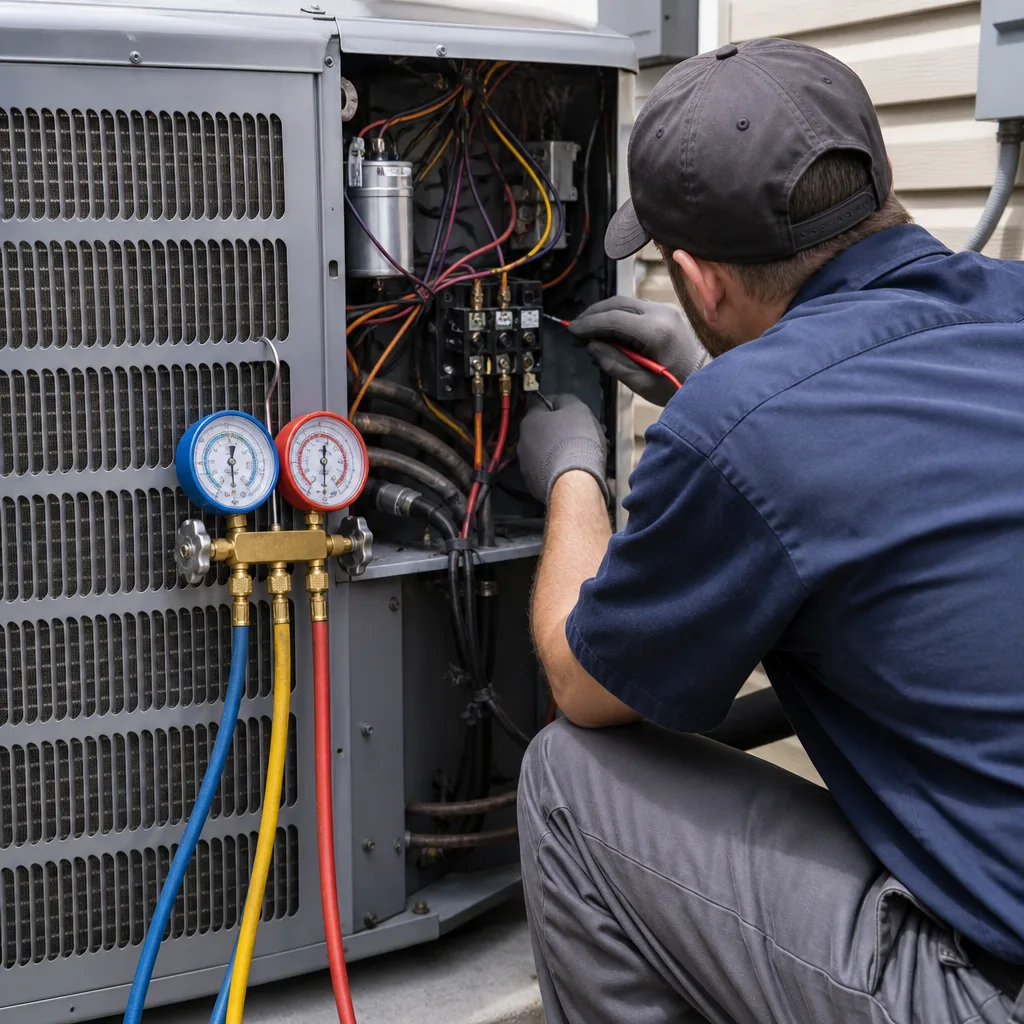 After
After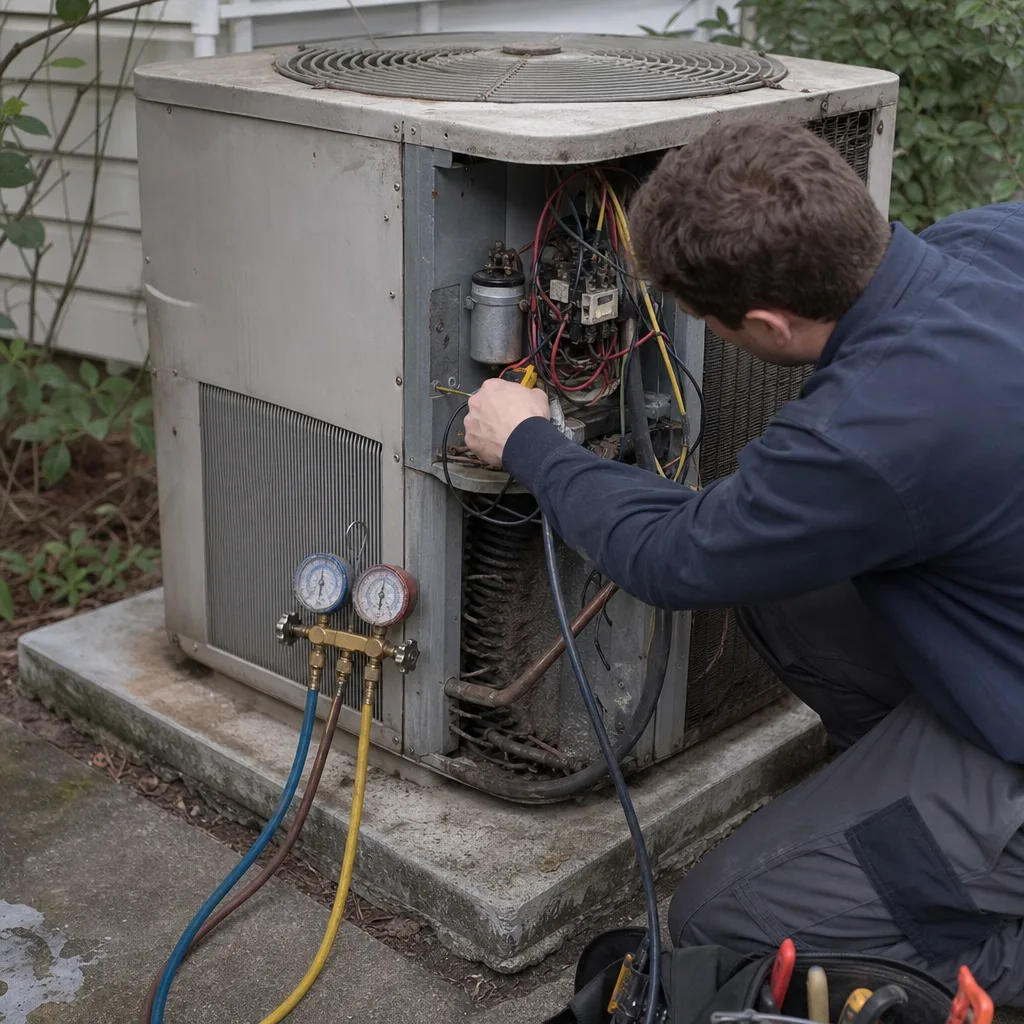 Before
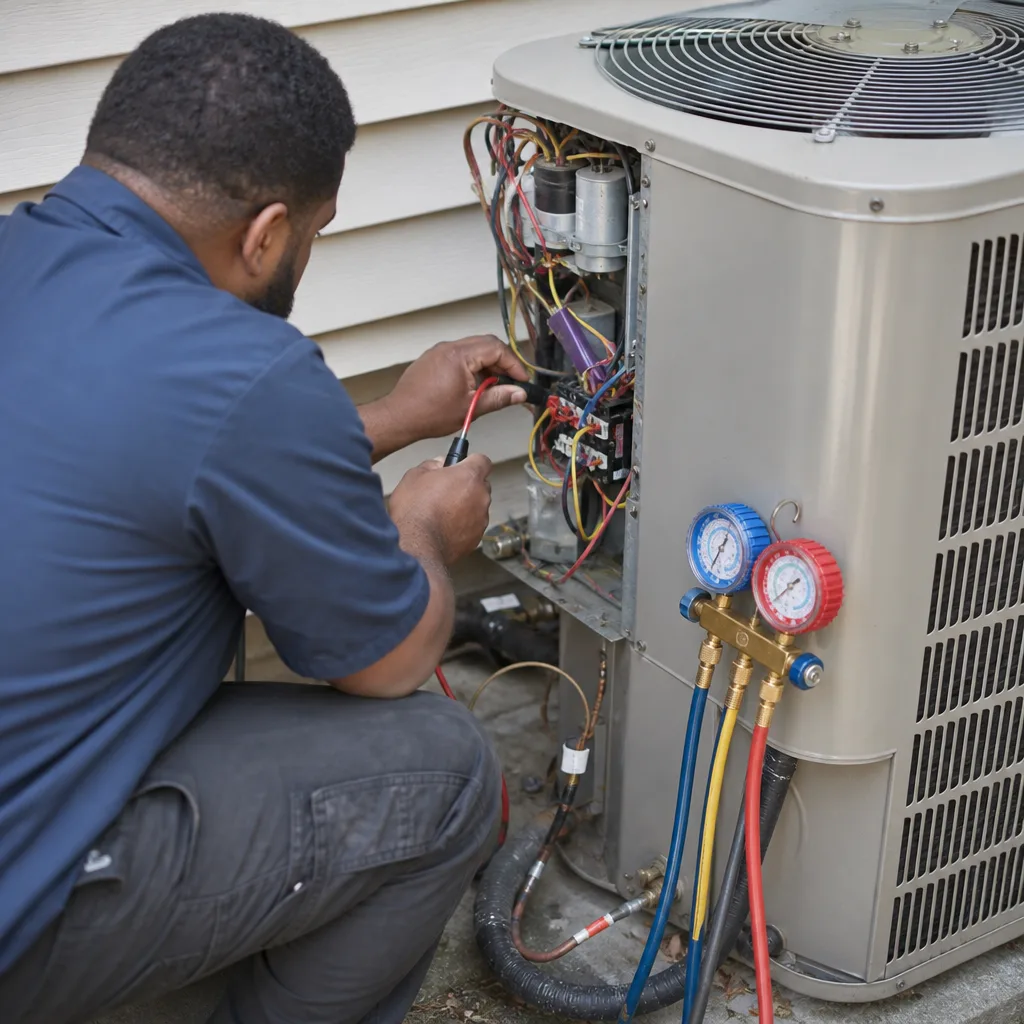 After
After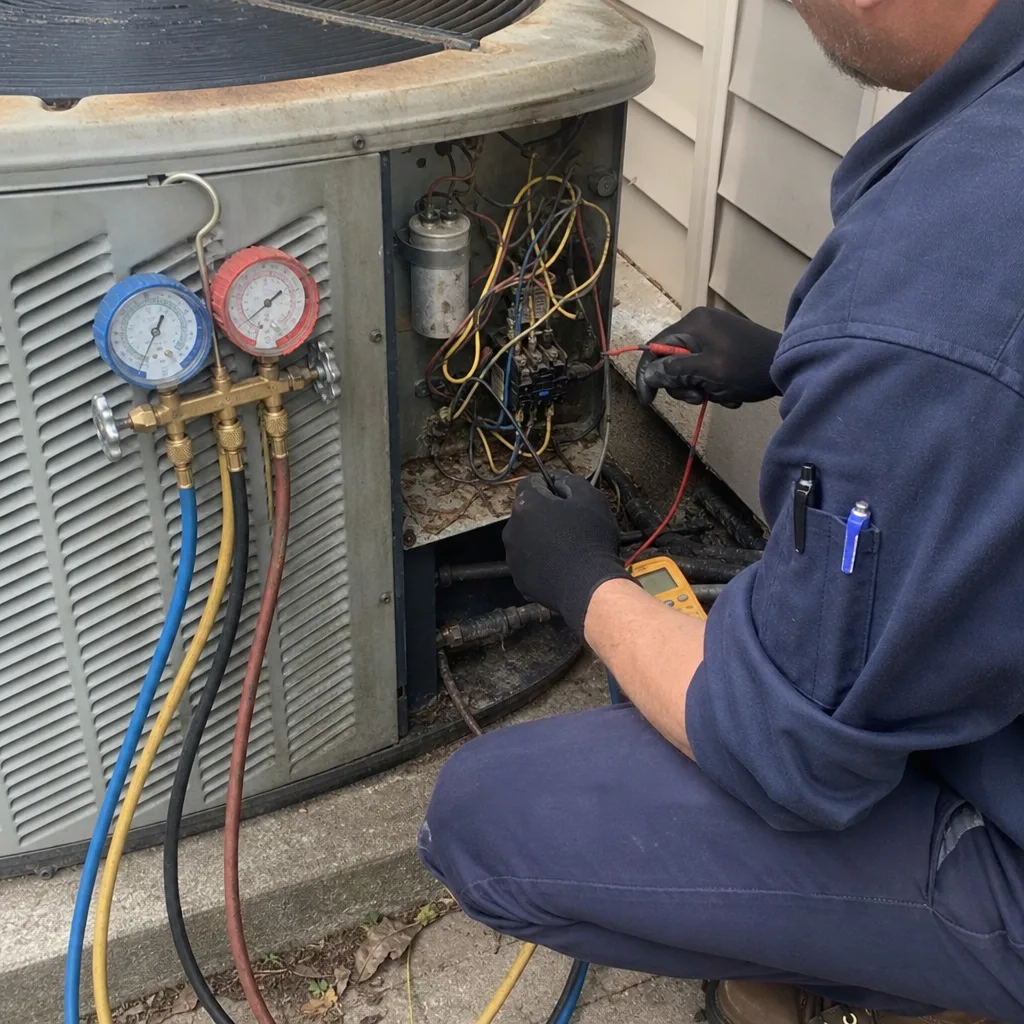 Before
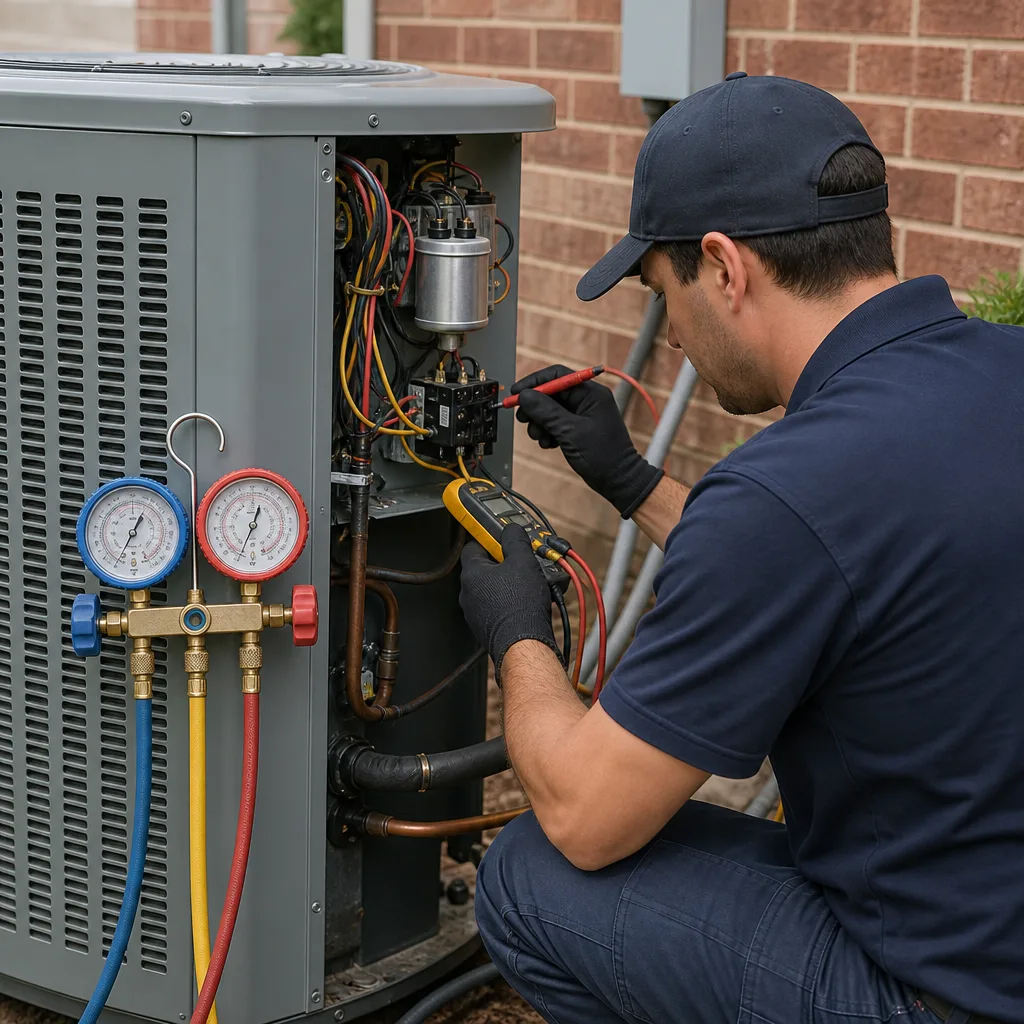 After
AfterReplacement Cost & What’s Included
Here’s what capacitor replacement costs in Atlanta, straight from our pricing book:
| Service | Typical Installed Price |
|---|---|
| Single-run capacitor (fan or compressor) | $150 – $220 |
| Dual-run capacitor (fan + compressor) | $180 – $320 |
| Diagnostic visit (if capacitor isn’t the culprit) | Applied toward repair cost if we do the work |
The range depends on two things: which capacitor your Trane needs, and whether it’s a simple single-run or a larger dual-run unit. Labor is included in every price. You’ll see a written price before any work starts, and we don’t charge overtime or weekend rates even for same-day calls in Atlanta’s summer rush. The replacement is covered by our 365-Day Done Right Promise, and the capacitor itself typically carries a manufacturer warranty on top of that. If the part fails within our guarantee period, we come back and make it right at no charge.
DIY or Call Us?
Here’s the straight answer: a capacitor holds an electrical charge even when your system is completely powered off. Touching the wrong terminals is a genuine shock hazard, and we’ve seen DIY capacitor swaps go wrong in ways that cost more than the original repair. We don’t recommend opening the panel and pulling the capacitor yourself. What we do recommend is turning off the system at the thermostat, looking at the outside unit to confirm the fan isn’t spinning, and checking your breaker. If it’s tripped, reset it once. If the unit still hums and won’t start, the capacitor is the likely problem, and that’s where your job ends and ours begins.
Devin Marlowe and our Atlanta techs get this call all summer long. We’ll arrive with the right capacitor for your Trane model, confirm the spec on the existing part, and have your system running again in under an hour in most cases. Call us at (762) 465-4570 and a live person will answer, any hour, any day.
FAQs
A Trane capacitor in Atlanta typically lasts 5 to 10 years, but our heat shortens that. Frequent cycling, voltage fluctuation from the utility, and lightning storms all take years off the part’s life. If your unit is over a decade old and still running the original capacitor, it’s on borrowed time.
No. Capacitors are sealed, factory-built components and there’s no safe or practical way to rebuild one. The fix is a replacement with the correct microfarad and voltage rating. We’ll verify the spec before we install, so the new part is the right part.
Once we’re at your home in Atlanta, the swap itself takes 20 to 40 minutes on most Trane units. The diagnostic and safety check run a little longer. Most customers are back up and cooling within an hour of our arrival, especially when the part is on the truck, which it usually is.
We do. We keep the common Trane sizes on our trucks at all times, including 35/5, 40/5, 45/5, and 50/5 dual-run capacitors in both 370V and 440V. For less common configurations, we can usually source the part from our Atlanta supplier the same day. Call (762) 465-4570 and we’ll tell you exactly what we’ve got before we roll out.
Know what’s wrong, know what it costs, know it’s covered – that’s the whole deal.
Written by Devin Marlowe, Owner, Brandt HVAC Co Atlanta at Brandt HVAC Co Atlanta, serving Atlanta and nearby areas.