

Last updated October 16, 2026
 AC repair
 Furnace & heating
 Heat pumps
 Carrier
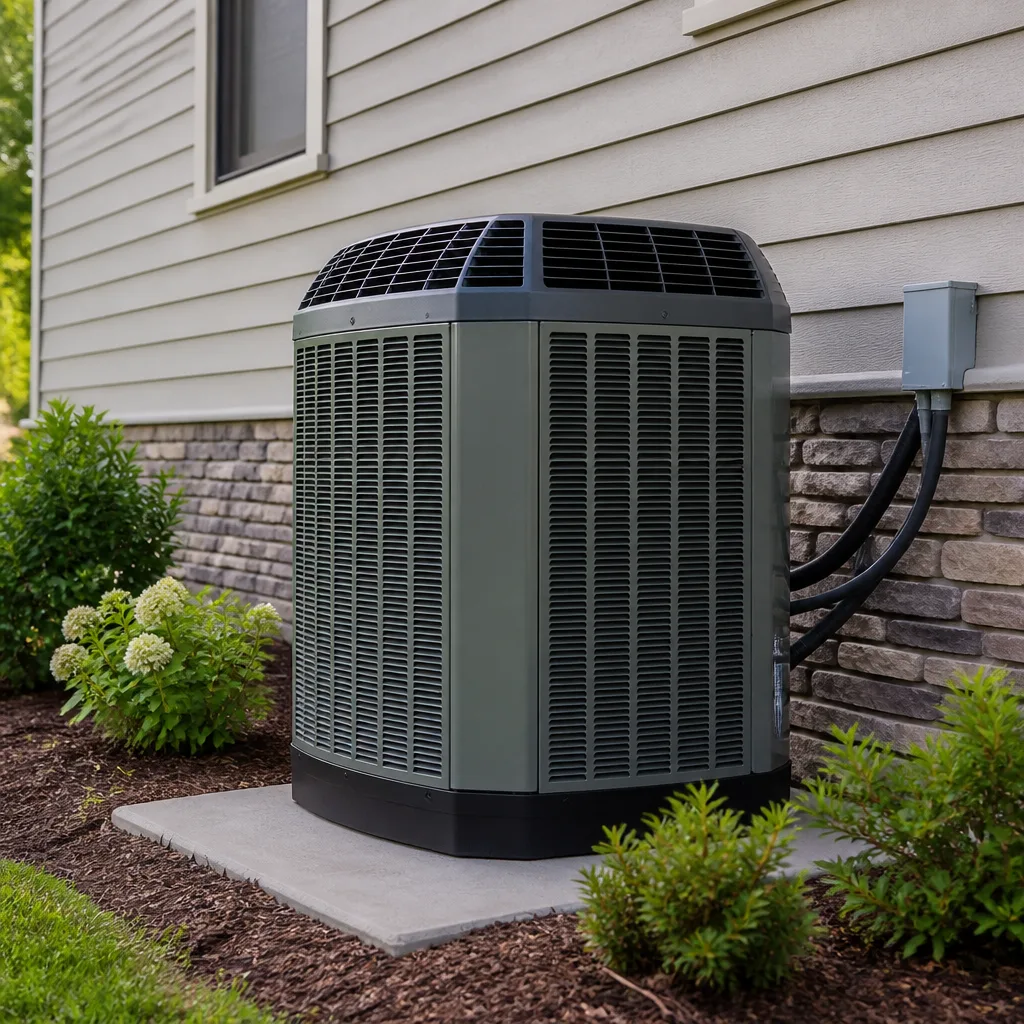 Trane
Trane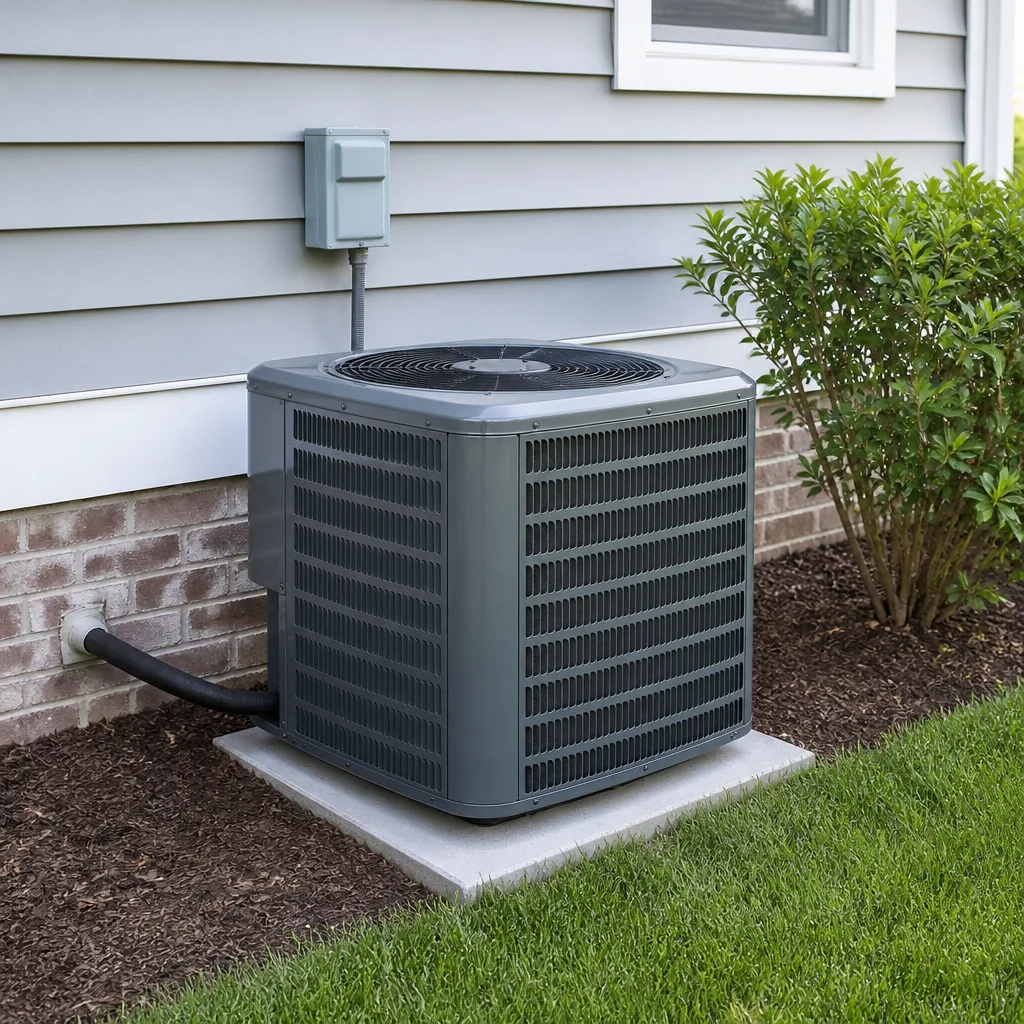 Goodman
Seasonal tune-up and full diagnostic on your Carrier, Trane, or Goodman system - readings shown to you before any repair is proposed
Diagnosis first, numbers second - you approve the repair price before a single part goes in.
Get your free estimateDIY vs Professional HVAC: The Atlanta Homeowner’s Decision Guide
Buying refrigerant to top off your own AC system is illegal for most Atlanta homeowners under EPA Section 608, yet YouTube tutorials for exactly this task have millions of views. That gap between what the internet shows and what Georgia law permits is where a lot of Atlanta homeowners get into real trouble. This guide draws the legal line clearly: what you can do yourself, what requires a licensed pro, how DIY work affects your warranty, and what a mistake really costs when Atlanta’s July heat is pushing 95 degrees. We’ll also show you how to tell a trustworthy tutorial from one that will land you in front of a code inspector.
Quick Answer
Most Atlanta homeowners can safely handle basic HVAC maintenance like filter changes, thermostat programming, drain line clearing, and condenser cleaning. But refrigerant handling, gas line work, electrical panel connections, and any replacement requiring a permit fall under EPA or Georgia licensing rules, and doing them yourself can void your manufacturer warranty and expose you to fines. The practical line is simple: maintenance on your side, repairs and installations on a licensed professional’s side.
Styles & brands we work with
Table of Contents
- The Legal Line: What Georgia and the EPA Prohibit
- Five Tasks Atlanta Homeowners Can Safely Do Themselves
- How DIY Work Voids Manufacturer Warranties
- The Hidden Cost of a DIY Repair Gone Wrong in Atlanta
- How to Evaluate a YouTube HVAC Tutorial
- Tools, Time, and Skill: A Realistic Assessment
- Common Mistakes to Avoid
- When to Call a Professional
The Legal Line: What Georgia and the EPA Prohibit
Here’s the part most DIY videos skip: some HVAC work isn’t a choice between saving money and spending it. It’s a matter of federal and state law. The moment refrigerant enters the picture, you’re under EPA Section 608 of the Clean Air Act. That regulation requires anyone who purchases, handles, or disposes of refrigerants like R-410A to hold EPA Section 608 certification. A homeowner without that certification cannot legally buy refrigerant in containers larger than two pounds, cannot legally add refrigerant to their own system, and cannot legally recover refrigerant if the system needs to be opened.
Georgia state law adds another layer. The Georgia Construction Industry Licensing Board requires a state-issued conditioned air contractor license for any HVAC work that involves installation, alteration, or replacement of systems in residential properties. Repairs and maintenance are treated differently, but the line gets blurry fast. Replacing a capacitor? Probably fine as a repair. Replacing an entire condensing unit? That’s installation work, and it requires a license plus a permit from your local Atlanta jurisdiction, whether that’s the City of Atlanta, DeKalb County, Cobb County, or Gwinnett County, each of which has its own permitting office and inspection schedule. Our HVAC Permits, Codes & Inspections in GA: What You Need to Know walks through exactly what each jurisdiction requires.
Gas line work is another firm line. Any modification to a natural gas line serving a furnace or water heater requires a licensed gas fitter in Georgia. That’s not a suggestion buried in a manual; it’s in the state’s mechanical and fuel gas codes. We’ve had calls from Atlanta homeowners in neighborhoods like Virginia-Highland and East Atlanta who replaced a gas valve themselves and later discovered their homeowner’s insurance wouldn’t cover a related claim because the work was performed without a license. The insurer doesn’t care how capable you are. They care whether the paper trail shows a licensed contractor did the work.
Electrical connections at the disconnect box or breaker panel fall under similar rules. A homeowner can legally do minor electrical work in Georgia, but connecting a new condenser or air handler to the home’s electrical system requires a permit and inspection in most Atlanta-area municipalities. The risk isn’t just legal. An improperly torqued connection at the contactor, a double-tapped breaker, or a disconnect wired backward can cause arcing, which is a fire hazard that no amount of YouTube confidence fixes.
The takeaway: if the task involves refrigerant, gas, a new circuit, or a replacement that changes the system’s capacity or configuration, it’s not a DIY project. It’s a licensed trade, and in Georgia, the state has drawn that line in code, not in a blog post.
Five Tasks Atlanta Homeowners Can Safely Do Themselves
None of this means you’re helpless between service calls. There are five maintenance tasks that are legal, safe, and genuinely useful for Atlanta homeowners. Here’s what they are, what you need, and where each one should stop.
1. Air Filter Replacement
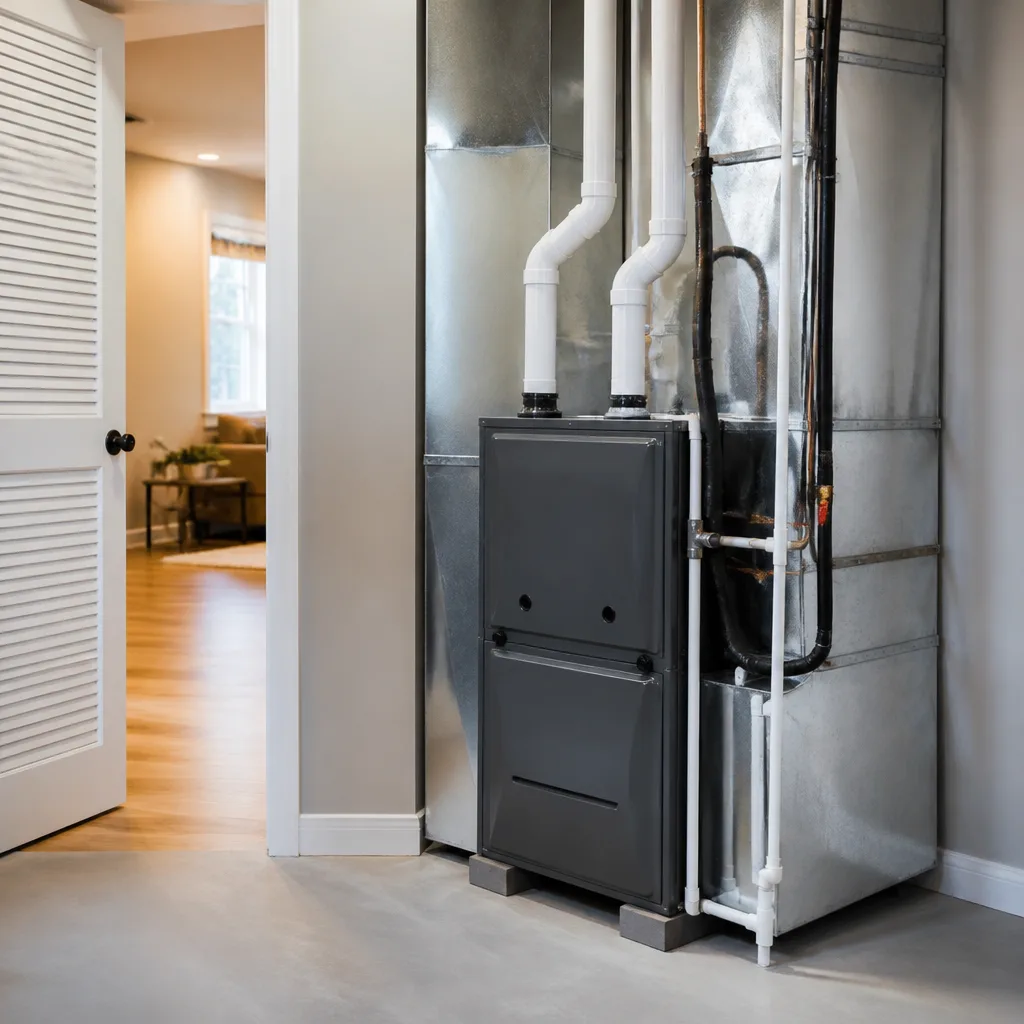
This is the single highest-impact task you can do, and it takes 90 seconds. Your filter is typically behind a return grille in a hallway ceiling or inside the air handler cabinet. In Atlanta’s pollen-heavy spring, a filter that’s designed to last 90 days can clog in six weeks. We recommend checking monthly from March through May, when pine pollen and oak pollen are at their worst. Use a MERV 8 to MERV 11 filter for a good balance of airflow and filtration. Don’t jump to MERV 13 unless your system was designed for it; the added resistance can strain the blower motor and raise your energy bill. Stop point: if you see ice on the indoor coil or the filter is damp, that’s an airflow or refrigerant problem, not a filter problem.
2. Thermostat Battery and Programming
A blank thermostat is often just dead AA batteries, and that’s a 5-minute fix with no tools. If your thermostat has a battery compartment, swap them once a year whether you see a warning or not. Programming is equally approachable: set a schedule that raises the temperature to 78 when you’re away and drops it to 74 or 75 when you’re home. Each degree of setback during Atlanta’s cooling season, roughly May through September, cuts cooling costs by about 3 percent. Stop point: if the thermostat is wired but not responding, or if you’re upgrading to a smart thermostat with a C-wire requirement, that’s where a technician should step in. Smart thermostat installs on heat pump systems with auxiliary heat are wired differently than conventional systems, and the wrong configuration can leave you without heat in January.
3. Condensate Drain Line Clearing
Your AC pulls gallons of humidity out of Atlanta’s air every day in summer, and that water exits through a PVC drain line. Algae and mold grow in that dark, wet pipe, and when the line clogs, the safety float switch shuts your system down or the drain pan overflows into your ceiling. You can clear a slow drain with a wet/dry vacuum at the drain line’s exit point near the outdoor unit or in the mechanical closet. Suction for 30 to 60 seconds, then check for the slug of slime. Stop point: if the line is completely blocked, if water is already pooling in the emergency drain pan, or if the float switch is wet, call a pro. A secondary drain line that’s actively dripping means the primary is already clogged, and you need more than a shop vac.
4. Outdoor Condenser Coil Cleaning
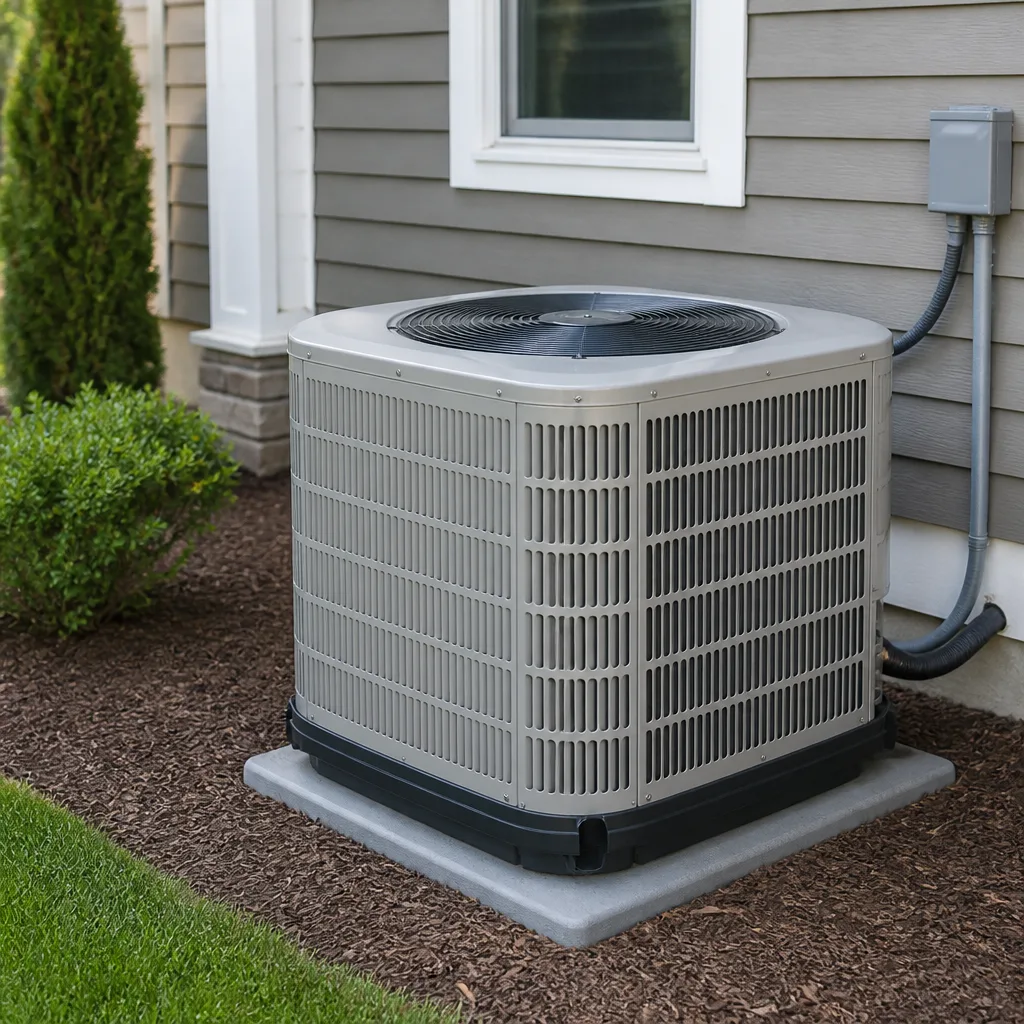
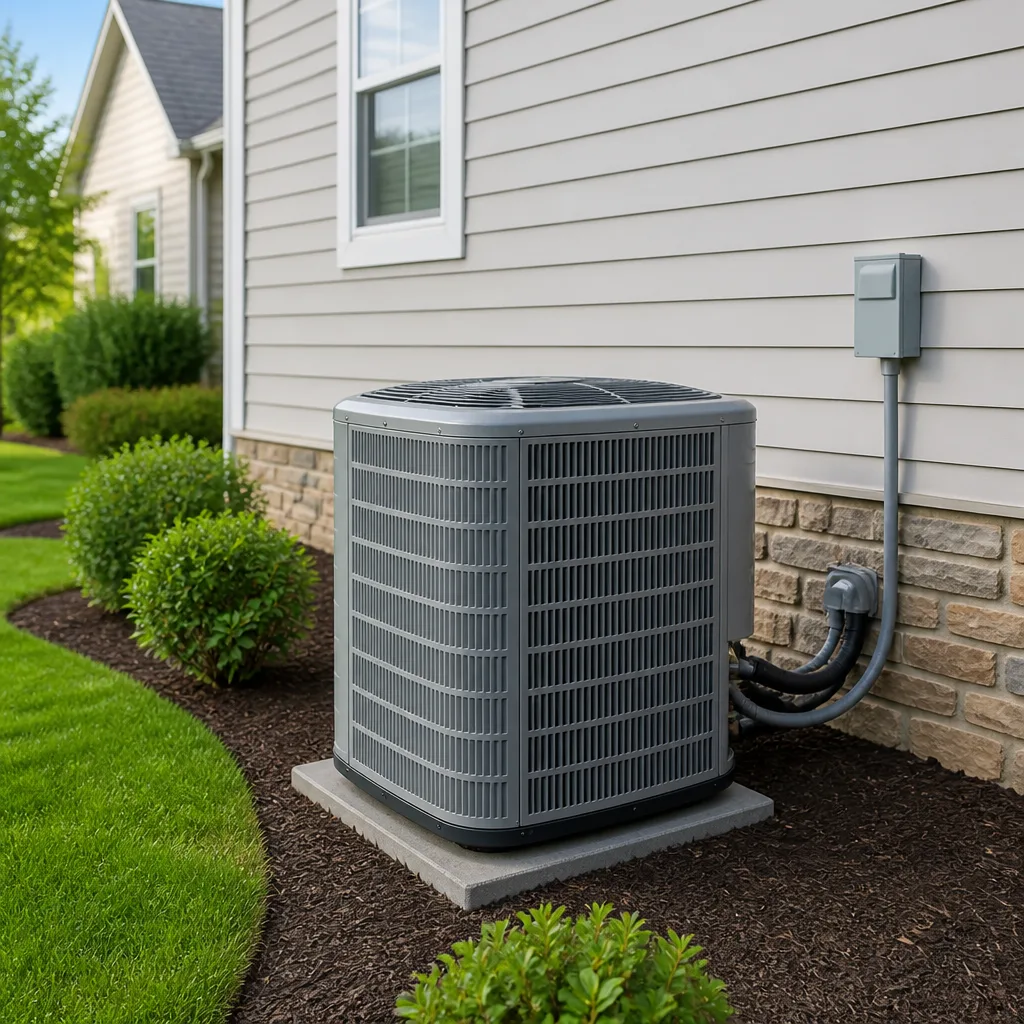
The condenser unit outside your home pulls air across the coil to reject heat. When that coil is packed with grass clippings, cottonwood fuzz, and red Georgia clay dust, the system works harder and runs longer. Turn off the disconnect at the outdoor unit, remove the fan grille and debris from the top, then gently rinse the coil with a garden hose, spraying from the inside out. Use a gentle stream, not a pressure washer; a pressure washer folds the aluminum fins flat and reduces airflow permanently. Do this twice a year: once after spring pollen and once after fall leaf drop. Stop point: if the fins are already bent across a large area, or if you see oil residue on the coil, that’s a refrigerant leak, and cleaning won’t fix it.
5. Breaker and Disconnect Check
When an AC unit won’t start, the problem is sometimes as simple as a tripped breaker at the main panel or a disconnect box that was left in the off position after yard work. You can check both safely: open the panel and look for a breaker that’s flipped to the middle or off position, then check the outdoor disconnect box, which is typically a small gray box on the wall near the condenser. Reset the breaker once. If it trips again, stop. A breaker that trips repeatedly is telling you there’s a short or overload somewhere, and resetting it twice is asking for a fire.
How DIY Work Voids Manufacturer Warranties
This is where we see the most expensive mistakes in Atlanta, and the warranty language is blunt. Every major residential HVAC brand requires that installation and repair work be performed by a licensed contractor for the warranty to remain valid. The exact wording varies, but the intent is identical across the board.
Carrier’s warranty, for example, covers parts for 10 years only when the unit is installed by a licensed HVAC contractor and registered within 90 days of installation. If a homeowner opens the sealed refrigerant system, Carrier’s warranty is void on the compressor, coil, and refrigerant lines. Trane’s base limited warranty states that labor and repairs must be performed by a “properly licensed” service provider, and it excludes damage caused by “unauthorized modifications.” Lennox and American Standard have similar clauses: any work that’s not performed by a licensed, trained technician can void the compressor warranty, and a compressor replacement in a modern Atlanta home runs $2,400 to $4,200 depending on the system size. That’s the part that turns a $300 DIY savings into a $4,000 out-of-pocket repair.
We had a homeowner in the Brookhaven area who replaced his own contactor, a $20 part, on a 7-year-old Trane system. The job went fine. Two years later, the compressor failed, and the manufacturer denied the warranty claim when the service history showed unauthorized electrical work. The homeowner paid for the full compressor replacement himself. The contactor repair saved him maybe $180 on a service call. The compressor cost him $3,100. That’s the warranty math in real dollars.
What’s more, some manufacturers require proof of annual maintenance by a licensed contractor to honor the warranty at all. If you’re doing your own maintenance and you never call a pro, you may be building a record that supports a claim denial later. Keep receipts and service records. They matter more than you think.
The Hidden Cost of a DIY Repair Gone Wrong in Atlanta
Let’s put real numbers on the risk. Atlanta’s cooling season runs long, and the highest demand for emergency HVAC service hits in July and August, when daytime highs sit in the low 90s and humidity makes it feel like 100. During that peak window, emergency replacement costs run 15 to 25 percent higher than off-season pricing, because manufacturers ship fewer units, distributors allocate inventory, and technicians work overtime. See our HVAC Cost Breakdown: The Atlanta Homeowner’s Reference for 2026 for line-item pricing on common repairs and replacements.
Here’s what a repair-gone-wrong can turn into, in real dollar terms for the Atlanta market:
- Spring or fall replacement: A 3-ton, 14 SEER system in Atlanta typically runs $7,500 to $9,500 installed, with a two to three week lead time.
- Peak July or August replacement: The same system runs $8,500 to $11,500, with premium pricing on emergency labor and fewer financing incentives available.
- Compressor failure from a DIY refrigerant mistake: $2,400 to $4,200 for the part alone, plus labor and refrigerant, and no warranty coverage if the DIY work is documented.
- Water damage from a DIY drain line repair gone wrong: a collapsed ceiling in an Atlanta home typically costs $1,800 to $4,500 to repair, and homeowner’s insurance often denies the claim when the cause is traced to unlicensed HVAC work.
The timeline matters too. A DIY repair that fails in July rarely means you wait three weeks for a new unit. It means you’re in a hotel or running window units while an emergency replacement is scheduled, and Atlanta’s emergency HVAC installers are booked solid during heat waves. We’ve seen homeowners wait four to five days for a replacement compressor in August, in a house that’s 88 degrees at midnight. Off-season, that same job happens in 48 hours. The cost of a mistake in Atlanta isn’t just the repair. It’s the timing, the overtime labor, and the days you can’t live in your own home.
How to Evaluate a YouTube HVAC Tutorial
Not every DIY HVAC video is dangerous. Some are produced by licensed contractors who assume you’ll call them if the job goes sideways. Others are produced by people who’ve replaced one capacitor in their life and now teach other homeowners to do the same, with no mention of the electrical risks. Here are three questions that separate the two.
- Does the creator identify themselves as a licensed contractor, and can you verify it? A real HVAC technician says their name, their company, their license state, and their service area. If the channel is anonymous, or the host refers to “a buddy who does HVAC,” treat everything in the video as entertainment, not instruction.
- Does the video show safety steps, or skip them? A credible tutorial starts with disconnecting power at the breaker and the outdoor disconnect, and it shows a voltage tester confirmation. If the host reaches into a condenser with bare hands and a running unit, the video is dangerous. Close it.
- Does the video mention when to stop and call a professional? Honest DIY content draws boundaries. It shows the task, then says, “if you see X, stop and call a licensed tech.” Videos that present every outcome as fixable are teaching you to chase a problem that needs tools and training you don’t have.
One more signal: check the comments. If licensed technicians are correcting the creator in the comments, that’s a red flag. It means someone who does the work for a living watched the video and saw something wrong. Scroll through before you pick up a screwdriver.
Tools, Time, and Skill: A Realistic Assessment
Be honest with yourself about what you’re equipped to do. HVAC work looks approachable on camera, but the tools are specialized, and the diagnostics are where amateurs lose time and money. A manifold gauge set for checking refrigerant pressure costs $120 to $250, and without EPA certification, you can’t legally use it on a residential system anyway. A quality multimeter for testing capacitors and contactors runs $60 to $150, and using one safely around 240 volts is a skill that takes practice, not a 9-minute video.
Time is the other cost. What takes a technician 45 minutes often takes a first-time DIYer four hours, plus a trip to the supply house, plus a second trip when the part doesn’t fit. The Atlanta homeowner who spends a Saturday afternoon swapping a capacitor to save a $220 service call is working for about $35 an hour, and that’s if nothing goes wrong. When something does go wrong, the real cost is the week you spend with no air conditioning in June while you wait for a licensed tech to undo the damage.
There’s also a knowledge gap that’s hard to close online. A technician looks at a system and reads it: the amp draw on the blower motor, the subcooling reading on the condenser, the temperature split across the coil. Amateurs don’t know what those readings mean, so they don’t know what they’re missing. A system can run fine for a month after a DIY repair and then fail because of an underlying condition the amateur never saw. That’s the part that doesn’t make it into the video.
Common Mistakes to Avoid
- Buying refrigerant online without EPA certification. It’s a federal violation, and sellers who ship to uncertified buyers are operating illegally. You can be fined. Don’t do it.
- Using a pressure washer on the condenser coil. The fins are aluminum, they’re thin, and a pressure washer folds them flat. A garden hose with a gentle stream is the right tool.
- Resetting a tripped breaker repeatedly. A breaker that trips twice is protecting you from a short. Resetting it again is how electrical fires start. Call a licensed tech.
- Adding stop-leak refrigerant sealers. These products circulate through the system and gum up metering devices, compressors, and coils. They turn a $400 leak repair into a full system replacement.
- Wiring a smart thermostat without checking for a C-wire. On heat pump systems, the auxiliary heat wiring matters. A miswired thermostat can leave you without heat on Atlanta’s coldest January nights.
- Opening the sealed refrigerant system for any reason. That’s EPA-regulated work. The moment you open the system, you’ve crossed from maintenance into territory that requires certification.
When to Call a Professional
Call a licensed HVAC contractor when you hear a grinding noise from the outdoor unit, when the breaker trips more than once, when ice forms on the indoor coil in summer, when the system blows warm air in cooling mode, or when you smell gas near the furnace. These aren’t maintenance issues; they’re failure signals. Brandt HVAC Co Atlanta home offers free estimates in Atlanta, and we send a written price before any work starts. Our technicians arrive in uniform, with photo ID, and we tell you who’s coming before they get there. Call (762) 465-4570 and a live person answers, day or night.
For specific issues, these pages and our more guides & resources cover what you need to know:
- AC Repair in Atlanta for cooling failures, refrigerant leaks, and compressor problems.
- Furnace Repair in Atlanta for gas furnace, heat exchanger, and ignition issues.
- AC Maintenance in Atlanta for the annual tune-ups that keep your system running and your warranty intact.
See the difference
 Before
 After
After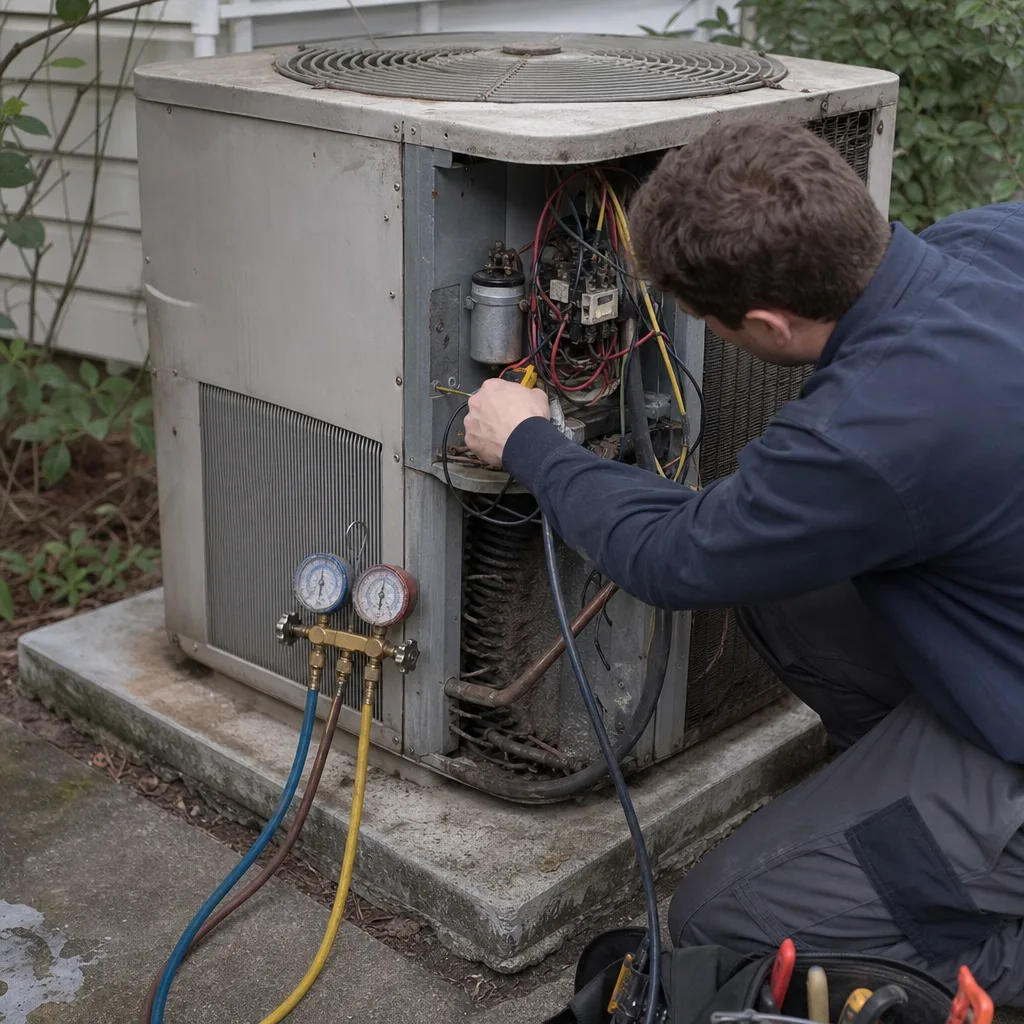 Before
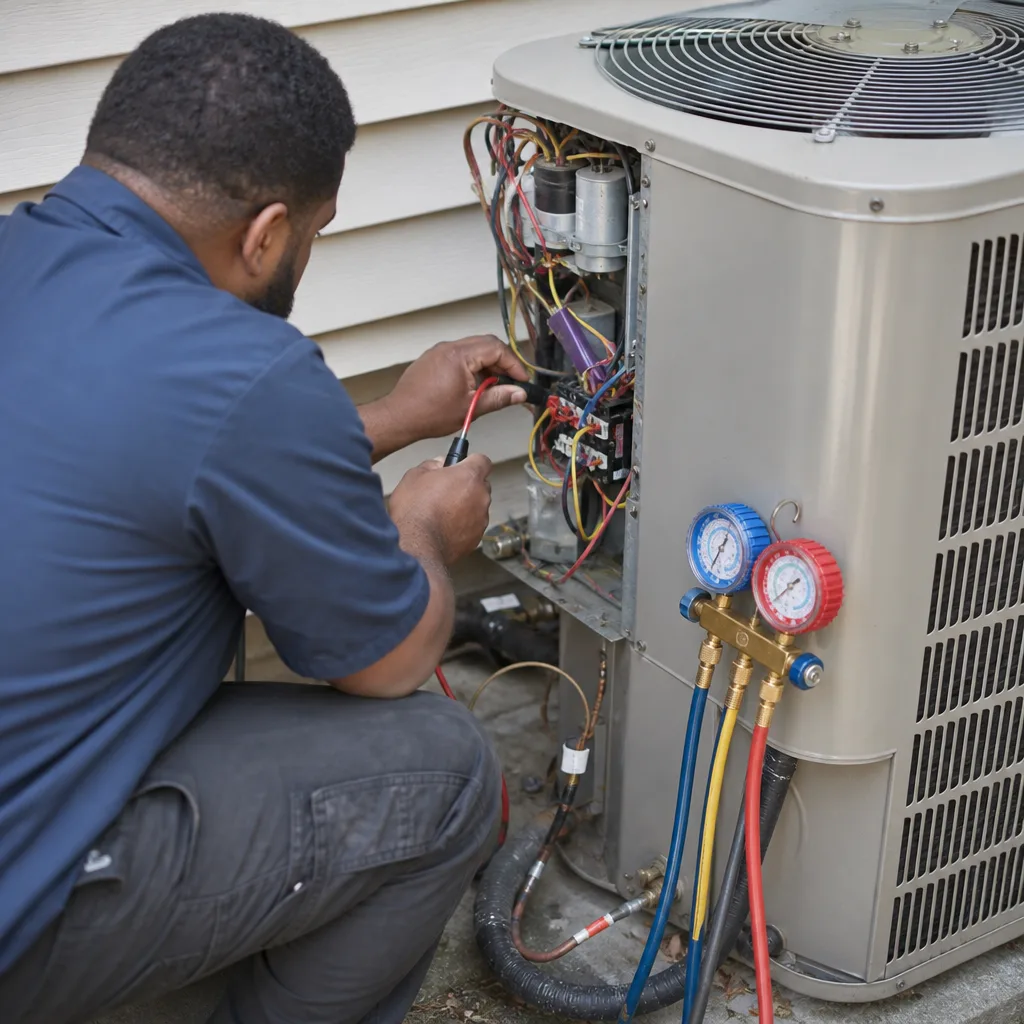 After
After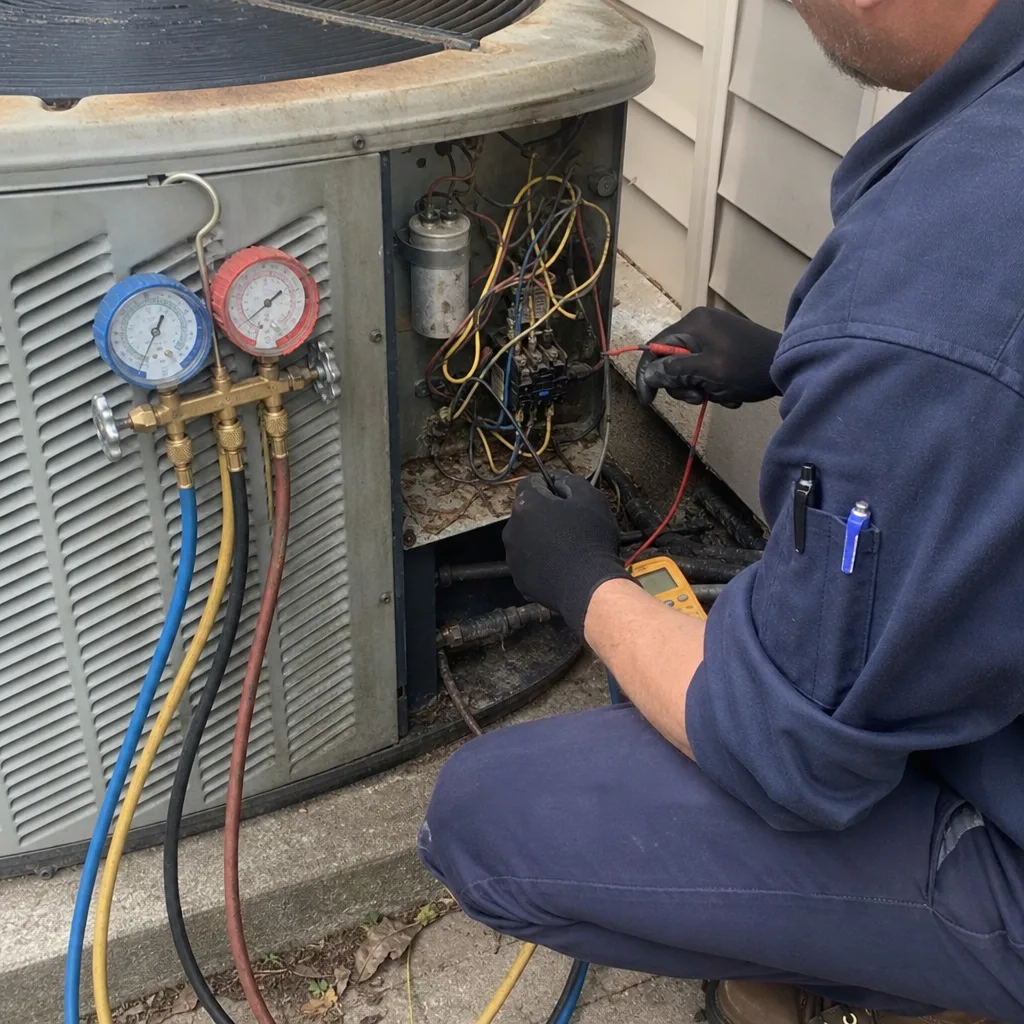 Before
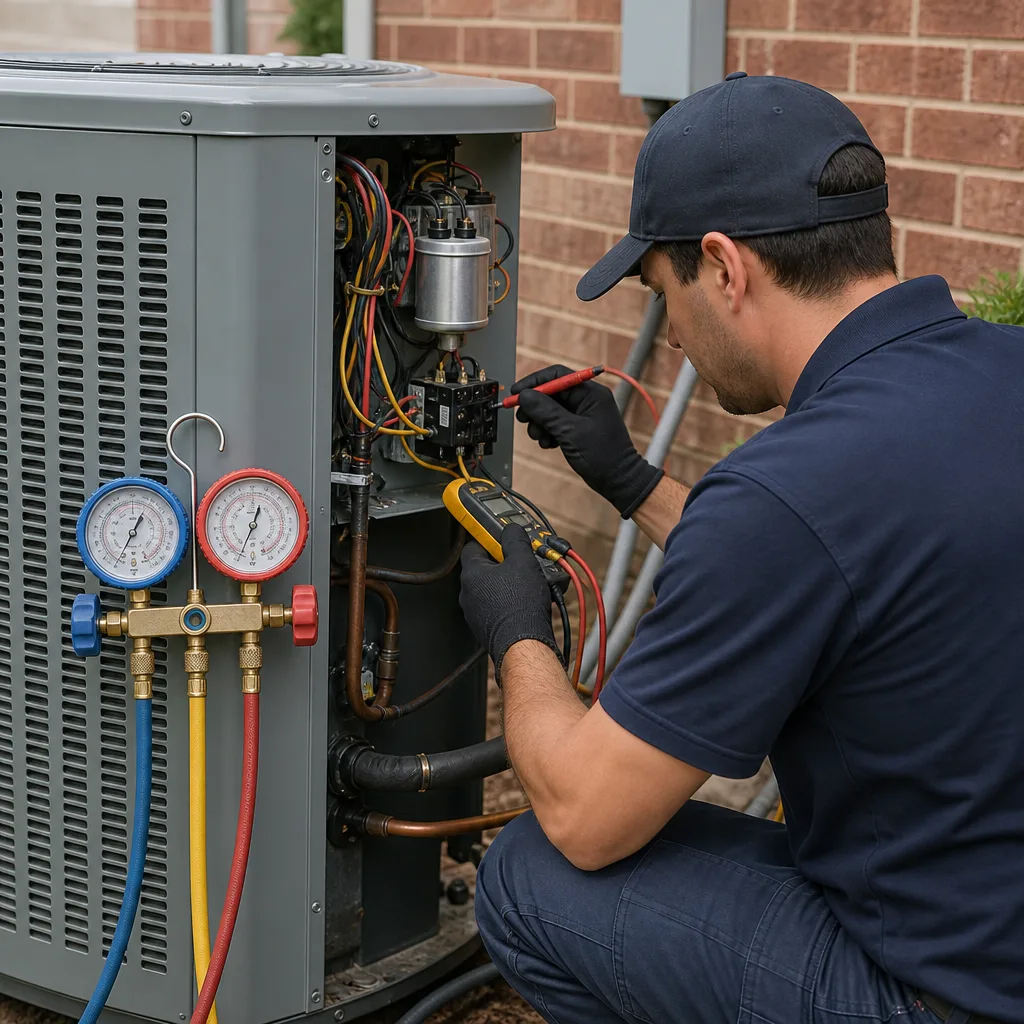 After
AfterFrequently Asked Questions
You do not need a license for basic maintenance like filter changes, thermostat battery replacement, or drain line clearing. You do need a license for refrigerant handling under EPA Section 608, for gas line work under Georgia code, and for any installation or replacement that requires a permit from your local Atlanta jurisdiction.
No. The EPA prohibits refrigerant sales to anyone without Section 608 certification, and that certification requires passing an EPA-approved exam. Buying refrigerant online without certification is a federal violation, even if the seller doesn’t ask for proof.
Basic maintenance won’t void your warranty, and manufacturers actually expect you to change filters and keep the outdoor unit clear. But any repair that involves opening the sealed system, modifying wiring, or replacing parts without a licensed contractor can void coverage, and manufacturers like Carrier, Trane, and Lennox all write that exclusion into their warranty terms.
We see more failed capacitor and contactor replacements than anything else. Homeowners buy the wrong microfarad rating, install it without tightening the connections properly, and the system fails again within a week. Then they pay for the DIY parts and the professional repair.
Filter changes and drain line clearing save about $150 to $250 per year in service fees, and those are worth doing. Repair work is different. A capacitor replacement that goes wrong can turn a $220 service call into a $600 repair or a $3,000 compressor failure. The savings math falls apart quickly when the stakes are high.
Demand. Atlanta’s peak cooling season runs May through September, and July and August see the highest emergency call volume. Manufacturers and distributors prioritize inventory for scheduled installs, and emergency replacements pay premium freight and overtime labor. It’s not a surcharge; it’s market pricing in a heat-driven economy. Off-season replacement, October through February, is typically 15 to 25 percent less expensive.
The Bottom Line
The DIY versus professional HVAC decision isn’t about capability. Plenty of Atlanta homeowners are handy enough to change a capacitor. The line is legal, financial, and practical. Refrigerant, gas, high-voltage electrical, and permitted installations belong to licensed professionals because the law says so and because the cost of a mistake in Georgia’s climate runs into the thousands. Maintenance belongs to you. Keep the filter clean, keep the drain clear, and keep the outdoor unit free of debris, and you’ll save real money over the life of the system. When a repair crosses the line, call a licensed Atlanta contractor and get a written price before any work starts. Not sure where to start? Read How to Hire a HVAC Contractor in Atlanta: A Step-by-Step Guide first. That’s how you protect your warranty, your home, and your family.
Written by Devin Marlowe, Owner at Brandt HVAC Co Atlanta, serving Atlanta since 2003.