

Last updated October 16, 2026
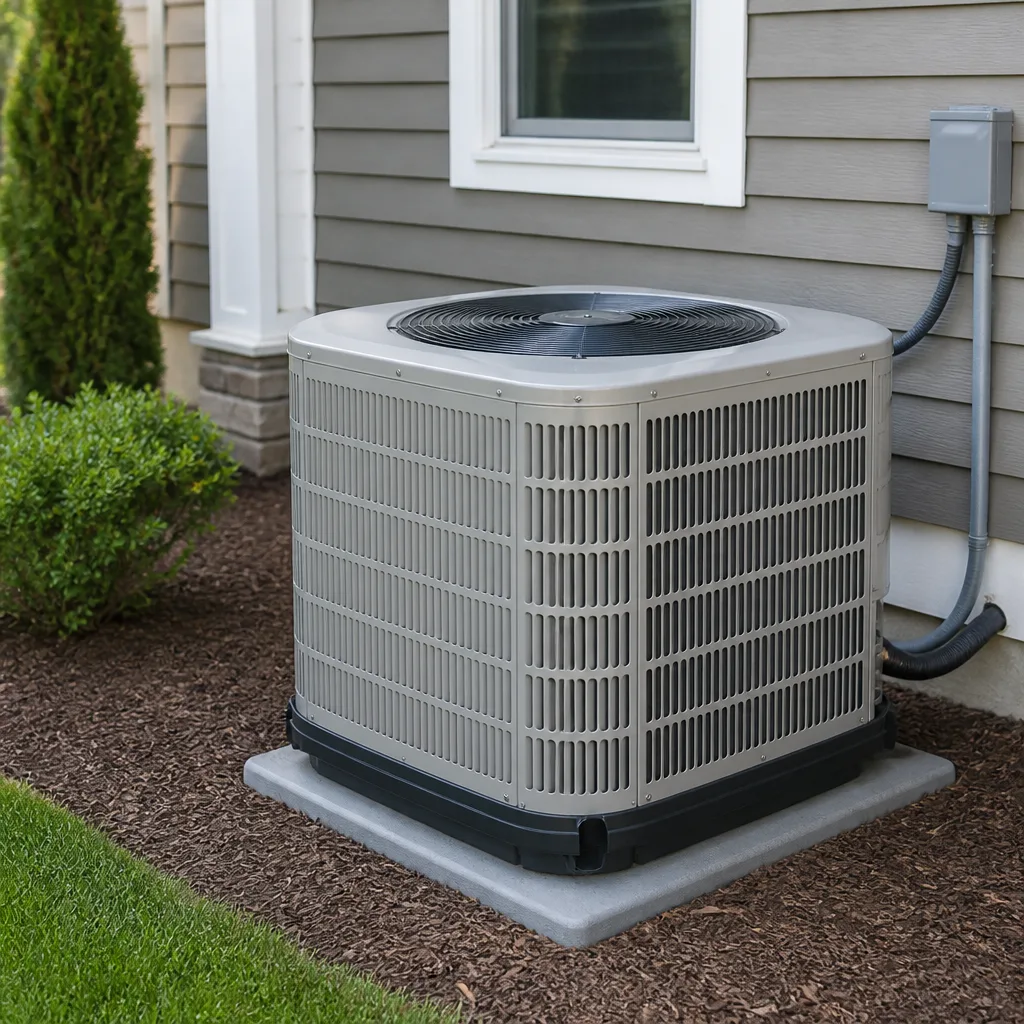 AC repair
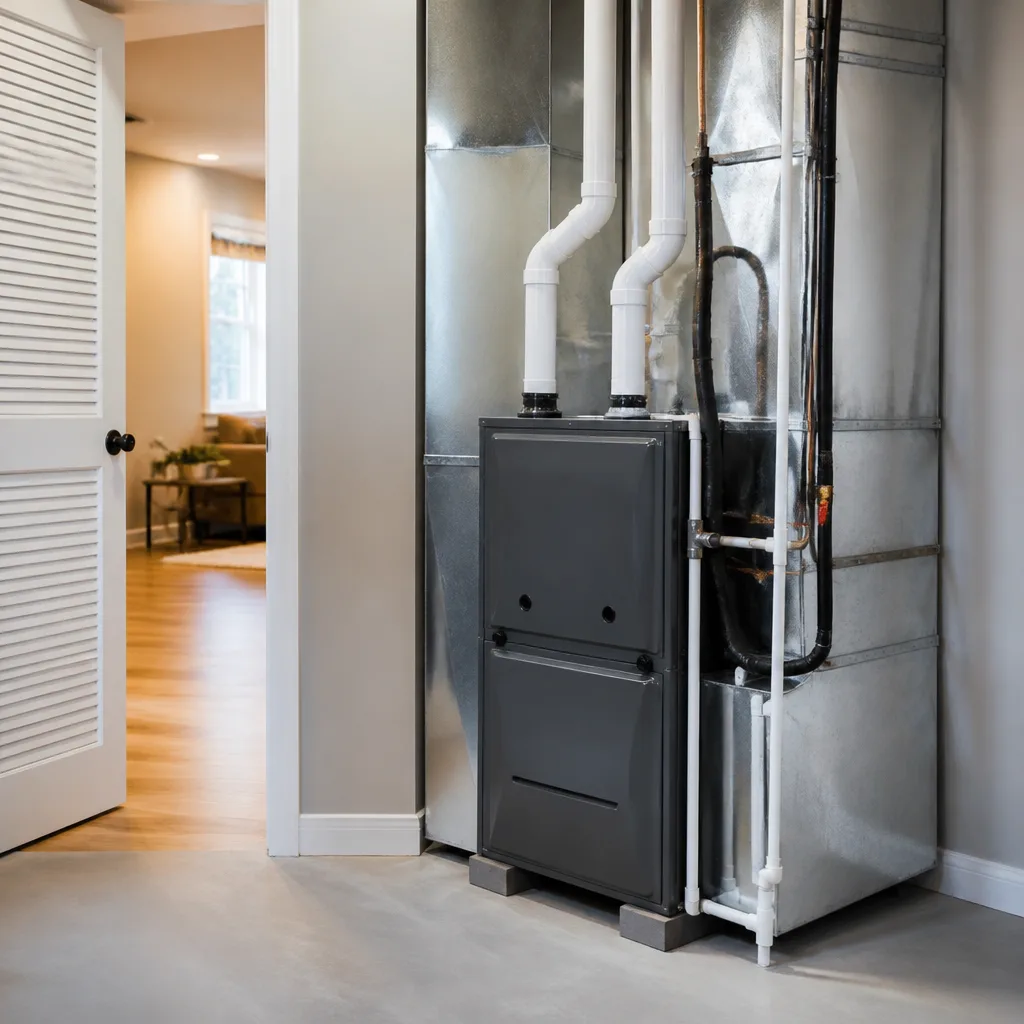 Furnace & heating
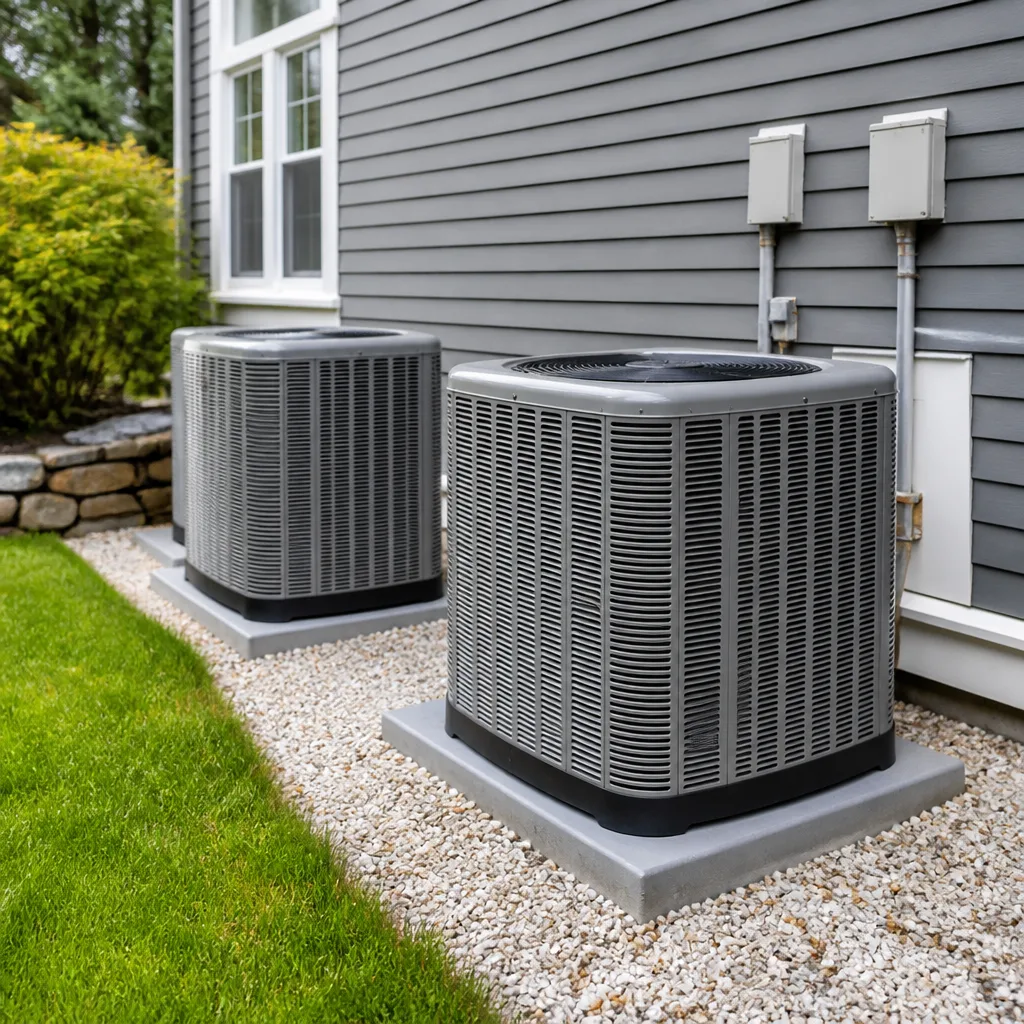 Heat pumps
 Carrier
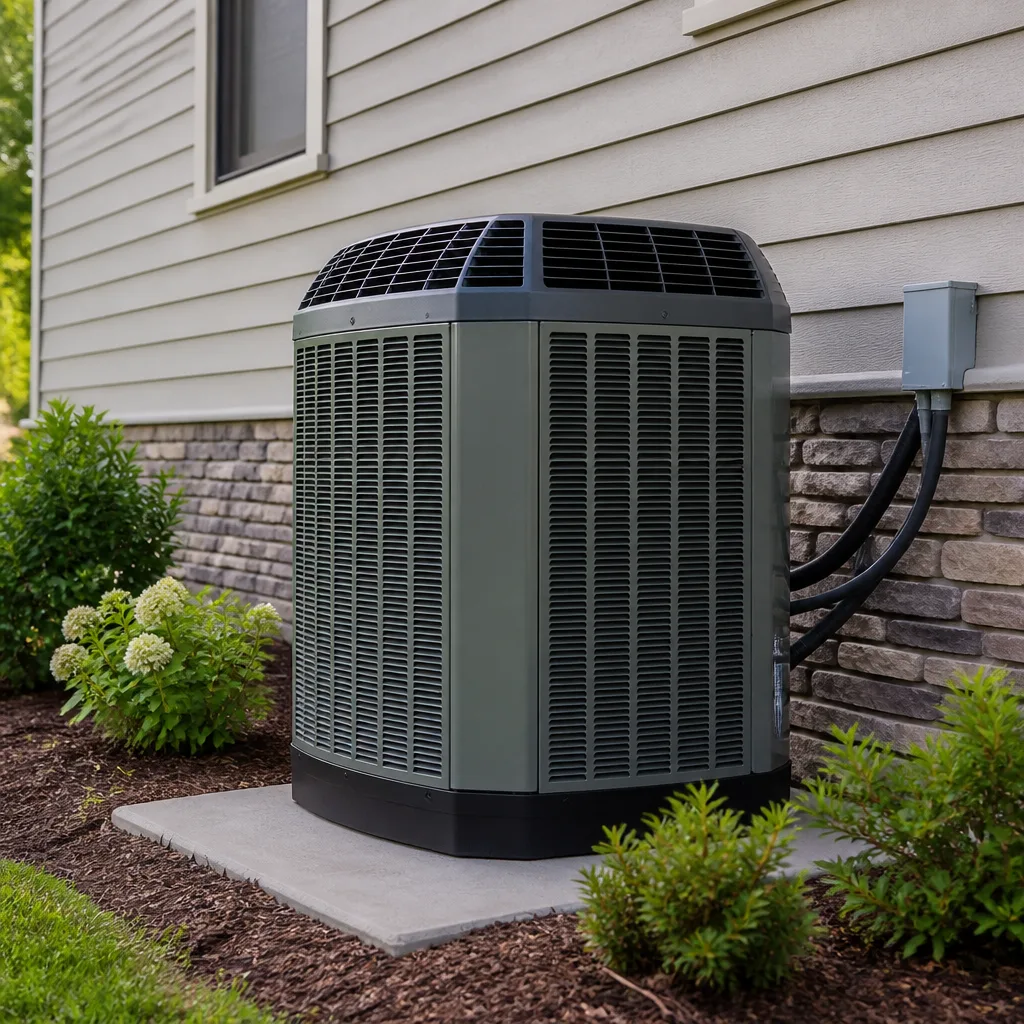 Trane
Trane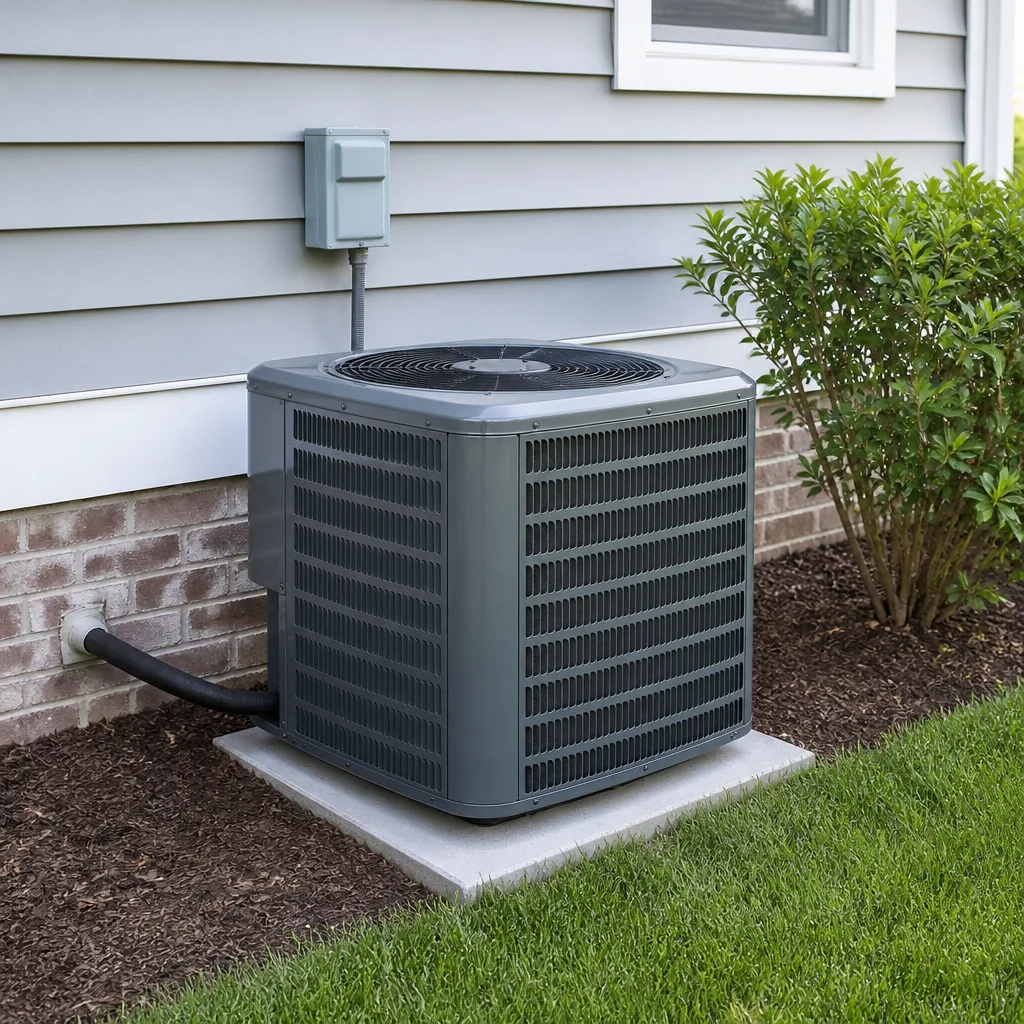 Goodman
Seasonal tune-up and full diagnostic on your Carrier, Trane, or Goodman system - readings shown to you before any repair is proposed
Diagnosis first, numbers second - you approve the repair price before a single part goes in.
Get your free estimateThe Complete Guide to HVAC in Atlanta
Atlanta logs an average of 95 cooling days per year, nearly double what a Chicago homeowner experiences, yet most HVAC guides read as if climate were an afterthought. That’s a problem, because the decisions you make about your heating and air system in Atlanta are shaped by factors most national advice never touches: humidity that never fully quits, short but sharp winter spikes, and a web of local permit rules that varies by county line. This guide maps every decision an Atlanta homeowner actually faces, from equipment sizing for humid subtropical conditions to knowing which city zones require permits for a simple refrigerant recharge. By the time you finish, you’ll know what things cost here, what local rules apply, and how to make sure the person walking through your door is someone you can trust.
Styles & brands we work with
Quick Answer
HVAC in Atlanta is a different animal than in drier or colder metros: your system must handle long, humid cooling seasons and brief but genuine winter cold snaps, which means sizing, equipment choice, and maintenance priorities all shift. Most homeowners in Atlanta will spend between $120 and $450 on a typical repair, $90 to $180 on an annual tune-up, and $7,500 to $14,000 on a full system replacement depending on equipment brand, efficiency, and home size. The single most important thing you can do is verify that any contractor sizes your equipment with a Manual J load calculation for Atlanta’s mixed-humid climate, not a rule-of-thumb guess.
Table of Contents
- How Atlanta’s Climate Shapes Your HVAC Needs
- Manual J Sizing: Why It Matters More in Atlanta
- Permits and Codes: Fulton, DeKalb, and Cobb County Rules
- Heat Pump vs. Gas Furnace: Atlanta’s Winter Question
- What HVAC Services Cost in Atlanta in 2026
- Who’s at Your Door: How Threshold Verified Works
- Maintenance That Actually Matters in Atlanta’s Humidity
- Common Mistakes to Avoid
- When to Call a Professional
- Frequently Asked Questions
- The Bottom Line
How Atlanta’s Climate Shapes Your HVAC Needs
Atlanta sits in a humid subtropical zone, which sounds mild until you live through it. Summers run hot and wet from late May through mid-September, with dew points that hover in the mid-70s and push your air conditioner to remove moisture as much as it removes heat. Winters are short but not harmless. Average lows dip into the mid-30s, and on rare occasions a polar air mass pushes wind chills into single digits. Your system has to do two very different jobs well.
What this means in practice is fairly simple. An HVAC system sized only for peak cooling will struggle to keep a home comfortable on the shoulder days when the temperature swings 30 degrees between morning and afternoon. A system chosen without serious attention to dehumidification will leave your home feeling clammy even when the thermostat says 72. And a system that ignores winter entirely may leave you scrambling during those brief cold snaps when heat demand spikes.
We see this play out in neighborhoods across the metro. Homes in older intown areas like Grant Park or Virginia-Highland often have systems that were sized decades ago, before Atlanta’s summers grew longer and hotter. Homes in newer developments in Cobb County or DeKalb County may have systems that were installed to hit a builder’s price point rather than matched to the actual thermal load of the house. None of this is the homeowner’s fault, but all of it lands on the homeowner’s monthly bill and comfort level.
The practical takeaway: in Atlanta you should think of your HVAC system as a year-round climate manager, not a seasonal appliance. That single shift in thinking changes how you shop, how you maintain, and how you evaluate repair vs. replace decisions.
Manual J Sizing: Why It Matters More in Atlanta
Manual J is the industry-standard load calculation that determines exactly how much heating and cooling capacity a home needs. It accounts for square footage, ceiling height, window orientation, insulation levels, air infiltration, and local climate data. In a dry climate like Phoenix, a slightly oversized air conditioner mostly wastes energy. In Atlanta, an oversized system is actively bad at its job. Here’s why.
Air conditioners dehumidify only when they run. A system that’s too large will blast cold air into the home, hit the thermostat setpoint in minutes, and shut off before it has run long enough to pull meaningful moisture from the air. The result is a home that feels cold and clammy at the same time. You’ve felt this if you’ve ever sat in a house where the thermostat reads 70 but the air feels sticky. That’s an oversized system working against itself.
An undersized system has the opposite problem. On Atlanta’s hottest days, which now routinely reach the mid-90s with high humidity, the unit will run constantly and never reach setpoint. Your energy bill climbs, the compressor wears out years early, and the house never feels right.
How do you know if your current system was ever properly sized? Here are three signs to check:
- Runtime behavior. On a typical summer afternoon with the thermostat at 75, your AC should cycle on for 15 to 20 minutes at a stretch. If it turns on and off every five or six minutes, it’s likely oversized. If it runs for an hour without stopping, it’s undersized or struggling.
- Humidity complaints. If you run a separate dehumidifier in the summer just to feel comfortable, your AC isn’t handling Atlanta’s moisture load. That’s often a sizing issue, not a maintenance issue.
- No load calc on record. When a system was replaced by a previous owner, there may be no documentation of a Manual J calculation. Most systems installed by volume builders were sized using a rough square-footage rule, and that’s exactly the wrong approach for Atlanta’s mixed-humid climate.
Any contractor you hire for a full replacement should be able to show you the Manual J inputs and results. If they wave it off and say they’ve been doing this for 20 years and can size it by eye, that’s a red flag. Not because experience doesn’t matter, but because Atlanta’s climate is specific enough that even experienced eyes miss things that a calculation catches.
Permits and Codes: Fulton, DeKalb, and Cobb County Rules
This is the section that catches Atlanta homeowners off guard, because the city of Atlanta and the surrounding counties do not play by one set of rules. The metro area splits across multiple jurisdictions, and what’s true in one may not be true three miles away.
Here’s the plain-language version of what you need to know:
- City of Atlanta proper (Fulton County). A mechanical permit is required for system replacement, new ductwork, or any work that involves altering the refrigerant circuit beyond a simple recharge. The city also enforces energy code compliance on new installations, which means your contractor must document that the new equipment meets current efficiency minimums. The city of Atlanta adopted the 2015 International Energy Conservation Code with local amendments, and inspectors do check.
- DeKalb County (unincorporated areas and cities that contract with the county). DeKalb requires a mechanical permit for full system replacements and for new duct installation. Simple repairs like a capacitor or igniter swap generally do not require a permit. DeKalb’s scheduling system for inspections can run several days out during peak cooling season, so homeowners planning a replacement in June or July should build that timeline in.
- Cobb County. Cobb requires a permit for system changeouts and new equipment installations. The county also has specific rules about outdoor condenser placement including setbacks from property lines, which matters if your unit is being relocated as part of a renovation. A contractor who pulls the permit in their name, rather than asking the homeowner to pull it, is doing the job the way it should be done.
What should you actually do with this information? Two things. First, ask any contractor before work begins whether they’ll pull the required permit in their name. If they hesitate, that’s a problem. Second, understand that a permit isn’t bureaucratic overhead. It triggers a third-party inspection that verifies the work was done to code, and in our experience, that inspection catches real issues often enough to be worth the wait.
There’s a practical nuance on refrigerant. In Atlanta’s market, a straightforward refrigerant recharge without any leak repair typically does not require a permit in most jurisdictions. But here’s the catch: adding refrigerant without finding and fixing the leak is illegal under EPA rules in many cases, and it’s bad practice in every case. A system that needed a recharge will need another one, because the refrigerant didn’t disappear on its own. A contractor who wants to just “top it off” without a leak search is doing you no favors.
Heat Pump vs. Gas Furnace: Atlanta’s Winter Question
This is the most consequential equipment decision an Atlanta homeowner makes, and it’s one where national advice frequently steers people wrong. The standard national guidance says heat pumps are great in mild climates and gas furnaces win in cold climates. Atlanta doesn’t fit neatly into either bucket.
Here’s the honest math. Atlanta’s winter design temperature, the number engineers use to size heating equipment, is right around 23 degrees Fahrenheit. That means a properly sized heat pump will handle 95 percent of Atlanta winter days without backup. But those remaining days, when a polar air mass drops lows into the teens or single digits with wind chill, are real. Modern cold-climate heat pumps from brands like Lennox and Goodman can maintain decent output down into the single digits, but their efficiency drops, and if your home has average insulation, you may wish you had gas.
The other factor is energy pricing. Natural gas in Georgia is historically cheap relative to the national average, which shifts the economics in favor of gas furnaces for homes that already have gas lines. But if you live in an all-electric home without a gas connection, running a gas line for a furnace can add thousands to a replacement cost, and a high-efficiency heat pump becomes the more sensible choice.
Our plain recommendation: if you have natural gas at your home, a dual-fuel approach or a standard gas furnace paired with a high-efficiency AC is usually the right call for Atlanta. The gas furnace handles those sharp winter spikes with authority, and the AC handles the summer, which is the season your system spends most of its working life. If you’re all-electric, don’t fear a heat pump. Modern units from Rheem and York have improved dramatically in cold-weather performance, and many Atlanta homes use them comfortably year-round.
One more thing worth knowing: Georgia Power offers rebates on qualifying high-efficiency heat pumps, and federal tax credits under the Inflation Reduction Act still apply to eligible equipment in 2026. We’ll touch on rebates more in the cost section below.
What HVAC Services Cost in Atlanta in 2026
Let’s talk real numbers, because arriving at a repair decision without knowing the ballpark is a miserable experience. These ranges reflect what we see in Atlanta’s market as of 2026, including local labor rates, which run higher in the metro than in rural Georgia but lower than in coastal metros like New York or San Francisco.
Repair Costs
- Capacitor replacement: $120 to $250, parts and labor included. This is the most common summer repair in Atlanta, because capacitors take a beating from our heat.
- Condensate drain line clearing: $100 to $200. Atlanta’s humidity means drain lines clog with algae faster here than almost anywhere.
- Refrigerant leak search and repair: $350 to $900 depending on where the leak is and how hard it is to reach. The search itself is usually $150 to $300.
- Blower motor replacement: $400 to $900 depending on whether it’s a single-speed or variable-speed motor.
- Compressor replacement: $1,800 to $3,200, and this is the number that forces the repair-vs-replace conversation.
- Furnace igniter replacement: $150 to $300, parts and labor included.
- Flame sensor cleaning or replacement: $80 to $180.
Maintenance Costs
- AC tune-up and inspection: $90 to $180. A maintenance visit should include coil cleaning, drain line clearing, refrigerant level check, capacitor testing, and a written report of what was found.
- Furnace tune-up: $90 to $160, including heat exchanger inspection and burner cleaning.
- Combined annual maintenance plan covering both systems: $160 to $280 per year, typically two visits.
Full System Replacement Costs
- 14 SEER2 single-stage AC with gas furnace, 2.5 to 3 tons: $7,500 to $9,500 installed. This covers most 1,800 to 2,400 square-foot Atlanta homes.
- 16 SEER2 two-stage system: $9,000 to $11,500 installed. Better humidity control, which matters in Atlanta summers.
- 18 SEER2 variable-speed heat pump: $11,000 to $14,000 installed, before any rebates.
- Ductwork replacement for a typical Atlanta home: $4,000 to $8,000 depending on accessibility, which varies wildly by house age and foundation type. Crawlspace homes in established neighborhoods run higher.
These numbers assume a licensed, insured contractor pulling permits where required and using proper evacuation and charging procedures. You can find lower prices, and they usually mean skipped permits, skipped leak searches, or undersized equipment. In Atlanta’s climate, that’s a bad trade.
Want to read more about what a repair actually involves? Our guide to AC Repair in Atlanta walks through the most common failures and what a proper diagnosis looks like.
Who’s at Your Door: How Threshold Verified Works
Here’s something most HVAC guides never address, and it matters more than most people admit: when your AC fails in Atlanta in July, you don’t have the luxury of researching a company for a week first. You call someone, and hours later a person you’ve never met is standing at your door, and you’re supposed to let them into your home. For homeowners who are often home alone, parents with young children, or older adults, that moment is genuinely uncomfortable.
The Brandt name comes from an old word for a firebrand, a fitting name for the work of keeping a home warm. But the part of our work we take most seriously is what happens before the fire gets lit or the air gets cooled. Every technician sent by Brandt HVAC Co Atlanta goes through the Threshold Verified standard, which means three concrete things:
- Background-checked and identity-verified. Every technician passes a criminal background check before their first day in a customer’s home, and their identity is verified through the Threshold Group’s employment records. This is not a one-time screen; it’s the standard for everyone who wears our uniform.
- Named and pictured before arrival. When you book with us, you receive the name and photo of the technician assigned to your job before they arrive. You know who is coming. If the person at the door doesn’t match the name and photo you were given, do not let them in, and call us immediately. Under the Threshold Verified standard, if anyone arrives who you were not told to expect, that visit is on us and we make it right.
- Photo ID shown at the door. Our technicians carry photo identification badges and are trained to present them without being asked. You should never have to wonder who you just let into your home.
This matters in a city like Atlanta, where the metro’s size means plenty of transient, unlicensed operators move through the market during peak season. The cheapest quote often comes from someone with no verifiable identity, no insurance, and no accountability. Saving $40 on a capacitor is a bad exchange for that kind of risk.
Maintenance That Actually Matters in Atlanta’s Humidity
Most maintenance advice is generic: change your filter, clean your coils, done. That’s insufficient in Atlanta, because our humidity creates specific failure modes that dry-climate HVAC systems never encounter. Here’s what actually matters here, in order of importance:
- Drain line clearing, twice a year minimum. Atlanta’s humidity means your AC pulls gallons of moisture out of the air every day in summer. That moisture drains through a PVC line that algae loves to colonize. A clogged drain line backs water into your air handler, and in Atlanta homes where air handlers sit in attics, that means water through your ceiling. This is one of the most common claims on homeowners insurance in the metro, and it’s almost entirely preventable.
- Evaporator coil cleaning. A dirty coil is inefficient anywhere, but in humid air it also becomes a breeding surface for mold and mildew, which then blow through your ducts. If you notice a musty smell when the AC kicks on, this is usually why.
- Capacitor and contactor testing. Atlanta’s heat stresses electrical components. A $25 capacitor that fails on a July afternoon becomes a $200 emergency call plus a miserable night. Testing these each spring catches failures before they happen.
- Refrigerant level verification. Your system does not consume refrigerant. If it’s low, there’s a leak. Catching a small leak early is a $400 repair. Ignoring it until the system won’t cool is a $2,000 repair or a full replacement.
- Filter replacement on a real schedule. In Atlanta, you should check your filter monthly during cooling season and replace it when it’s visibly loaded. For most homes with 1-inch filters, that’s every 30 to 60 days. Homes with pets or construction nearby will need it more often.
Our AC Maintenance in Atlanta page explains what a maintenance visit includes and why we put everything in writing, including what we found, what we recommend, and what we didn’t find.
Common Mistakes to Avoid
- Skipping the drain line. More Atlanta homeowners suffer water damage from a clogged condensate line than from any other HVAC failure. A $10 bottle of pan tablets or a spring maintenance visit prevents most of these.
- Replacing a system without a Manual J load calculation. If your contractor sizes by square footage alone, you’re paying for a system that’s either too big or too small. In Atlanta, either failure costs you comfort and money.
- Topping off refrigerant without finding the leak. It’s illegal in many cases and pointless in all cases. The leak is still there, and you’ll be back in the same spot within a season or two.
- Ignoring county permit rules. A contractor who won’t pull a permit in their name is either unlicensed or cutting corners. In Fulton, DeKalb, or Cobb County, a permitted replacement comes with an inspection that protects the investment you just made.
- Choosing price over identity. The person who gives the cheapest quote over the phone is often someone you know nothing about. In Atlanta’s busy summer season, unlicensed and unverified operators are everywhere. Knowing who’s at your door matters more than saving $50.
- Waiting until the first heat wave to schedule maintenance. Every Atlanta contractor is booked solid the first two weeks of June. Get on the calendar in March or April, and you’ll have your pick of times and a system that’s ready before it’s needed.
- Ignoring strange smells or sounds. A burning smell from the furnace on first startup of the season is often dust burning off and harmless. A burning smell that persists, or a grinding sound from the outdoor unit, or a hissing sound near the refrigerant lines, is not harmless. Call before it gets worse.
When to Call a Professional
Some things are safe to handle yourself: changing a filter, checking that your outdoor unit isn’t buried in leaves, confirming the thermostat is set correctly. Other things are not. If your system is making a grinding noise, if you smell burning that doesn’t stop after a minute or two, if water is pooling around your air handler, if your AC is running but not cooling, or if your furnace is short-cycling in winter, those are signals of mechanical or electrical failures that need a trained hand. Refrigerant handling requires EPA certification by law, and working on electrical components or gas lines without training is dangerous, full stop.
Brandt HVAC Co Atlanta offers free estimates in Atlanta. Call (762) 465-4570 and a live person will answer, any hour, any day. We’ll tell you who’s coming, send their name and photo before arrival, and put a written price in front of you before any work starts.
Frequently Asked Questions
A complete system replacement in Atlanta (AC plus furnace, including installation and permits) typically runs between $7,500 and $14,000 depending on size, efficiency, and brand. Entry-level 14 SEER2 systems fall at the lower end, while variable-speed 18 SEER2 heat pumps from brands like Lennox or Rheem run at the higher end. The best way to get an exact number is to have a contractor perform a Manual J load calculation and give you a written, itemized quote. Call (762) 465-4570 for a free estimate.
Twice a year is the right cadence for Atlanta: once in spring before cooling season, once in fall before heating season. Atlanta’s humidity makes drain line maintenance more important than in drier climates, and our summer heat stresses electrical components that benefit from yearly testing. Homes with pets, allergens, or heavy system use may need filter changes more often, but two professional visits per year covers the essentials.
In most of the Atlanta metro, including the city of Atlanta, DeKalb County, and Cobb County, a mechanical permit is required for a full system replacement. Simple repairs like a capacitor or igniter swap generally do not require one. Your contractor should pull the permit in their name and schedule the required inspection. If a contractor tells you permits aren’t needed for a full replacement, get a second opinion.
For most Atlanta homes with natural gas already connected, a gas furnace paired with a high-efficiency AC is the better call, because gas heat handles our occasional winter cold snaps efficiently and Georgia gas prices are relatively low. For all-electric homes, a modern cold-climate heat pump from Goodman or York performs well in Atlanta’s mild-to-moderate winters and is typically cheaper to install than running a new gas line. The answer depends on your home’s current setup and your comfort priorities.
That usually means your system is oversized for your home, so it cools the air quickly but doesn’t run long enough to remove moisture. In Atlanta’s humid climate this is a common problem, especially in newer homes where builders installed equipment by square-footage rules instead of a proper load calculation. A dehumidifier is a band-aid. The real fix is right-sizing the equipment or adjusting airflow settings, which a qualified technician can evaluate.
Ask for the company’s name before you book, verify that the technician’s identity matches what the company told you, and look for a photo ID badge at the door. With Brandt HVAC Co Atlanta, you receive the technician’s name and photo before arrival, and every technician is background-checked and identity-verified under the Threshold Verified standard. If the person at your door doesn’t match the person we told you to expect, do not let them in, and call (762) 465-4570 immediately.
The standard rule is to replace if the repair costs more than a third of the system’s replacement value and the system is past 10 to 12 years old. But Atlanta’s climate adds a wrinkle: if your system is 12 years old, uses R-22 refrigerant that’s being phased out, and has a leaking coil, the math strongly favors replacement, because R-22 is now expensive and hard to source. A trustworthy contractor will show you the numbers for both paths and let you decide. Our Furnace Repair in Atlanta guide covers the same decision from the heating side.
The Bottom Line
Atlanta’s climate punishes shortcuts. An oversized AC leaves you clammy. A skipped drain line floods your ceiling. A contractor who won’t pull a permit leaves you holding the liability. The homeowners who get the most from their HVAC systems in this city do three things: they maintain on schedule, they demand proper sizing on any replacement, and they know exactly who’s walking through their door. You don’t need to become an HVAC expert. You need a contractor who does the load math right, prices work in writing, and proves their identity at your door. That’s what this guide set out to explain, and that’s the standard we hold ourselves to every day in Atlanta.
Written by Devin Marlowe, Owner at Brandt HVAC Co Atlanta, serving Atlanta since 2003.
See the difference
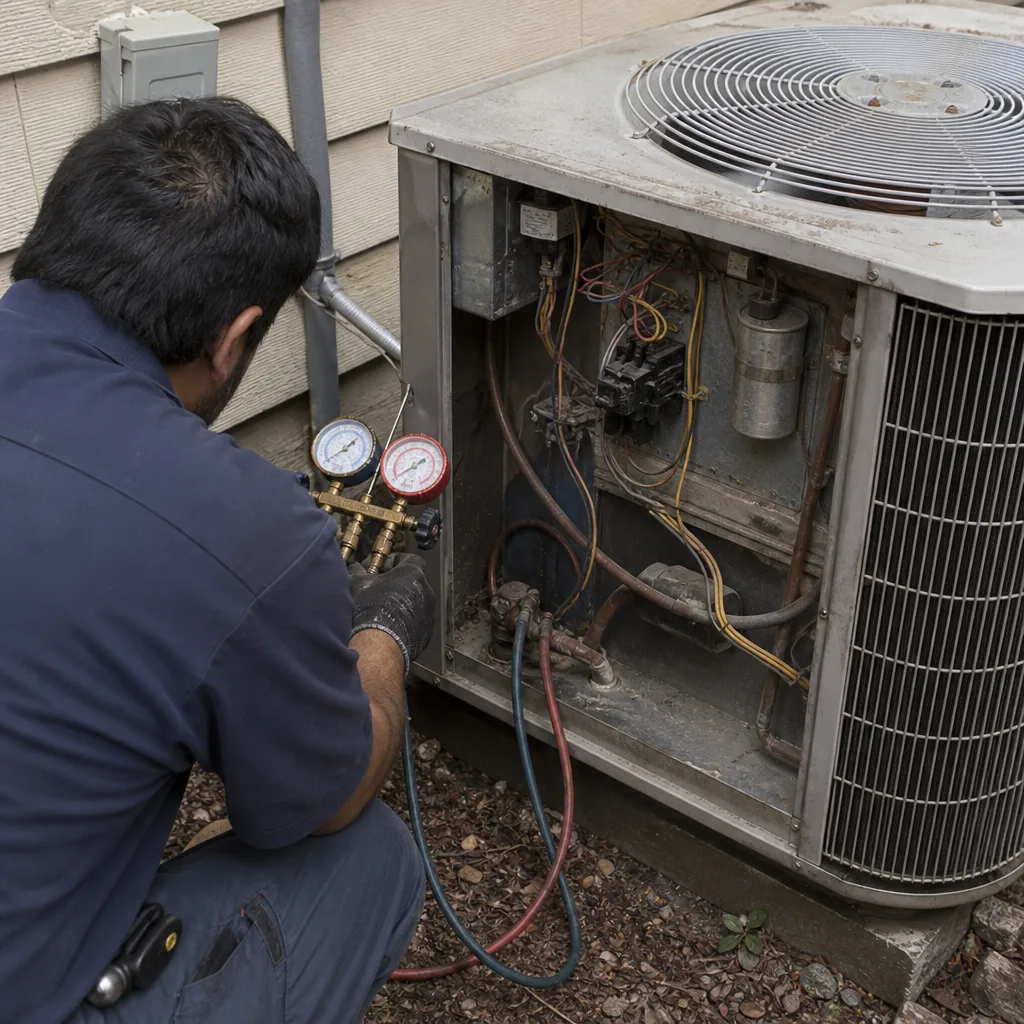 Before
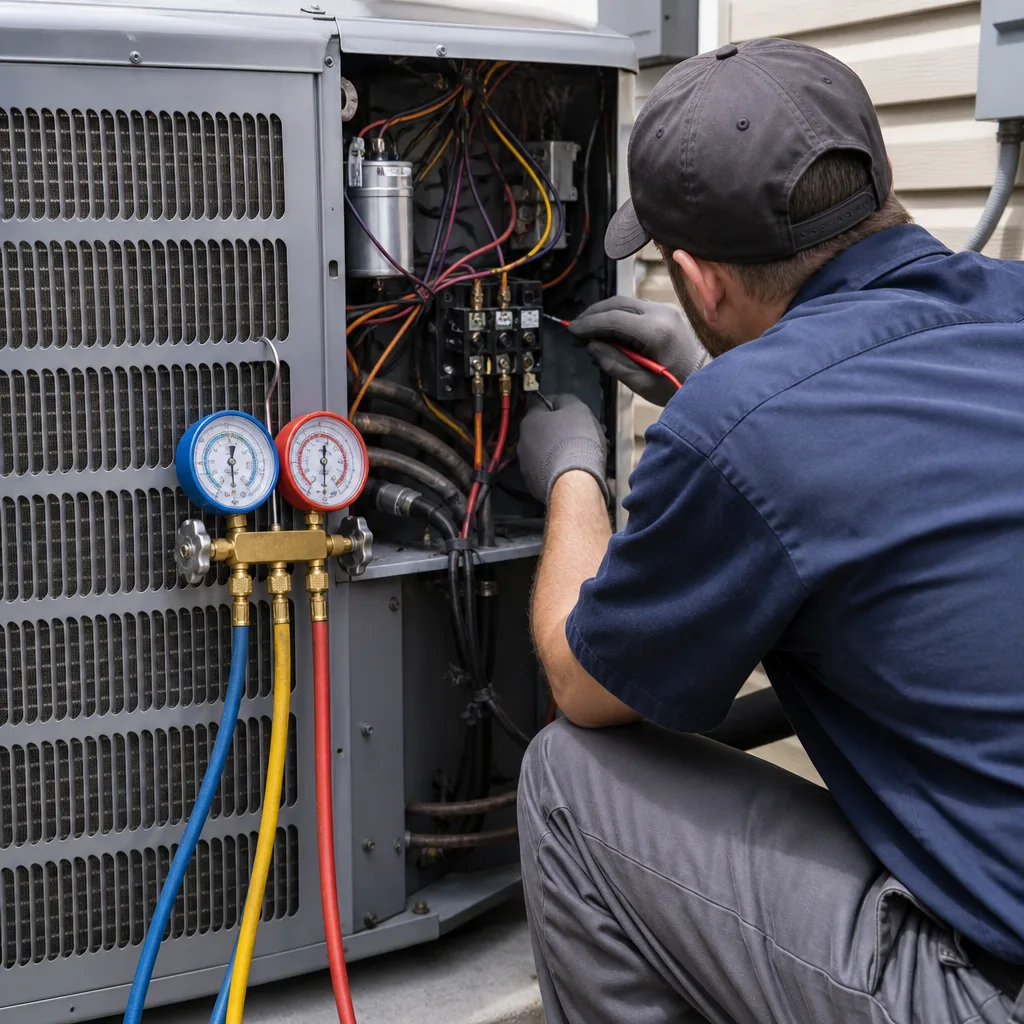 After
After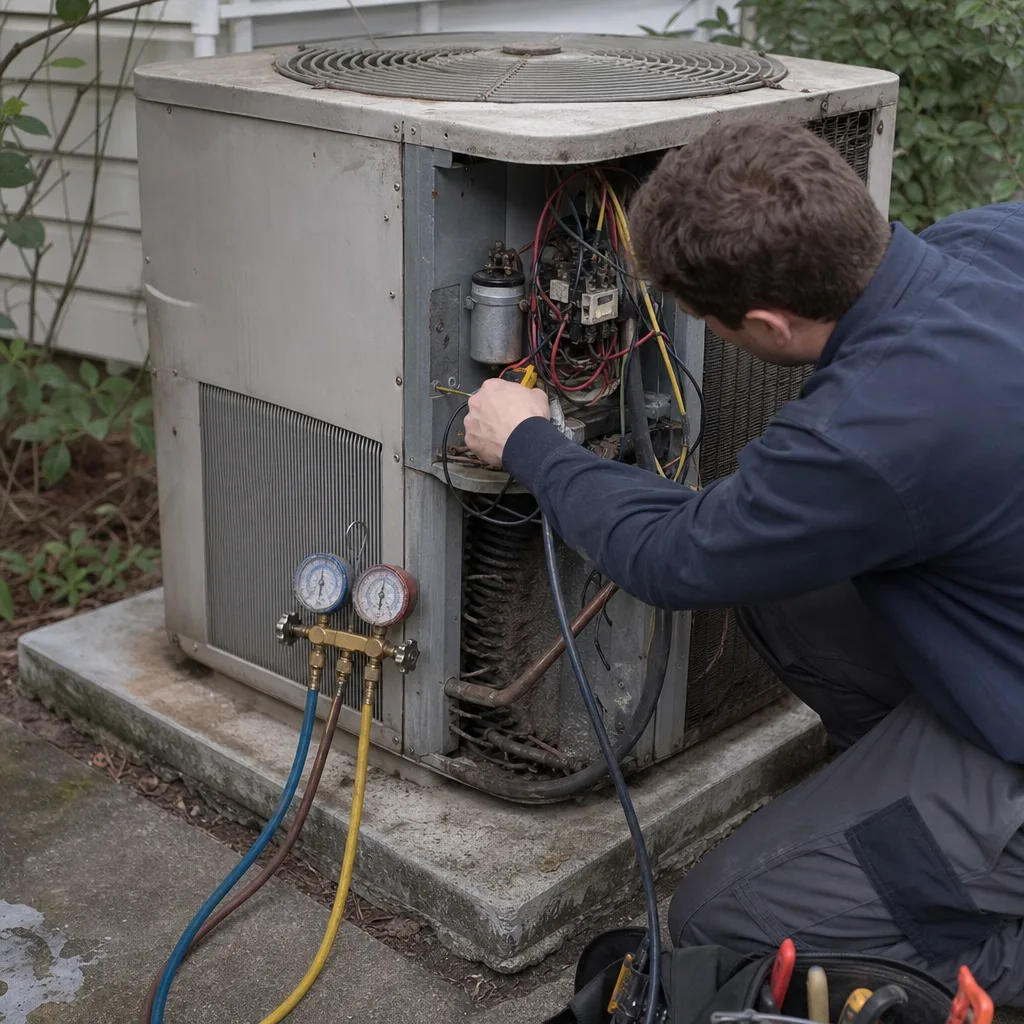 Before
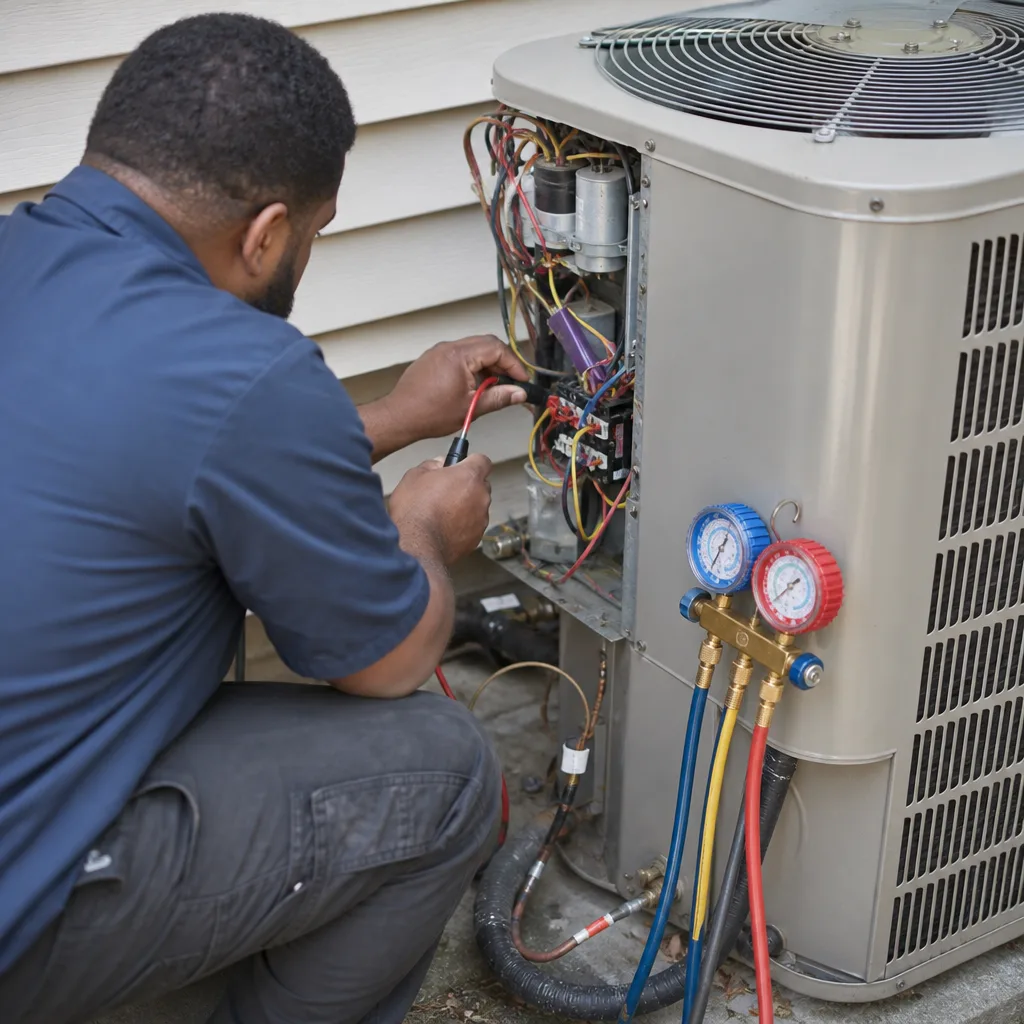 After
After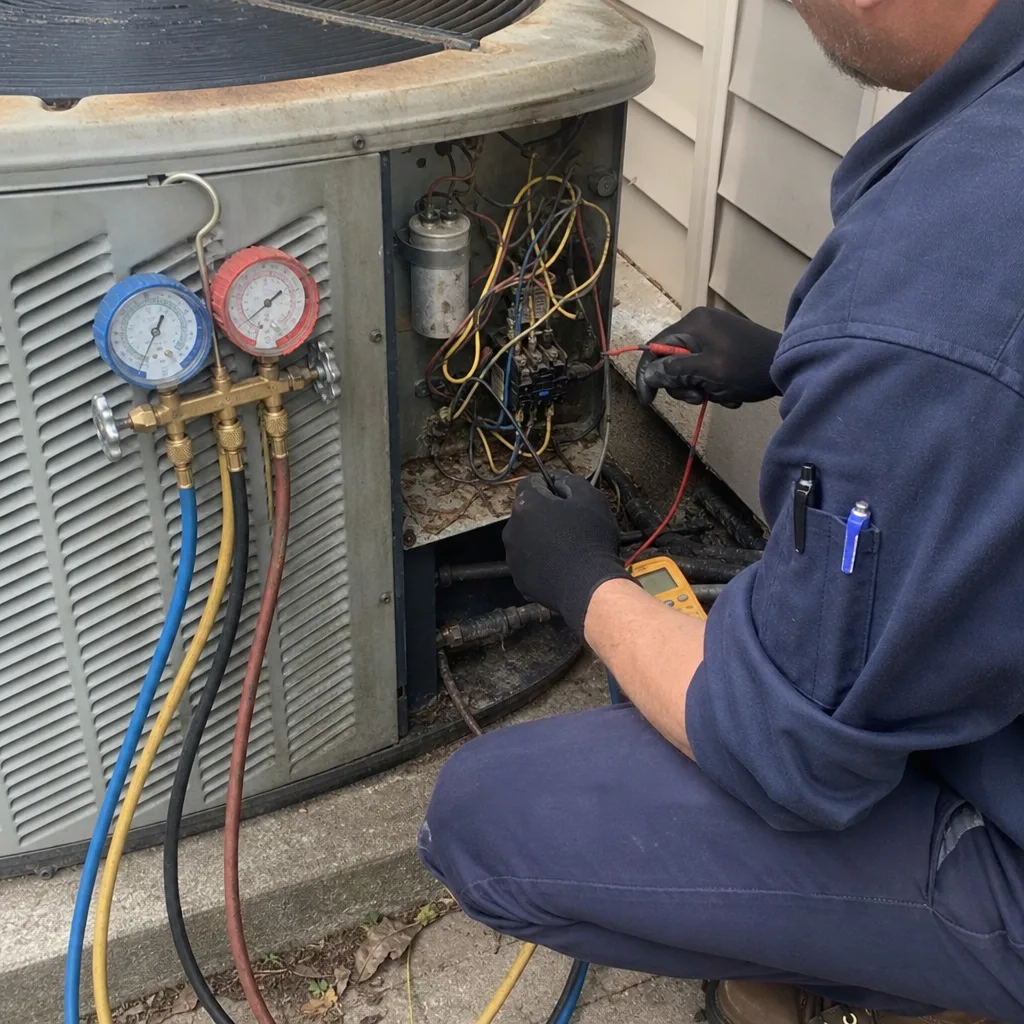 Before
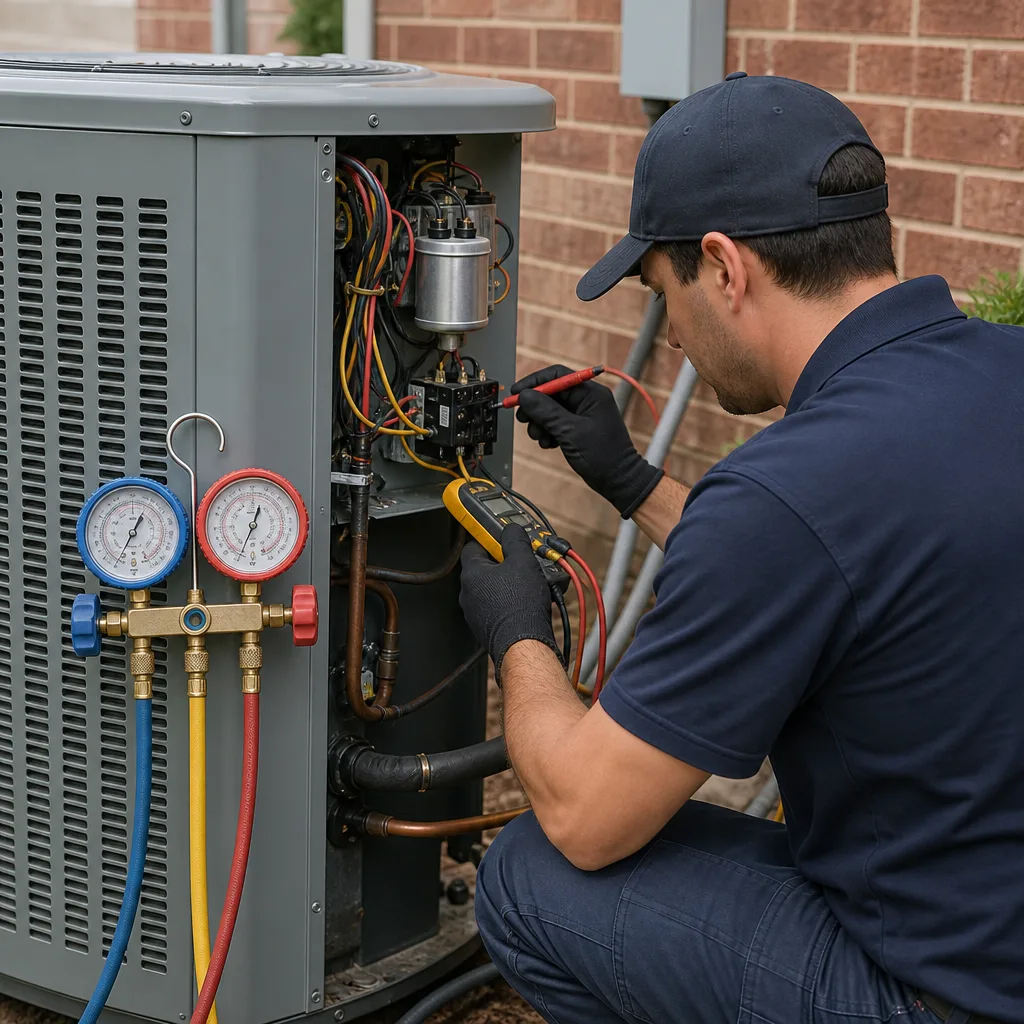 After
After