

Last updated October 16, 2026
 AC repair
 Furnace & heating
 Heat pumps
 Carrier
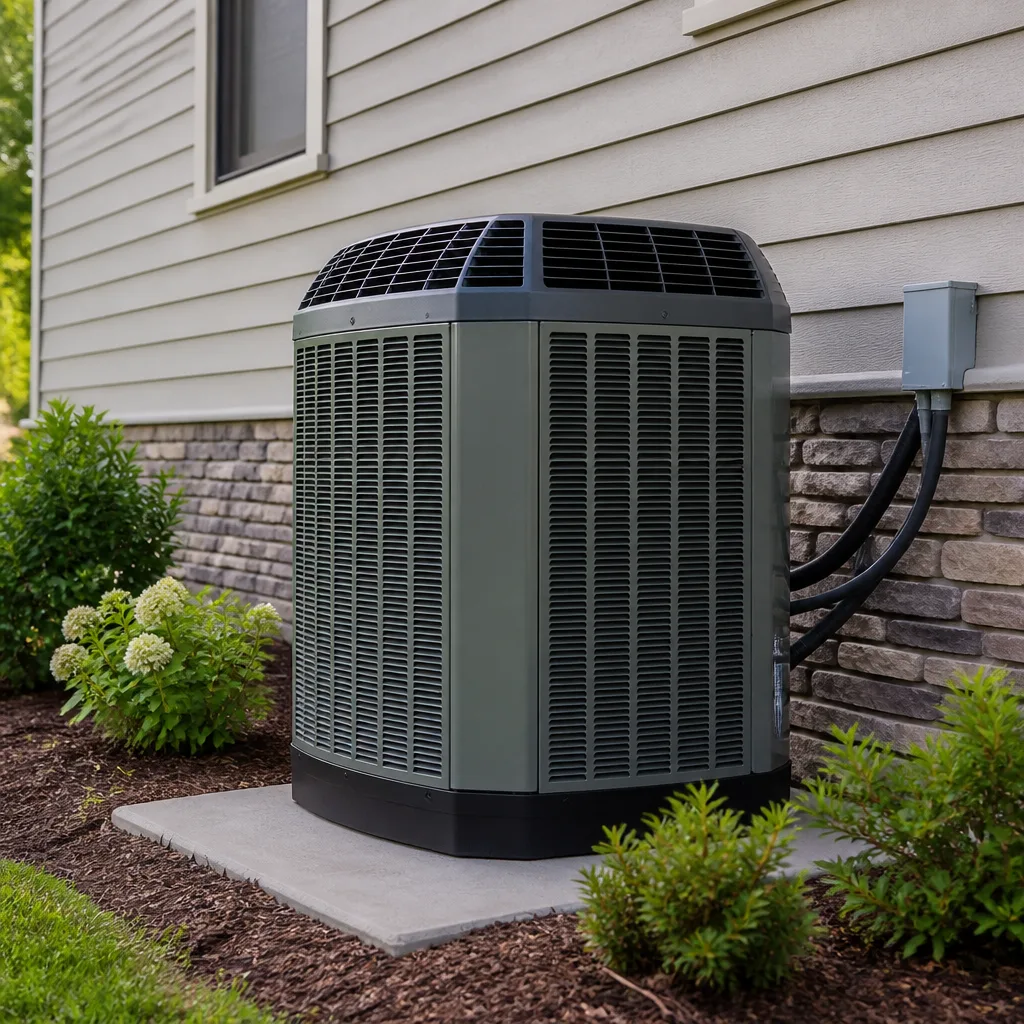 Trane
Trane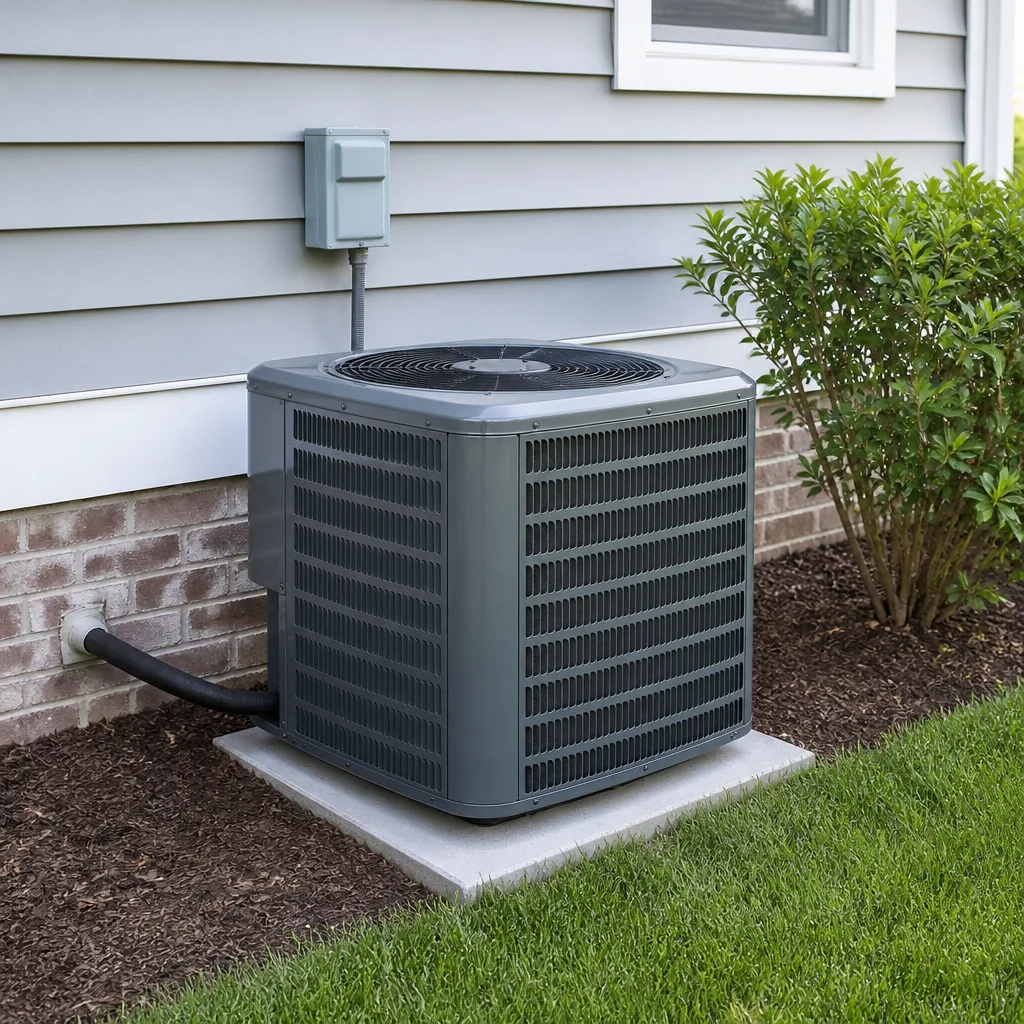 Goodman
Seasonal tune-up and full diagnostic on your Carrier, Trane, or Goodman system - readings shown to you before any repair is proposed
Diagnosis first, numbers second - you approve the repair price before a single part goes in.
Get your free estimateHVAC Warning Signs: A Atlanta Homeowner’s Reference Guide
Most HVAC warning sign guides read like a list of bad omens with no sense of proportion. A burning smell and a slightly higher power bill are both “warning signs,” but one may require you to leave your home immediately while the other might mean you need a $15 filter. This guide-along with our Complete Guide to HVAC in Atlanta-sorts every common and uncommon HVAC warning sign into a four-level triage system so Atlanta homeowners can act with good judgment instead of panic. You’ll learn which signs are genuine safety emergencies, which are mechanical problems worth scheduling this week, which are efficiency issues to track for a month, and which are cosmetic quirks to note at your next tune-up. We’ll also cover warning signs specific to Atlanta’s high-humidity climate that you won’t find in generic national guides.
Styles & brands we work with
Quick Answer
HVAC warning signs in Atlanta fall into four urgency levels: stop-and-call-now safety issues (burning odors, gas smells, electrical sparking, persistent breaker trips), schedule-this-week mechanical issues (ice on coils, short cycling, strange grinding or squealing), watch-for-a-month efficiency issues (rising bills, weak airflow, slight temperature differences between rooms), and note-at-next-tune-up cosmetic items (minor rattles, small rust spots). The two warning signs that demand immediate action are any smell of natural gas or burning plastic from your vents, and any circuit breaker that trips more than once for the same HVAC system. Everything else can be assessed with the triage system below, and a written price in hand before anyone touches the system.
Table of Contents
- The Four-Level HVAC Warning Sign Triage System
- Level 1: Stop-and-Call-Now Safety Signs
- Level 2: Schedule-This-Week Mechanical Signs
- Level 3: Watch-for-a-Month Efficiency Signs
- Level 4: Note-at-Next-Tune-Up Cosmetic Signs
- Atlanta-Specific Warning Signs Other Guides Miss
- Refrigerant Leak vs. Condensate Drain Clog: Two Problems That Look Identical
- What to Document Before the Technician Arrives
- Common Mistakes to Avoid
- When to Call a Professional
- Frequently Asked Questions
- The Bottom Line
The Four-Level HVAC Warning Sign Triage System
When a strange noise, odor, or behavior shows up in your HVAC system, the first question isn’t “what is it?” It’s “how fast do I need to act?” We’ve structured this guide around that question because acting too slowly on a safety issue is dangerous, and acting too quickly on a cosmetic issue wastes your money. Here’s the framework in plain terms.
Level 1: Stop-and-Call-Now (Safety)
These signs indicate a possible fire, gas leak, carbon monoxide risk, or electrical hazard. Shut the system off at the thermostat, then at the breaker if you can do so safely, and call a professional from a phone that isn’t in the affected area if you smell gas. Do not restart the system until it’s been inspected.
Level 2: Schedule-This-Week (Mechanical)
These signs mean a component is failing or stressed. The system may still run, but continued operation is causing wear that will turn a $250 repair into a $2,500 replacement if ignored for a month. Schedule service within seven days.
Level 3: Watch-for-a-Month (Efficiency)
These signs suggest declining performance rather than imminent failure. Track them for 30 days: note dates, outdoor temperatures, thermostat settings, and utility bill changes. If the pattern worsens, escalate to a service call.
Level 4: Note-at-Next-Tune-Up (Cosmetic)
These are quirks that don’t affect safety, function, or meaningful efficiency. Mention them at your next seasonal maintenance visit-our Seasonal HVAC Care for Atlanta: Year-Round Homeowner’s Guide covers what to expect-but don’t book an emergency call for them.
What makes this system useful in Atlanta specifically is the climate. An air conditioner that uses a little more power in July might be a sign of declining efficiency, or it might be the normal consequence of a Georgia heat wave where nighttime lows stay above 80°F. Triage keeps you from spending money on a service call that finds nothing wrong.
Level 1: Stop-and-Call-Now Safety Signs
These are the warning signs that justify immediate action. In our experience, Atlanta homeowners hesitate on these more often than they should, usually because the sign is intermittent or because they’re not sure if it’s “really that bad.” It is. Here’s what demands a shut-down.
Burning or Acrid Odors from Vents
A burning smell from your HVAC system is never normal. Two distinct scenarios matter here. First, the smell of burning plastic or an acrid electrical odor often indicates overheating wiring, a failing blower motor, or a scorched circuit board inside the air handler. This is a fire risk. Shut the system off at the thermostat and breaker. Second, the smell of burning dust is common on the first heating cycle of the season when dust that settled on the heat exchanger burns off. That’s usually harmless and clears within an hour. The distinction matters: burning dust smells like a hot hair dryer. Burning plastic smells sharp, chemical, and wrong. If you can’t tell the difference with confidence, shut it down and call.
Natural Gas or Rotten Egg Smell
Natural gas is odorless, so utility companies add mercaptan, a sulfur compound that smells like rotten eggs. If you smell rotten eggs near your furnace, gas line, or vents, do not operate light switches, do not use a phone inside the home, and do not start your car in an attached garage. Leave the house, then call your gas utility’s emergency line from outside. This is not an HVAC service call first; it’s a gas utility call first. Once the gas line is cleared, an HVAC technician can inspect the furnace connections.
Repeated Circuit Breaker Trips
This is the electrical warning sign Atlanta homeowners routinely ignore, and it is a documented cause of residential fires. A breaker that trips once during a storm or a heat wave when every appliance is running is doing its job. A breaker that trips twice, three times, or weekly for the same HVAC circuit is telling you something specific: the circuit is overloaded, a component is shorting, or a connection is loose and arcing. Arcing generates heat. Heat generates fires. Do not keep resetting the breaker. Shut the system off and call an HVAC technician who can check the compressor, blower motor, and capacitor for the electrical fault before an electrician is needed. In Atlanta’s older neighborhoods, where some homes still have original panels from the 1960s and 70s, we see this pattern more often than in newer construction.
Carbon Monoxide Detector Activation
If your carbon monoxide detector goes off and your furnace is running, treat it as a real alarm, not a battery fluke. Open windows, leave the house, and call the fire department if anyone has symptoms like headache, dizziness, or nausea. CO poisoning from a cracked heat exchanger is a real risk with older gas furnaces. After the alarm is cleared and the home is ventilated, a furnace inspection should examine the heat exchanger before the system runs again.
Safety signs are the one category where we will never tell you to wait and watch. A fire, a gas leak, or carbon monoxide exposure is not something a filter change fixes. Shut the system down, call, and get a written diagnosis before any repair work begins.
Level 2: Schedule-This-Week Mechanical Signs
Mechanical warning signs mean a specific part is failing. The system may keep running for now, but every cycle adds wear that widens the repair bill. These are the signs worth scheduling within a week, not because the house will blow up, but because a $200 capacitor replacement today beats a $1,200 compressor replacement in August. In Atlanta’s summer, when HVAC systems run 18 hours a day, that timeline compresses. What might be a “this week” issue in a temperate climate becomes “this is getting worse every day” in Georgia heat.
Ice on the Outdoor Unit or Refrigerant Lines
Ice on an air conditioner is not normal, even in summer. It’s counterintuitive, but ice on the coils means the system is absorbing less heat, not more. The two most common causes are low refrigerant (a leak) and restricted airflow (a clogged filter or a dirty evaporator coil). Both force the coil temperature below freezing, and the condensation that normally drains away freezes solid. Running an iced-up system stresses the compressor, and compressor replacement is one of the most expensive residential AC repairs. If you see ice, turn the system off at the thermostat and set the fan to “on” to melt the ice, then call for service. Note: in Atlanta’s humidity, the ice can melt and the system might seem fine for a day, but the underlying cause hasn’t gone anywhere.
Short Cycling
Short cycling means the system turns on and off every few minutes instead of running a full 15 – 20 minute cycle. The causes are varied: an oversized system, a failing thermostat, a refrigerant problem, or a dirty sensor. The point is that short cycling never fixes itself, and it roughly doubles the wear on the compressor in the meantime. If you notice the system clicking on and off frequently, especially at night when temperatures drop and the demand should be lower, that’s a Level 2 sign.
Grinding, Screeching, or Metal-on-Metal Sounds
A healthy HVAC system makes a steady, low hum. Grinding or metal-on-metal sounds from the outdoor unit usually mean a failing compressor or fan motor bearing. Screeching from the indoor unit often means a blower motor bearing is going. Squealing can mean a loose or worn belt in older furnaces. These sounds indicate mechanical friction, and friction means a part is destroying itself. Schedule service before the part seizes entirely. Repairing a bearing or belt is straightforward; replacing a seized motor is more involved and more expensive.
Warm Air Blowing from AC Vents
If your air conditioner is running but the air from the vents isn’t cool, or the system is blowing warm air in cooling mode, check the thermostat first: is it set to “cool,” not “heat” or “fan only”? If the settings are correct and the air is still warm, the likely culprits are low refrigerant, a failed compressor, or a thermostat that’s not actually talking to the system. This is a schedule-this-week issue because it’s not getting cooler on its own, and whatever is wrong is likely to get worse under load. In Atlanta, where daytime summer temperatures regularly exceed 90°F from June through September, warm air from a running AC isn’t a comfort issue. It’s a health issue for young children, elderly residents, and anyone with a respiratory condition.
Refrigerant Hissing or Bubbling Sounds
A hissing or bubbling sound from the indoor coil or refrigerant lines means refrigerant is escaping as a gas. Refrigerant leaks don’t seal themselves. The system will slowly lose cooling capacity until it stops cooling at all. Hissing is a specific sound; it’s not the same as the normal whoosh of air through a register. If you hear it, schedule service this week and mention the sound when you call so the technician arrives prepared to find a leak rather than just top off the charge.
Water Pooling Around the Indoor Unit
Some condensation on the indoor coil is normal in the humid season. A puddle on the floor next to the air handler or furnace is not. The most common cause is a clogged condensate drain, which is often a quick fix, but pooling water can also indicate a frozen coil that’s now melting, a cracked drain pan, or a refrigerant leak. Water that sits against drywall or subflooring creates a mold risk, and Atlanta’s humidity makes that risk worse than in dry climates. Any persistent water around the system is a reason to schedule service this week.
Level 3: Watch-for-a-Month Efficiency Signs
Efficiency warning signs don’t point to a broken part. They point to a system that’s working harder than it should and costing you more than it needs to. These signs justify tracking before spending, which is why the triage system places them on a 30-day watch rather than an immediate call. Here’s what to watch and how to measure it.
Gradually Rising Utility Bills
A single high bill in July or August is not an efficiency warning sign in Atlanta; it’s a normal response to 95°F days. A trend is. Compare this month’s bill to the same month last year, not to last month. If June is meaningfully higher than last June despite similar thermostat settings and similar heat, and the system hasn’t been serviced in over a year, that’s a signal. Track two more billing cycles. If the trend holds, the likely causes are a refrigerant charge that’s slowly dropping, a dirty outdoor coil, aging compressor efficiency, or duct leaks. Our AC Repair Maintenance Checklist for Atlanta Homeowners can help you spot these before they hit your bill. None of these demand a 2 AM call, but all of them are worth a professional look within the month.
Uneven Temperatures Between Rooms
Some temperature difference between floors or between the sun-exposed side of the house and the shaded side is normal. A consistent 5 – 8°F gap between rooms on the same floor with similar windows is not. The causes range from closed or blocked registers (a free fix), to undersized duct runs, to a zoning problem, to a refrigerant issue that’s reducing capacity. Track it for a month: note which rooms are warm, what time of day it happens, and whether the gap grows during heat waves. That data is genuinely useful to a technician and saves diagnostic time. In Atlanta’s older ranch homes and split levels, where original ductwork from the 1970s often runs through a hot attic, duct leaks are a frequent culprit.
Weaker Airflow from Vents
Airflow that’s noticeably lower at every register, not just one, points to a blower issue, a severely clogged filter, or a collapsing duct. Airflow that’s weak at one register points to a damper, a disconnected duct, or an obstruction. Check the filter first; a dirty filter is the simplest cause and the simplest fix. If the filter is clean and the airflow is still weak, start your 30-day watch. If it gets worse, that’s your answer: call for service.
Humidity That Won’t Come Down
Atlanta’s outdoor humidity averages over 70% in summer. A working central air conditioner should keep indoor humidity below about 60% at a comfortable temperature. If your home feels sticky even when the thermostat says 72°F, and the system is running normally otherwise, the system may be oversized (short cycles don’t remove enough humidity) or the coil may not be draining properly. Track indoor humidity with a cheap hygrometer for a month. If it stays above 65% while cooling runs normally, that’s worth a service call, especially in older Atlanta homes with plaster walls that absorb moisture. Chronic indoor humidity above 65% also feeds dust mites and mold, which is a health consideration beyond comfort.
Slight Increase in System Runtime
If your system used to cycle off for 20 minutes between runs and now runs nearly constantly to hold the same temperature, that’s an efficiency sign. It could be refrigerant, a dirty coil, an aging compressor, or a thermostat that’s losing calibration. Track it for a month with a simple log: outdoor temperature, thermostat setting, and how long the system runs per cycle. That log will tell the technician more in two minutes than a half hour of guessing. In Atlanta’s summer heat, a system that runs nonstop is also drawing maximum power during peak-rate hours, which compounds the bill impact.
Level 4: Note-at-Next-Tune-Up Cosmetic Signs
Cosmetic warning signs are the ones that trigger unnecessary service calls and unnecessary spending. They look and sound concerning to a homeowner, but a technician sees them and thinks “normal, harmless, or scheduled for the next maintenance visit.” Here’s what belongs in this category and why.
Occasional Rattles or Hums
A rattle that happens occasionally when the system starts up is usually a loose panel, a screw, or a line set vibrating against framing. It’s an annoyance, not a mechanical failure. A hum that’s steady and low is often the normal sound of a transformer or contactor. Neither requires an emergency visit. Note it and mention it at your next tune-up. The exception: a rattle combined with a new sound, like grinding or screeching, moves the sign up to Level 2. A rattle that’s consistent and gets louder also moves up.
Small Rust Spots on the Outdoor Unit
Surface rust on the corner of an outdoor unit’s cabinet is cosmetic. It doesn’t affect function, and Atlanta’s humid climate plus seasonal rain makes it common. Rust on refrigerant lines, on the compressor housing, or rust that’s flaking through the cabinet is different and worth a closer look. But a thumb-sized rust spot on a panel that’s five years old is a note-at-tune-up item, not a service call.
Condensation on Ductwork in the Attic
In Atlanta’s muggy summers, some condensation on uninsulated or poorly insulated ductwork in the attic is common. If the condensation is light and the ducts are functioning, note it and evaluate whether the attic has adequate ventilation. If the condensation is dripping onto insulation or drywall, or if the ductwork is consistently wet, that’s a Level 3 issue because it feeds mold and degrades insulation. Most homeowners first notice this when a water stain appears on a ceiling below the attic; that’s actually a Level 2 or Level 3 sign depending on severity, not a cosmetic one.
Dust on the Return Grille
A return grille that collects dust faster than the rest of the house is a filter and cleanliness issue, not a system failure. Vacuum it, change the filter, and note the pattern. If the dust returns within days, it points to a leaky return duct pulling unfiltered attic air, which is an efficiency issue, not a cosmetic one. But a dusty grille on a normal schedule is simply a reminder to change your filter, which is about a five-minute job for most systems.
Thermostat Display Flicker
A thermostat display that flickers occasionally, especially during storms or when the system kicks on, is usually a low battery or a loose wire. Replace the batteries first. If it continues, mention it at the next service visit. A thermostat that goes completely dark or resets to default settings is a Level 2 or Level 3 sign, because the system can’t operate correctly without a working controller. In Atlanta’s frequent summer thunderstorms, brief power flickers are common and don’t by themselves indicate an HVAC problem.
Here’s the rule for cosmetic signs: if the sign is consistent but mild, it’s a note-at-tune-up item. If the sign changes, worsens, or appears alongside a Level 1 or Level 2 sign, escalate it. Don’t spend $150 on an emergency call for a loose screw, but don’t ignore a rattle that turns into a grind.
Atlanta-Specific Warning Signs Other Guides Miss
Most HVAC warning sign guides are written generically, as if every homeowner lives in a place with moderate humidity and predictable weather. Atlanta is different, and several warning signs mean something specific here that a national guide gets wrong or omits entirely.
Musty Odors from Vents Mean Something Different in High Humidity
In a dry climate, a musty smell from the vents usually points to a dead animal in the ductwork or standing water in a drain pan. Both are possible in Atlanta too, but there’s a third cause that’s far more common here: mold and mildew growing on a coil or in a drain pan because the system can’t shed the constant humidity. Atlanta’s summer dew points routinely stay above 70°F, which means the indoor coil is continuously wet. If the coil is dirty or the drain is slow, biological growth takes hold within weeks. That musty smell you get when the AC first starts is often the smell of a wet coil that needs cleaning and a drain that needs clearing. The fix is usually a professional coil cleaning and drain treatment, not an air freshener. In our experience, the musty smell that comes and goes with the cooling cycle is almost always biological growth in the drain pan or coil area, not a dead animal.
Condensate Drains Clog Faster in Atlanta Than Almost Anywhere
Atlanta’s combination of high outdoor humidity, long cooling seasons, and warm temperatures makes condensate drain clogs a predictable seasonal event. Every hour of cooling produces condensation; in Atlanta, a system can produce 5 to 20 gallons of condensate per day in July. That water carries dust, pollen, and biological material into the drain line, where it grows into a clog. The warning sign is a drain pan that’s full, a system that shuts off unexpectedly (many systems have a float switch that cuts power when the pan fills), or water stains on the ceiling below an attic air handler. If your AC shuts off on its own during a heat wave and the thermostat is still set to cool, a tripped float switch from a clogged drain is a leading cause. In Atlanta specifically, we recommend having the drain line blown out or treated at the start of every cooling season, which is April or May here.
Atlanta Pollen Season Creates a Predictable Coil Problem
Every March and April, Atlanta’s pine and oak pollen coats every outdoor surface in a yellow-green film. The outdoor condenser coil is not exempt. Pollen sticks to the coil fins, mixes with humidity and dust, and forms a paste that reduces airflow and heat rejection. The warning sign is a system that cools less effectively in late spring than it did in early March, with no other symptoms. The pollen cake acts as an insulating blanket on the coil. In neighborhoods with mature tree canopies like Decatur, Druid Hills, and parts of North Atlanta, the pollen load is heavier. A coil cleaning after pollen season is one of the highest-value maintenance items we do for Atlanta homes, and it’s a specific warning sign a generic guide rarely mentions. For context on what a seasonal maintenance visit includes, see AC Maintenance in Atlanta.
Heat Waves Reveal Capacity Problems That Mild Weather Hides
In a milder climate, a slightly undersized AC or a system losing refrigerant might still hold the set temperature because the cooling demand never exceeds the system’s capacity. In Atlanta, where summer design temperatures are based on sustained mid-90s heat with high humidity, the system’s limits get exposed. The warning sign: your AC holds temperature fine until about 3 PM, then falls behind and can’t recover until evening. That pattern is often mistaken for a failing system when it’s actually an undersized system, a refrigerant undercharge, or a dirty coil being pushed beyond its limit. The fix depends on the cause, but the pattern itself is a legitimate warning sign worth investigating before the system is pushed into failure. If you’re seeing this pattern with an older system, it may also be the point where repair-versus-replace math becomes relevant; our team walks through that math honestly at AC Repair in Atlanta.
Winter Humidity Swings Stress Ductwork Differently
Atlanta doesn’t have the long, bone-dry winters of the upper Midwest, but it does have a wide humidity swing between summer and winter, and between warm days and cold nights in the shoulder seasons. That swing causes ductwork in unconditioned attics to expand and contract. Over years, joints loosen and tape fails. The warning sign is a specific pattern: rooms that are comfortable in summer but drafty or cold in winter, or vice versa. The seasonal nature of the problem points to duct leaks, not a furnace issue. Duct sealing is an efficiency conversation, not a repair conversation, but it’s one that a national guide written for a stable climate misses.
Refrigerant Leak vs. Condensate Drain Clog: Two Problems That Look Identical
This is the diagnostic confusion we see most often with Atlanta homeowners. A refrigerant leak and a condensate drain clog produce overlapping symptoms: weak cooling, a frozen coil, water around the indoor unit, and sometimes a hissing sound. But the costs and urgency are very different. A clogged drain can sometimes be cleared for $150 – $250, while a refrigerant leak requires finding and repairing the leak, which is typically a $400 – $1,200 repair depending on the leak location and whether the system needs a top-off afterward. Here’s how to tell them apart before you spend money on the wrong problem.
What a Refrigerant Leak Looks Like
- The system cools poorly or not at all, and the problem gets gradually worse over weeks or months.
- The outdoor unit runs but the air from the vents is lukewarm, even at night when outdoor temperatures drop.
- Ice forms on the outdoor unit’s refrigerant lines, or on the indoor coil, and it persists.
- A hissing or bubbling sound comes from the indoor coil even when the system is off (the refrigerant is escaping).
- The copper refrigerant lines feel warm to the touch at the outdoor unit instead of one being cool and one being warm.
- The bill creeps up while cooling capacity drops.
What a Condensate Drain Clog Looks Like
- The system cools normally for a while, then shuts off unexpectedly, especially on humid days.
- Water pools around the indoor unit, or the drain pan is full.
- The overflow switch (if equipped) has tripped, which cuts power to the system. This is often the reason the system “died” suddenly with no prior warning.
- The drain line outside, usually a PVC pipe near the outdoor unit, is not dripping during operation when it normally would be.
- No ice is present, and the system cools fine once cleared and restarted.
The Fastest Differentiator
If your system cools normally for 30 – 60 minutes and then shuts off or loses cooling, the problem is likely the drain clog causing a float switch trip. If your system runs continuously and never cools properly, even from the moment it starts, the problem is likely refrigerant. If you’re not confident in the diagnosis, document what you observe (described in the next section) so the technician arrives with usable information. Either way, get a written price before any work begins. That’s a non-negotiable on any repair, and it’s how a trustworthy company operates in a market like Atlanta where some operators thrive on vague verbal estimates that grow after the work starts.
What to Document Before the Technician Arrives
Here’s a step-by-step practice that costs nothing and can save you real money: document the problem before the service call. The reason is simple. Many HVAC problems are intermittent. The system may behave perfectly while the technician is standing in your hallway, leaving them to diagnose from your description alone. Your documentation is evidence. It’s also a guardrail: if the diagnosis comes back different from what your documentation shows, you have a basis for a second conversation. This is standard advice from our owner Devin Marlowe, who has spent years teaching Atlanta homeowners how to be smarter service customers.
- Photograph everything unusual. Ice on the coil, water on the floor, a tripped breaker, a thermostat error code, a rust spot, a standing puddle. Include a timestamp if your phone doesn’t add one automatically.
- Video the behavior. A 15-second video of the system short cycling, a strange sound, or a thermostat behaving oddly captures what a photo can’t. Audio matters as much as video for grinding or hissing sounds.
- Log the timeline. Note when the problem started, how often it happens, what the outdoor temperature is when it happens, and whether anything changed recently (new thermostat, new filter, recent service, a power outage).
- Take a photo of your thermostat settings. If the system isn’t cooling and the thermostat is accidentally set to heat or fan only, that photo saves a diagnostic fee. It also documents that the settings were correct if a technician says otherwise.
- Note the breaker history. If a breaker tripped, write down the date, which breaker, and what the system was doing at the time. Repeated trips are a specific diagnostic pattern an electrician or HVAC tech can read.
- Keep your service records in one place. Previous repairs, the age of the system, the last time the coil was cleaned or the drain was cleared. A technician who sees the full history makes better decisions than one guessing from a single symptom.
This documentation habit matters more in Atlanta than in many markets because the problems are often humidity-related and intermittent. A drain clog that only backs up on the hottest, most humid days may not reveal itself on a mild Thursday morning. Your photos and video become the diagnosis when the symptom isn’t in the room. And when you send a repair company your documentation, you’re also setting an expectation: this homeowner is paying attention.
Common Mistakes to Avoid
- Ignoring a repeating breaker trip. One tripped breaker is an event. Two is a pattern. Three is a fire risk. Resetting the breaker each time and hoping it stops is the single most dangerous mistake on this list. In Atlanta’s older housing stock with aging panels, this mistake is more common and more consequential than in newer construction.
- Responding to every sound with a service call. The opposite mistake is treating every rattle and hum as an emergency. Use the triage system: if the sound is new, loud, metallic, or combined with a performance drop, it’s Level 1 or 2. If it’s occasional and performance is unchanged, it’s Level 4. Paying for an emergency call for a loose panel burns money better spent on the next real repair.
- Adding refrigerant without fixing the leak. If a technician offers to “top off” the refrigerant without finding the leak, treat that as incomplete work. Refrigerant doesn’t burn off or wear out; if it’s low, there’s a leak. A recharge without a repair is a temporary bandage that leaks out again, often within months.
- Running an iced-up system until it stops. The ice is a symptom, not the problem. Running a system with a frozen coil stresses the compressor, and compressor replacement is one of the most expensive residential HVAC jobs. Shut the system off, turn the fan on to melt the ice, and call. Atlanta’s humidity makes the damage worse because the ice doesn’t dry quickly.
- Waiting until the coldest week of winter to address a furnace problem discovered in the fall. If your furnace makes a strange noise during the first heating cycle in November, don’t wait until January’s cold snap to address it. Same for AC: if the system struggles during an April warm spell, don’t wait until July. The worse the weather, the harder it is to get same-week service in a market like Atlanta where demand spikes all at once.
- Failing to document intermittent problems. If the problem only happens at 3 PM on hot days, document it at 3 PM on a hot day. Don’t wait for the technician to ask; hand them the log. A documented intermittent problem is solvable. An undocumented one is a guessing game that often ends with “couldn’t reproduce the issue” and a service fee.
- Assuming a high bill is always a system problem. A high Atlanta summer bill can mean an HVAC efficiency problem, or it can mean a rate increase, a pool pump running overtime, or a poorly insulated attic. Check the unit rate on the bill and compare usage (kWh), not just dollar amount, before assuming the HVAC is the culprit. Usage goes up with weather; rate hikes go up with the utility.
When to Call a Professional
Call a professional immediately if you smell natural gas or burning plastic, if a carbon monoxide detector activates, if the system sparks or arcs visibly, or if a breaker trips repeatedly. Call within the week if you see ice, hear grinding, feel warm air from a cooling system, or find water pooling that doesn’t stop. Call for a maintenance visit if your bill is trending up with no obvious cause, or if rooms are unevenly cooled. And call if you’ve documented an intermittent problem that you can’t explain. Brandt HVAC Co Atlanta offers free estimates in Atlanta; call (762) 465-4570 and a live person answers, day or night, no phone tree. Before any work starts, you get a written price. Before the technician arrives, you get their name and photo. What you won’t get is pressure, vague pricing, or a stranger at your door you weren’t expecting.
Frequently Asked Questions
A burning or acrid odor from your vents is the most urgent warning sign in Atlanta, followed closely by a natural gas smell and repeated circuit breaker trips. These indicate a possible fire, electrical fault, or gas leak, and they require shutting the system off and calling a professional immediately.
In Atlanta’s high humidity, a musty AC smell usually means biological growth on the evaporator coil or in the drain pan, where condensation stays continuously wet through the cooling season. It’s not immediately dangerous for most people, but it does reduce indoor air quality and should be addressed with a professional coil cleaning and drain treatment.
If the system cools normally for 30 – 60 minutes and then shuts off or loses cooling, it’s likely a drain clog tripping the float switch. If the system runs continuously and never cools properly from the moment it starts, especially with ice on the lines or a hissing sound, it’s more likely a refrigerant leak. Drain clogs typically cost $150 – $250 to clear; refrigerant repairs run $400 – $1,200 depending on the leak location.
In Atlanta’s climate, have the cooling system serviced once a year, ideally in early spring before the hot season starts, and the heating system checked once a year in the fall. The long cooling season and high humidity make annual AC maintenance more important here than in milder markets.
Is it normal for my AC to run constantly during an Atlanta heat wave?
See the difference
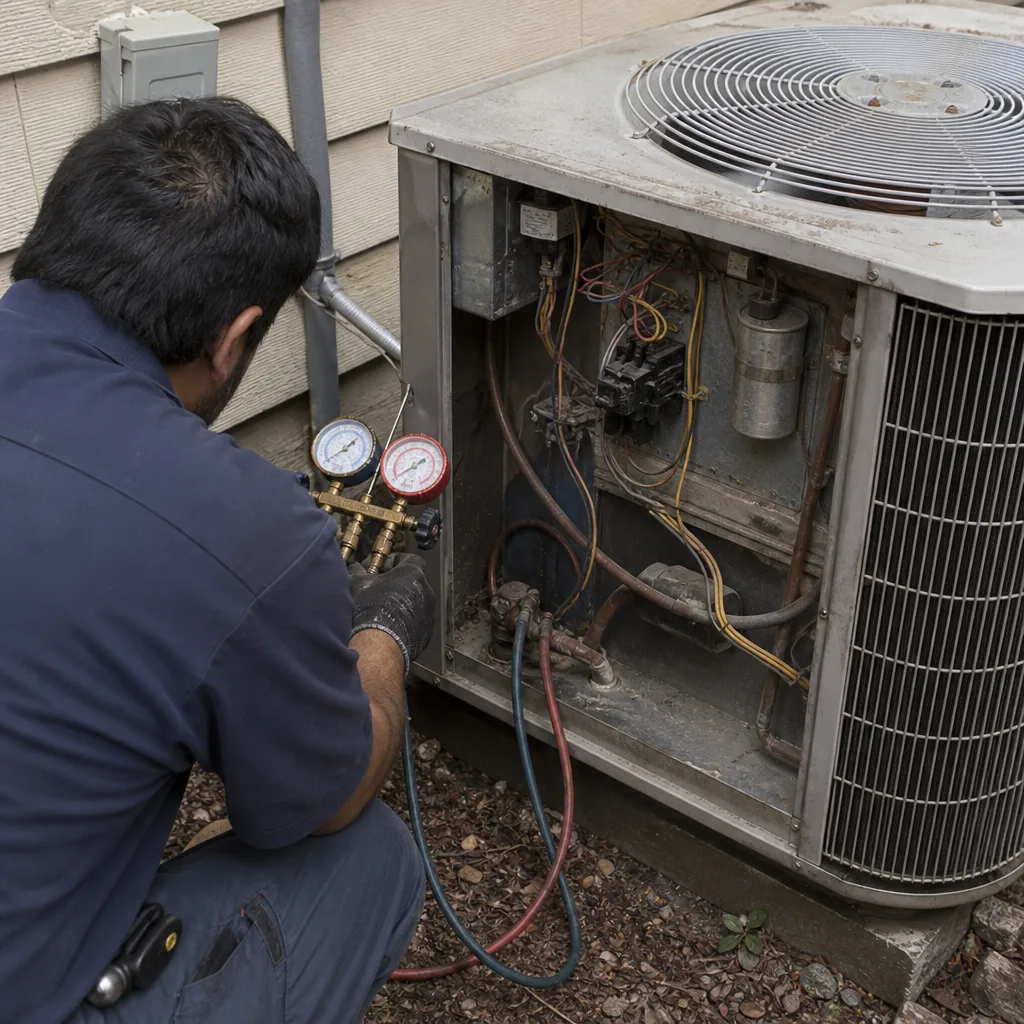 Before
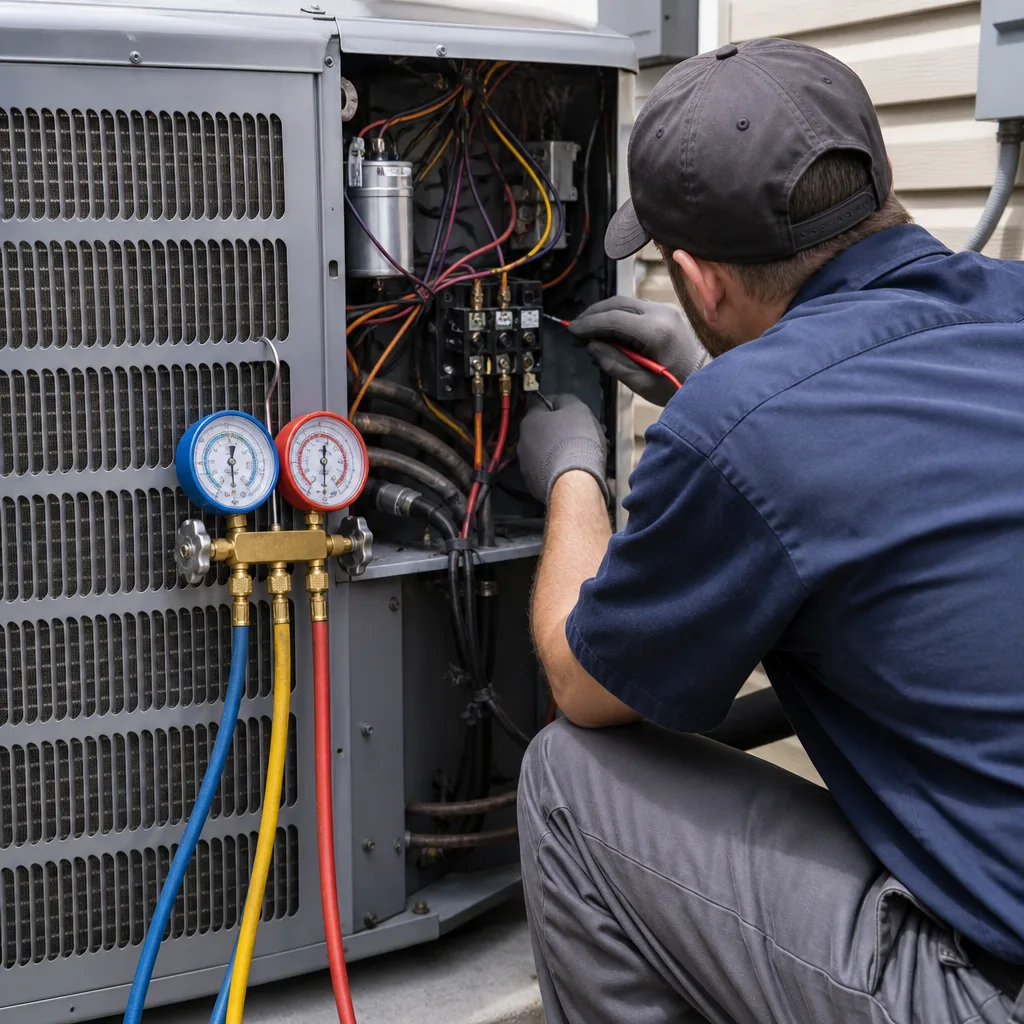 After
After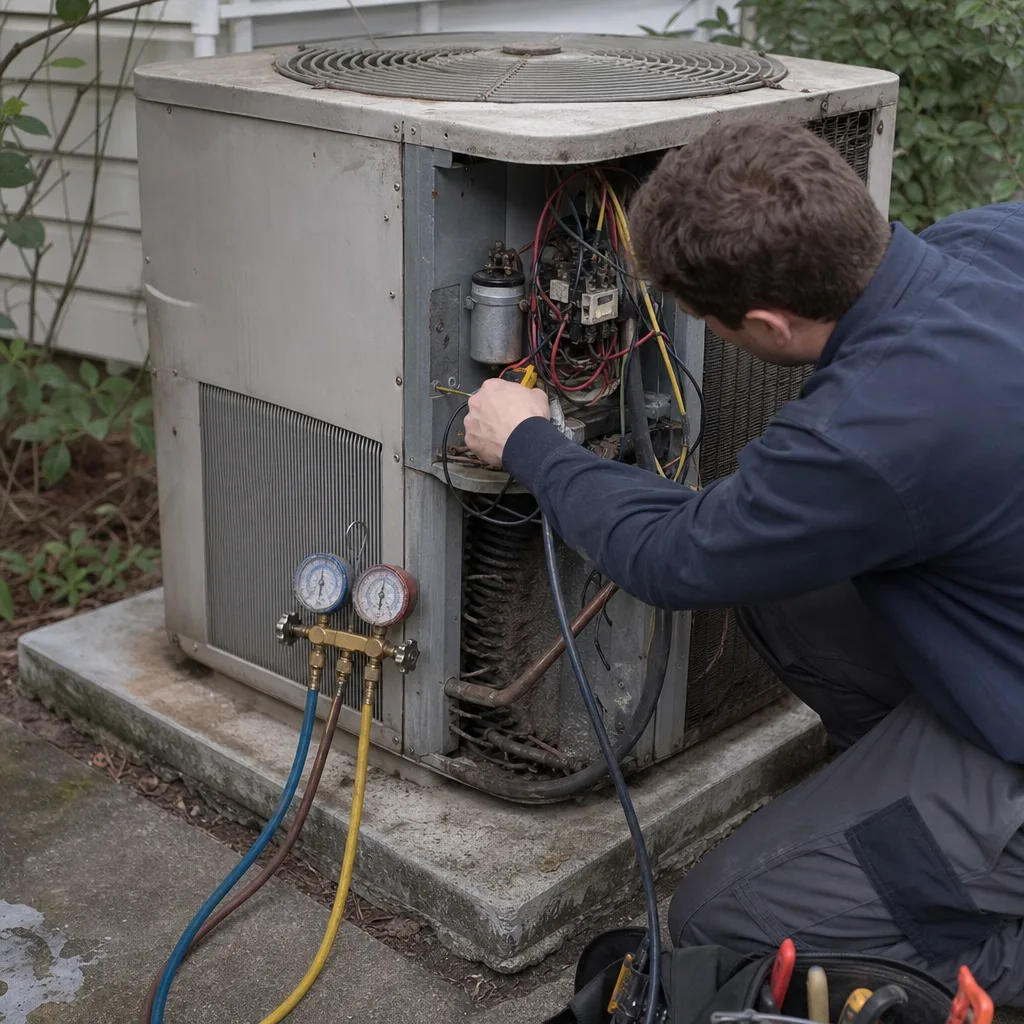 Before
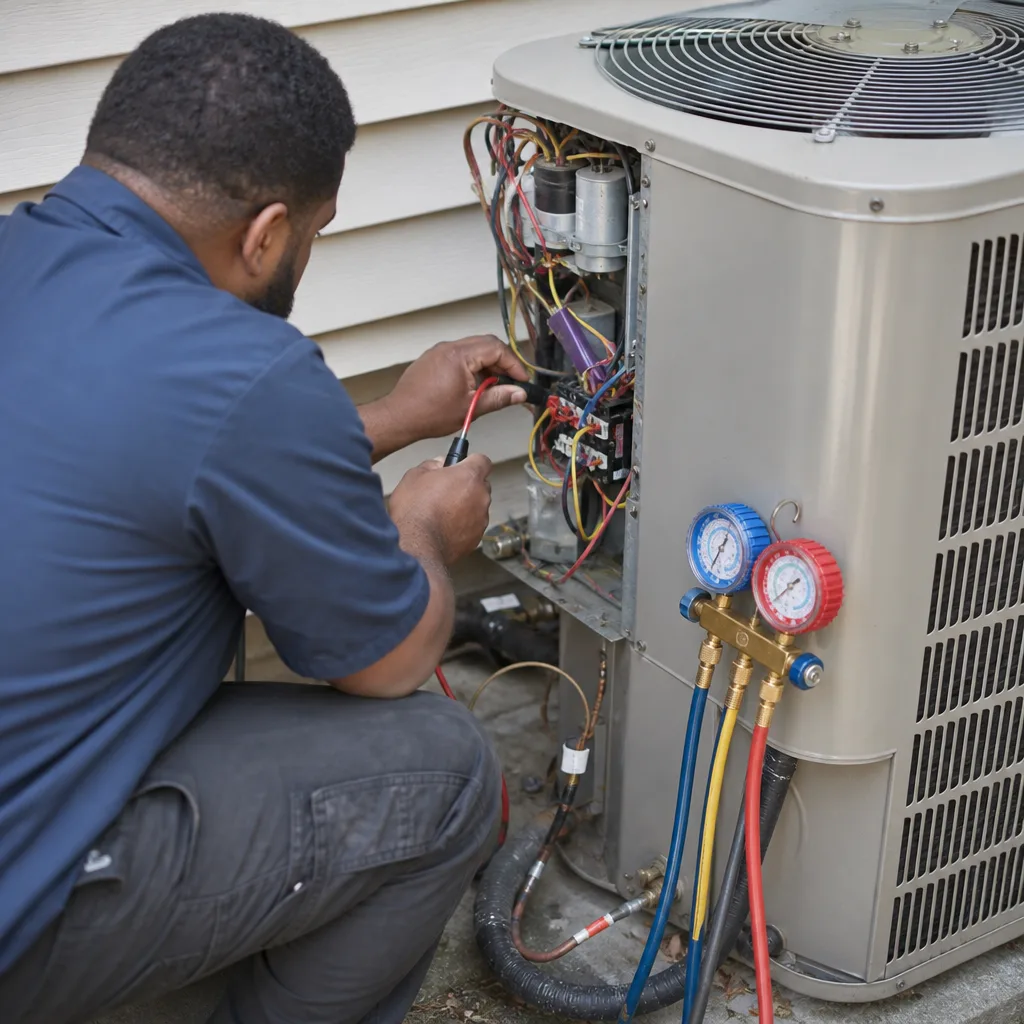 After
After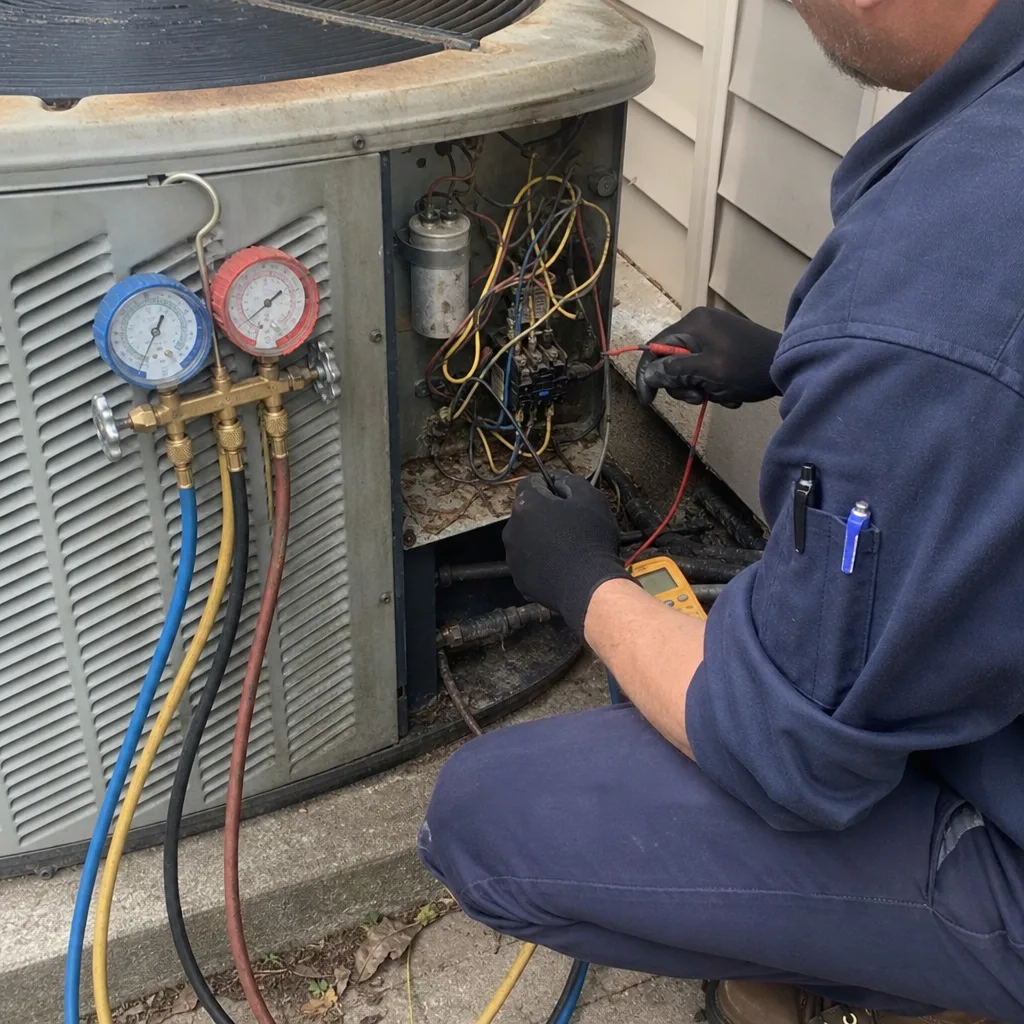 Before
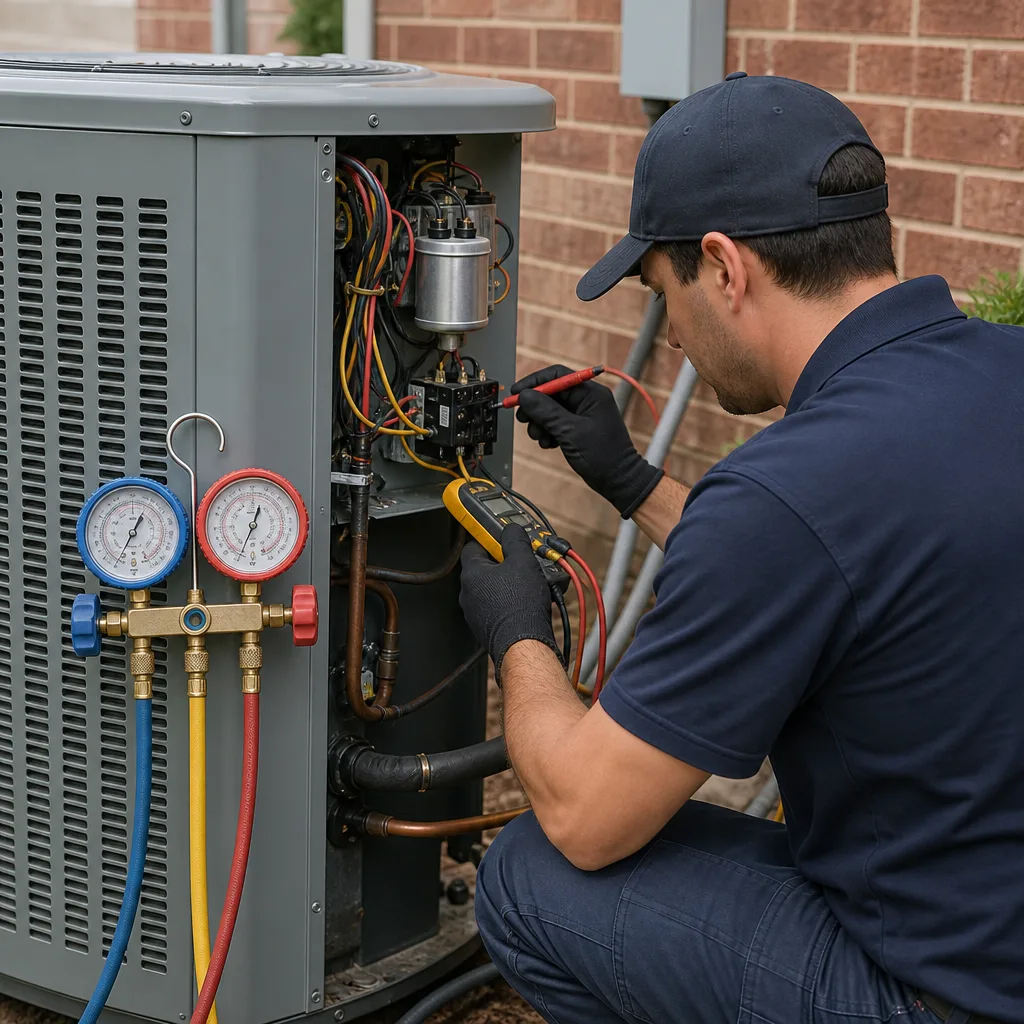 After
AfterRequest a Free Estimate in Atlanta
Tell us what you need - Brandt HVAC Co Atlanta responds fast. No obligation.